
Lattice boom cranes are a type of heavy-duty lifting machine that uses a truss-style boom made of welded steel tubes or structural steel sections. The boom consists of interconnected triangular structures that form a rigid yet lightweight framework.
This design allows the crane to achieve exceptionally high lifting capacity while maintaining a relatively low structural weight, making it ideal for projects that require long reach and heavy lifting.
Lattice boom cranes are commonly mounted on crawler cranes or large all-terrain cranes and are widely used in demanding industries such as wind energy installation, petrochemical plant construction, bridge building, and nuclear power projects. Their combination of stability, reach, and lifting power makes them essential equipment for large-scale infrastructure and industrial operations.
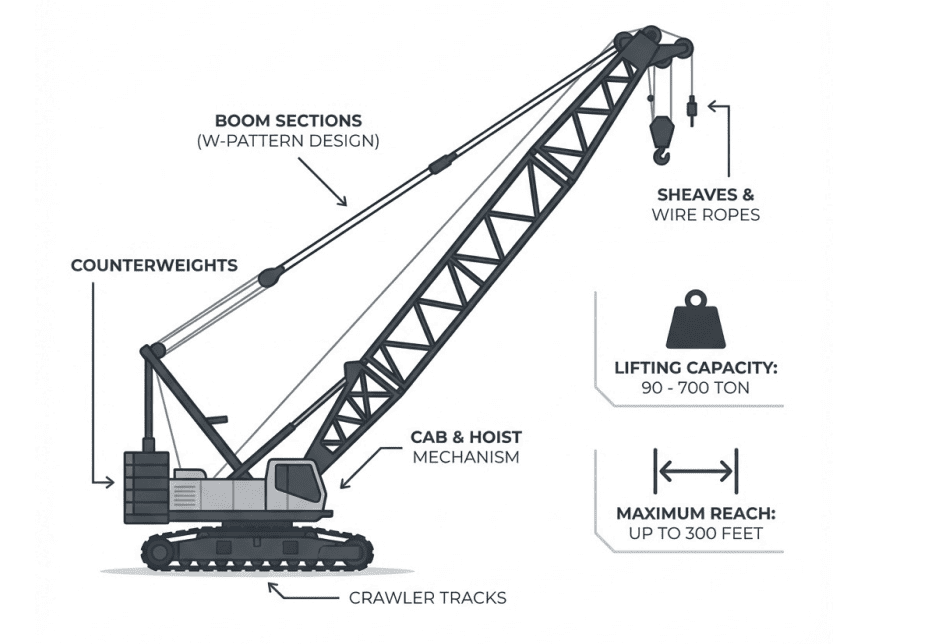
Structural Design of a Lattice Boom Crane
A typical lattice boom crane is mainly composed of several key components, including the lattice boom sections, main boom foot, hoist winches, wire ropes, counterweight system, operator cab, and the carrier or base machine (such as a crawler chassis or truck carrier). The modular boom sections can be assembled and extended according to different lifting height and radius requirements, providing high flexibility for various construction projects.
The defining feature of a lattice boom crane is its truss-type boom structure. Instead of using a solid box-shaped arm, the boom is constructed from multiple triangular steel frameworks welded together.
Key structural characteristics
1. Triangular truss design
The lattice boom is formed by a network of triangular units. This geometry distributes loads efficiently and provides excellent resistance to bending and torsion.
2. Lightweight but strong structure
Because the framework contains open spaces rather than solid steel plates, the overall boom weight is significantly reduced while maintaining high strength.
3. Modular boom sections
The boom is typically composed of several interchangeable sections that can be assembled to reach different lengths depending on the lifting requirements.
4. Adjustable configurations
Additional components such as jib extensions, luffing jibs, and heavy lift attachments can be installed to extend working radius or increase lifting performance.
How a Lattice Boom Crane Works
A lattice boom crane operates by combining mechanical lifting systems, counterweight balance, and boom geometry to safely lift heavy loads.
Main working process
1. Power transmission
The crane’s engine or hydraulic system powers the hoisting winch, which controls the lifting and lowering of loads via steel wire ropes.
2. Boom positioning
The boom angle is adjusted using luffing mechanisms or boom hoist systems, allowing operators to change the lifting height and working radius.
3. Load lifting
The hook block attached to the wire rope lifts the load vertically. Multiple reeving lines are often used to distribute load forces and increase lifting capacity.
4. Counterweight balancing
Large counterweights installed at the rear of the crane balance the load, ensuring stability during lifting operations.
This system enables the crane to lift extremely heavy loads over long distances while maintaining structural stability.
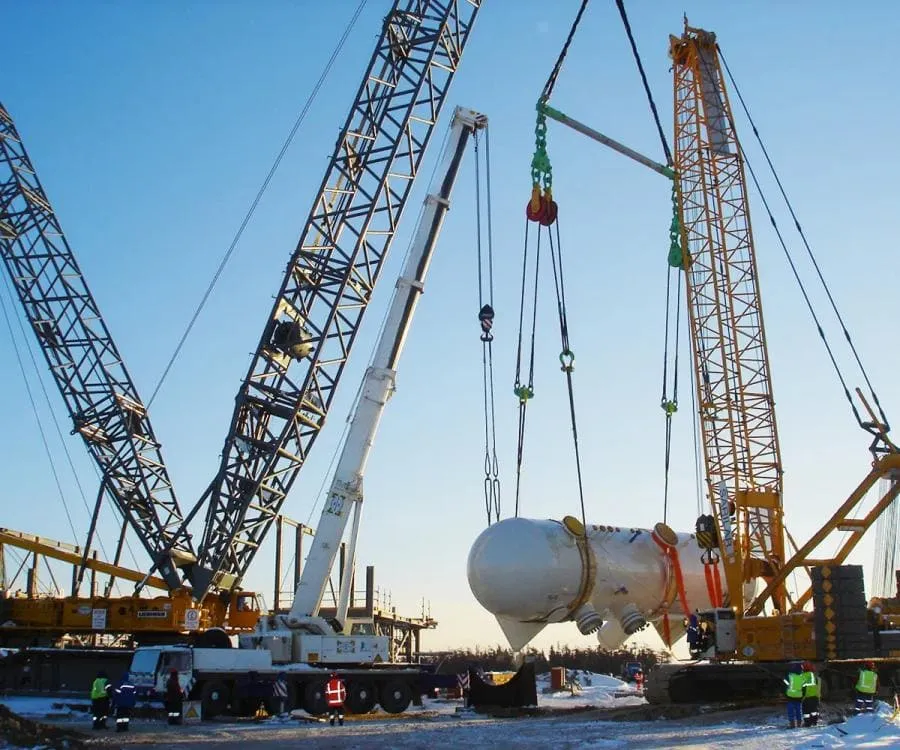
Types of Lattice Boom Cranes
Not all lattice boom cranes are designed for the same working environment. Depending on the carrier and lifting requirements, different types of lattice cranes are available to meet specific project needs. Choosing the right type can improve lifting efficiency, site mobility, and overall project safety.
1. Crawler Lattice Boom Crane
Crawler lattice boom cranes are mounted on crawler tracks, providing excellent stability and low ground pressure. They can travel around the jobsite while carrying loads over short distances, making them ideal for large infrastructure and foundation projects.
Typical applications:
- Bridge construction
- Wind turbine installation
- Heavy foundation work
- Petrochemical plants
2. Truck-Mounted Lattice Boom Crane
A truck-mounted lattice boom crane combines a lattice boom with a road-legal truck carrier, allowing faster transportation between construction sites. It is a practical choice for projects that require frequent relocation while still benefiting from the strength of a lattice boom.
Typical applications:
- Industrial construction
- Plant maintenance
- Utility projects
- Large equipment installation
3. Crawler Crane with Luffing Jib
For projects requiring additional lifting height or extended working radius, a crawler lattice boom crane can be equipped with a luffing jib. This configuration is commonly used for high-rise construction, wind farms, and complex heavy-lifting operations.
Typical applications:
- Wind power projects
- High-rise buildings
- Large industrial facilities
4. Heavy-Lift Lattice Boom Crane
Heavy-lift lattice cranes are designed to handle extremely large loads using enhanced boom configurations and massive counterweight systems. These cranes are commonly deployed on long-term infrastructure and energy projects where maximum lifting capacity is required.
Typical applications:
- Mega bridge construction
- Nuclear power plants
- Offshore fabrication yards
- Petrochemical complexes
Key Advantages of Lattice Boom Cranes
Contractors and engineers widely use lattice boom cranes in heavy engineering projects because they offer several important advantages.
High lifting capacity
Thanks to the truss structure and large counterweight systems, lattice boom cranes can handle loads ranging from tens of tons to several thousand tons, making them some of the most powerful cranes in the industry.
Long reach capability
The modular boom sections allow the crane to achieve very long boom lengths, making it suitable for high-elevation lifting tasks such as wind turbine installation.
Excellent structural efficiency
The lattice design offers high strength-to-weight ratio, which improves lifting performance without excessively increasing the crane’s own weight.
Adaptability for heavy projects
Engineers can use various attachments and boom combinations with these cranes to meet the specific requirements of complex engineering projects.
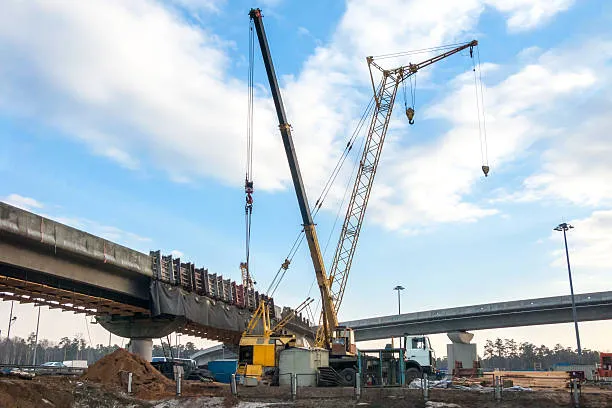
Lattice Boom Crane vs Telescopic Crane
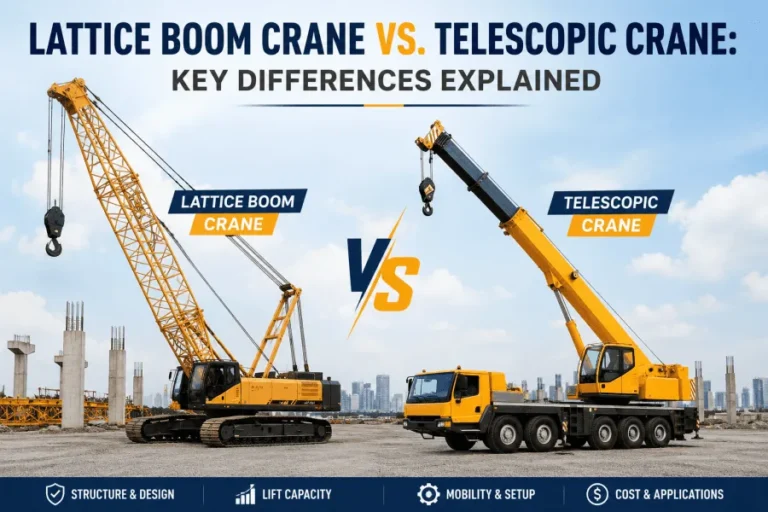
Although both lattice boom cranes and telescopic cranes are widely used in construction, they are designed for different lifting tasks. A lattice boom crane provides higher lifting capacity and longer reach, while a telescopic crane offers faster setup and greater mobility. Understanding these differences helps contractors select the most suitable crane for their project requirements.
| Feature | Lattice Boom Crane | Telescopic Crane |
|---|---|---|
| Boom Structure | Triangular lattice (truss) sections | Hydraulic box boom |
| Lifting Capacity | Excellent for heavy loads | Moderate to high |
| Maximum Boom Length | Longer through modular sections | Limited by telescopic extension |
| Assembly Time | Longer due to modular boom installation | Faster with hydraulic extension |
| Transportation | Requires multiple trailers for boom sections and counterweights | Easier to transport between jobsites |
| Mobility | Better suited for long-term projects | Ideal for projects requiring frequent relocation |
| Best Applications | Bridges, wind farms, petrochemical plants, heavy infrastructure | Building construction, maintenance, urban lifting |
| Initial Setup Cost | Higher | Lower |
| Working Efficiency | Excellent for continuous heavy lifting | Excellent for short-term lifting tasks |
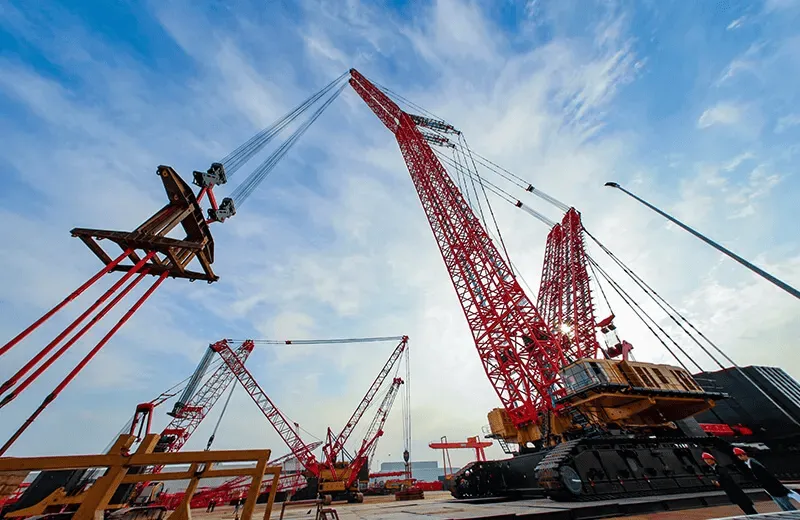
Typical Applications of Lattice Boom Cranes
Because of their strength and reach, lattice boom cranes are commonly used in large industrial and infrastructure projects.
Wind power installation
Installing wind turbine towers and blades often requires cranes with long reach and high lifting capacity.
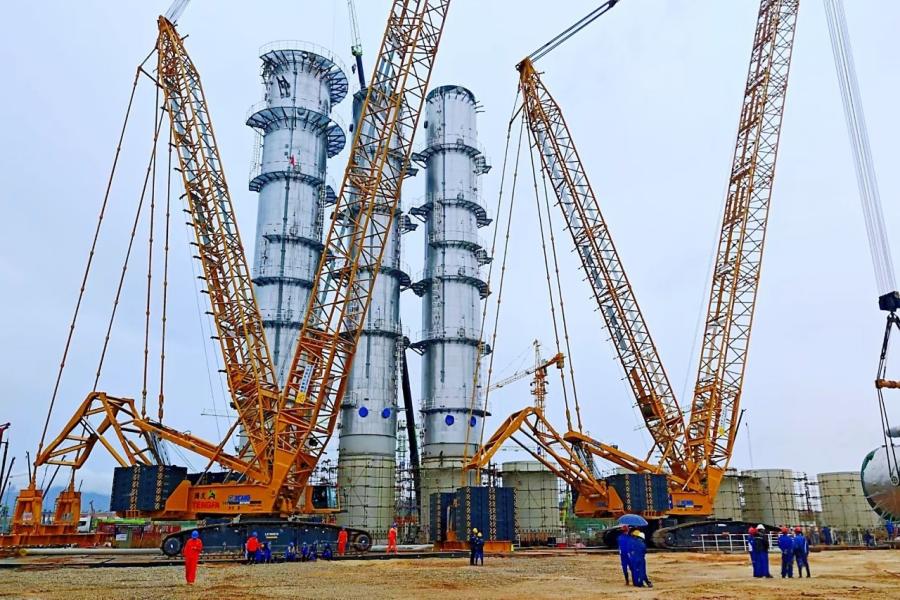
Petrochemical plant construction
Heavy equipment such as reactors, pressure vessels, and storage tanks must be lifted and positioned precisely.
Bridge and infrastructure construction
Large steel beams, bridge segments, and prefabricated structures are frequently lifted using lattice boom cranes.
Large-scale structural assembly
They are also used for erecting large steel structures in industrial plants and major construction projects.
Limitations of Lattice Boom Cranes
Although lattice boom cranes offer significant advantages, they also have some operational limitations.
Longer assembly time
The boom is made of multiple sections that must be assembled on site, which can take considerable time and labor.
Transportation complexity
Due to the large number of components and counterweights, transporting the crane between job sites requires multiple trucks and careful planning.
Less mobility during transport
Compared with telescopic cranes, lattice boom cranes are generally less convenient for rapid relocation.
Despite these limitations, they remain the preferred choice for extremely heavy lifting tasks.
What to Consider When Buying a Used Lattice Boom Crawler Crane
When choosing a used lattice boom crawler crane, contractors should evaluate more than the rated lifting capacity. The crane configuration, boom length, operating history, structural condition, and availability of replacement parts all affect its suitability for a project.
Key inspection points include:
- Boom structure: Check lattice sections, welds, pins, and connecting joints for cracks, deformation, or excessive wear.
- Lifting system: Inspect hoist winches, wire ropes, sheaves, brakes, and related components.
- Crawler undercarriage: Assess track links, rollers, sprockets, and overall wear.
- Operating history: Review maintenance records, working hours, and previous repairs where documentation is available.
- Load chart and configuration: Confirm that the crane’s rated capacity matches the required working radius, lifting height, and boom arrangement.
A pre-purchase inspection and review of the crane’s actual configuration can help buyers identify potential maintenance costs before committing to a machine.
Conclusion
A lattice boom crane is a powerful lifting machine designed for heavy-duty construction and industrial projects. Its truss-style boom structure provides a lightweight yet extremely strong framework, enabling the crane to achieve impressive lifting capacity and long reach.
Although assembly and transportation may take more time compared with telescopic cranes, lattice boom cranes excel in situations where maximum lifting strength, stability, and working radius are required. For large infrastructure developments, energy projects, and heavy industrial installations, they remain one of the most reliable lifting solutions available.
FAQ
A lattice boom crane is a heavy-duty lifting machine with a truss-style boom made of triangular steel frameworks. Its lightweight but strong structure allows it to lift extremely heavy loads over long distances while maintaining stability, making it ideal for large construction and industrial projects.
A lattice boom crane lifts loads using wire ropes, hoist winches, and counterweights. The modular boom sections and boom angle adjustments enable operators to control lifting height and radius, while the truss design distributes load forces efficiently for safe heavy lifting.
Lattice boom cranes offer high lifting capacity, long reach, excellent strength-to-weight ratio, and flexibility with modular boom sections. They are ideal for heavy industrial, infrastructure, and energy projects that require precise positioning of large or tall components.
Lattice boom cranes are widely used in wind turbine installation, petrochemical plants, bridge construction, and large-scale industrial projects. Their combination of long reach, stability, and lifting power makes them essential for heavy-duty and high-elevation lifting tasks.
Lattice boom cranes require longer assembly time and complex transportation due to modular boom sections and counterweights. They are less mobile compared to telescopic cranes, making them better suited for projects where maximum lifting capacity and stability are more important than rapid relocation.