
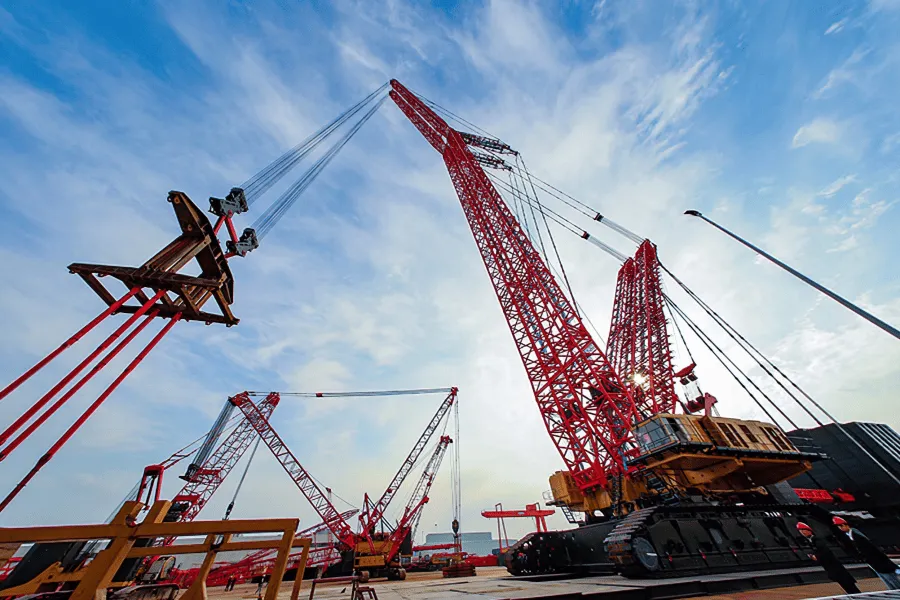
Crawler cranes are essential machines in heavy construction, known for their stability, lifting power, and ability to operate on challenging terrain. While understanding their structure is important, the real value lies in how these machines function during lifting operations.
This article focuses on how a crawler crane works, with a brief overview of its definition and components.
What Is a Crawler Crane and Its Main Components
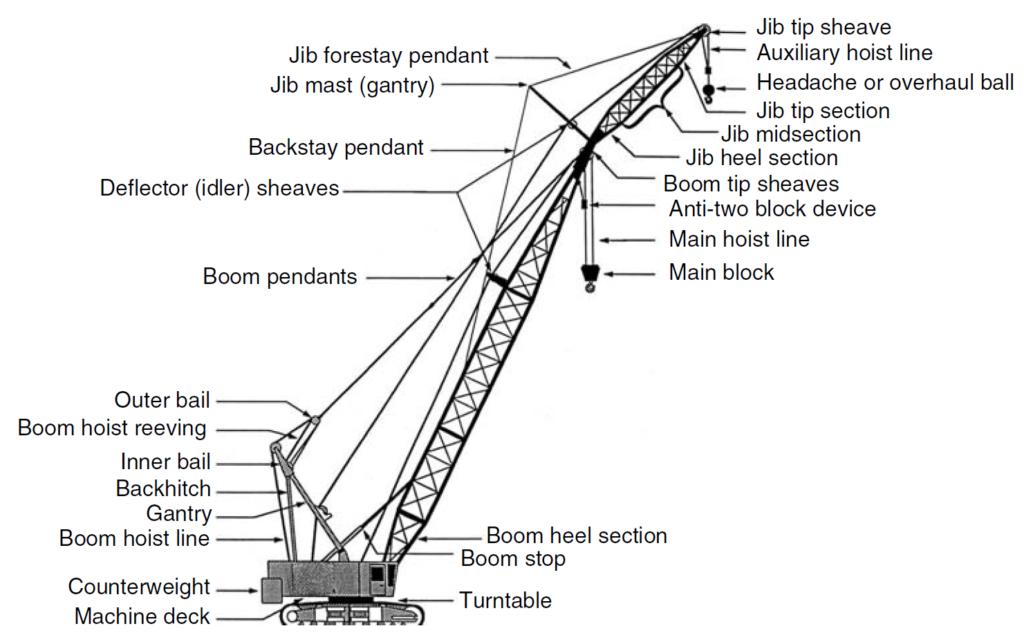
A crawler crane is a type of heavy lifting equipment mounted on tracked undercarriages instead of wheels. These tracks allow the crane to move across rough or soft ground while maintaining stability.
Its main components include:
- Undercarriage (Crawler Tracks): Provides mobility and distributes weight evenly
- Upper Structure (House): Contains the engine, operator cab, and control systems
- Boom: The main lifting arm, usually a lattice structure for heavy-duty lifting
- Counterweights: Balance the crane during lifting operations
- Hoisting System: Includes winches, wire ropes, and hooks for lifting loads
How Does a Crawler Crane Work?
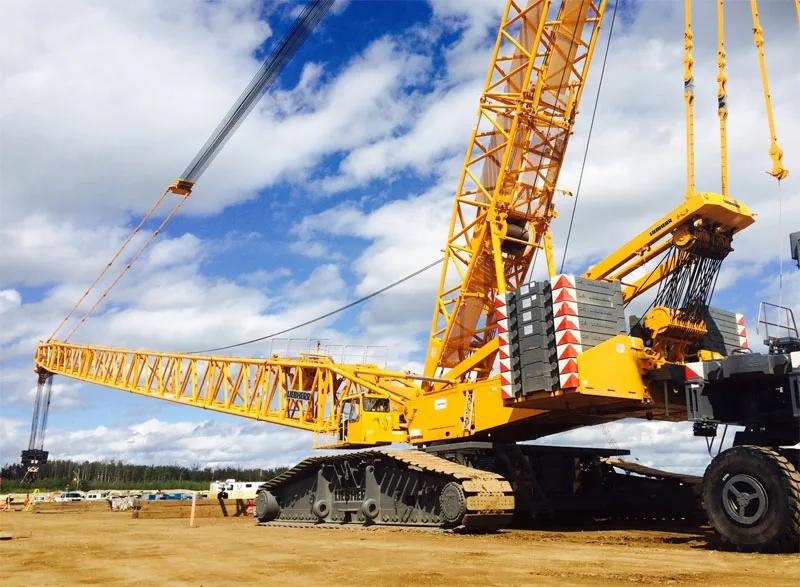
A crawler crane operates through a coordinated system of mechanical components and hydraulic power. The working process can be broken down into several key stages:
1.Positioning and Ground Preparation
Before lifting begins, the crane is positioned on-site using its crawler tracks. Because of its wide base, it does not require outriggers like mobile cranes.
Operators ensure:
- Ground stability and load-bearing capacity
- Proper crane alignment with the lifting area
- Correct configuration of boom length and counterweights
2.Load Rigging and Setup
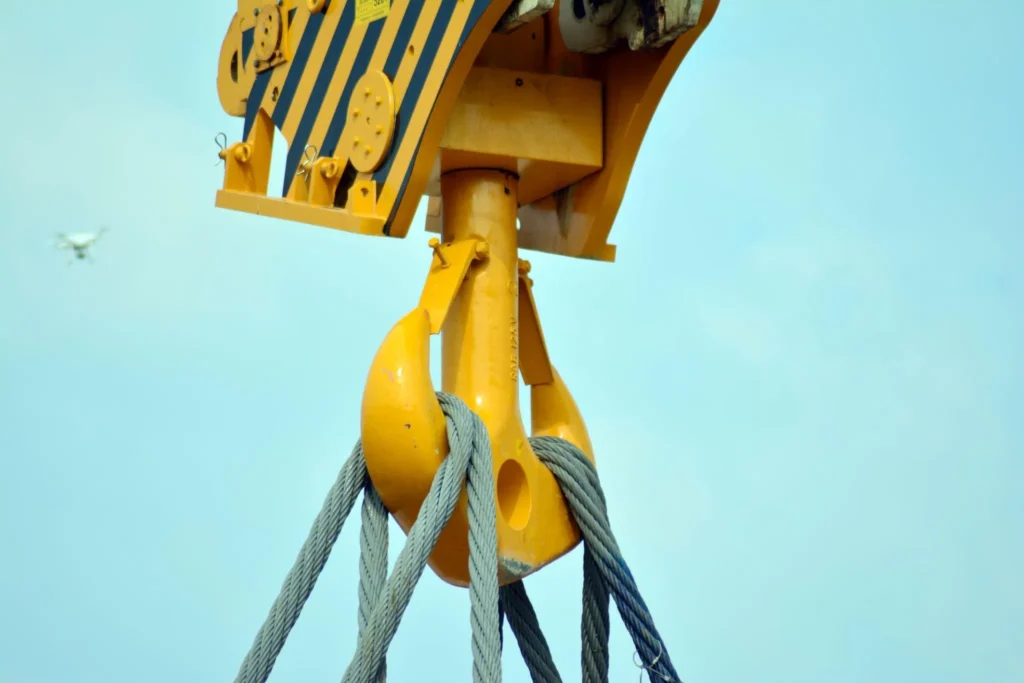
The load is attached to the crane hook using slings, shackles, or lifting beams. Proper rigging is critical for safety and balance.
At this stage:
- Load weight is verified against the crane’s load chart
- Center of gravity is identified
- Rigging equipment is inspected
3. Hoisting Mechanism (Lifting the Load)
The hoisting system uses winches powered by hydraulic motors to wind steel wire ropes and lift the load vertically.
Key actions include:
- Gradual tensioning of the wire rope
- Smooth lifting to avoid sudden load swing
- Continuous monitoring of load stability
4. Swing Operation (Horizontal Movement)
Once lifted, the crane’s upper structure rotates (swings) to move the load horizontally.
This movement is powered by:
- Slewing motors
- Rotating bearings
Operators must carefully control speed to prevent load oscillation.
5. Boom Control and Load Positioning
The boom angle and length determine the lifting radius and capacity.
Adjustments include:
- Raising or lowering the boom (luffing)
- Extending or configuring boom sections
- Coordinating boom angle with load placement
These adjustments directly affect lifting safety and efficiency.
6. Lowering and Placement
The final step is placing the load at the desired location.
This involves:
- Controlled lowering using the hoist system
- Fine positioning adjustments
- Ensuring stable placement before releasing the hook
How All Systems Work Together
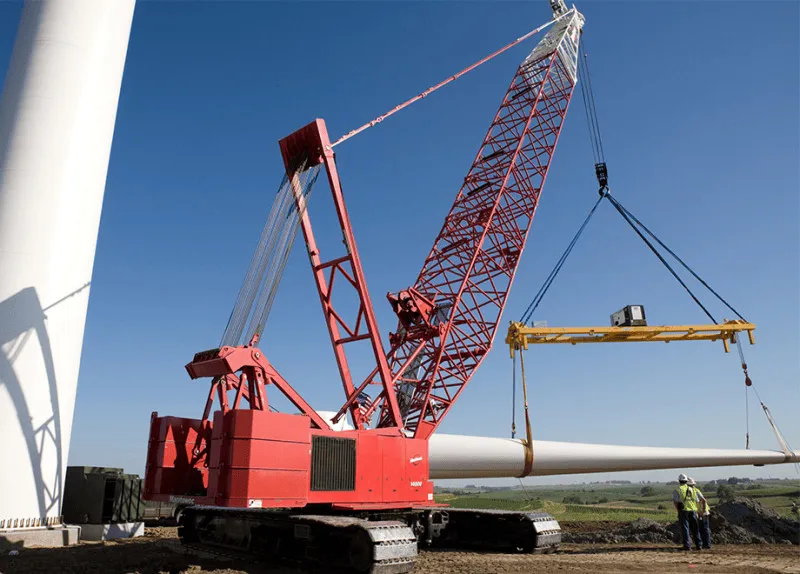
A crawler crane’s efficiency comes from the coordination of multiple systems:
- Hydraulic system → powers lifting, rotation, and movement
- Mechanical structure → supports load and maintains stability
- Control system → allows precise operator input
- Counterweight system → balances lifting forces
When synchronized properly, these systems allow the crane to handle extremely heavy loads safely.
Key Factors That Affect How a Crawler Crane Works
Several variables influence crane performance:
- Load weight and lifting radius
- Ground conditions
- Boom configuration
- Wind and weather conditions
- Operator experience
Understanding these factors is essential for safe operation.
Conclusion
A crawler crane works by combining hydraulic power, mechanical strength, and precise control systems to lift, move, and place heavy loads. From positioning and rigging to hoisting and final placement, every step requires careful coordination.
For contractors and equipment buyers, understanding how a crawler crane works is crucial for improving job site efficiency, ensuring safety, and selecting the right machine for the task.
Crawler cranes are among the most powerful and versatile lifting machines used in modern construction. Known for their stability, high lifting capacity, and ability to operate on challenging terrain, they are widely used in infrastructure, energy, and heavy industrial projects.
FAQ
A crawler crane is used for heavy lifting tasks in construction, such as building high-rise structures, bridges, and installing wind turbines. It is ideal for projects requiring high stability and lifting capacity.
A crawler crane lifts loads using a hoisting system powered by hydraulic motors. Steel wire ropes are wound through winches to raise and lower loads safely and smoothly.
Crawler cranes are more stable because they use wide tracks instead of wheels, which distribute weight evenly and eliminate the need for outriggers during operation.
Yes, a crawler crane can move slowly with a load over short distances, depending on ground conditions and load weight. However, this must be done carefully following safety guidelines.
Key factors include load weight, lifting radius, ground conditions, boom configuration, and weather conditions such as wind.