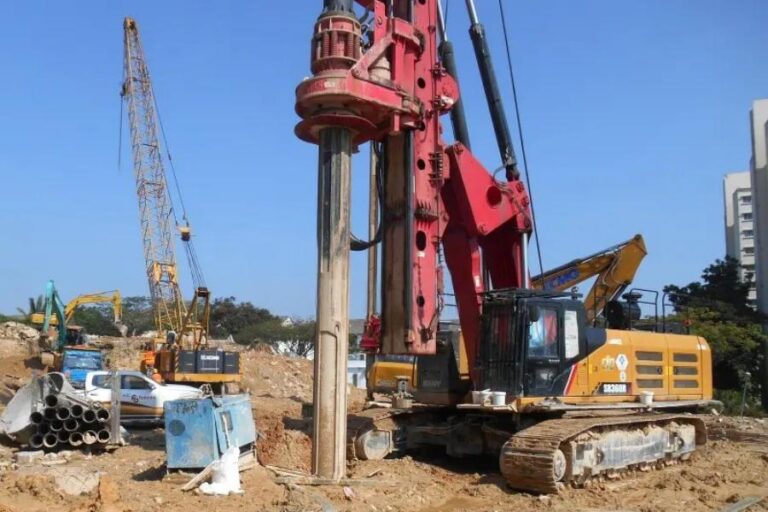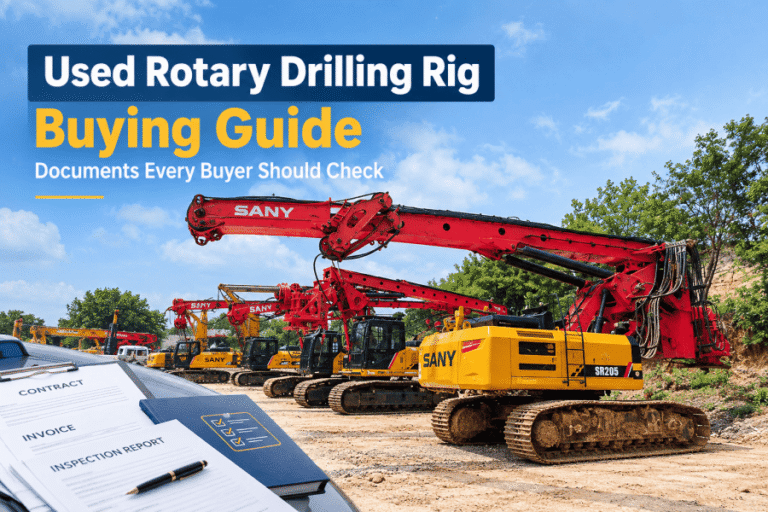

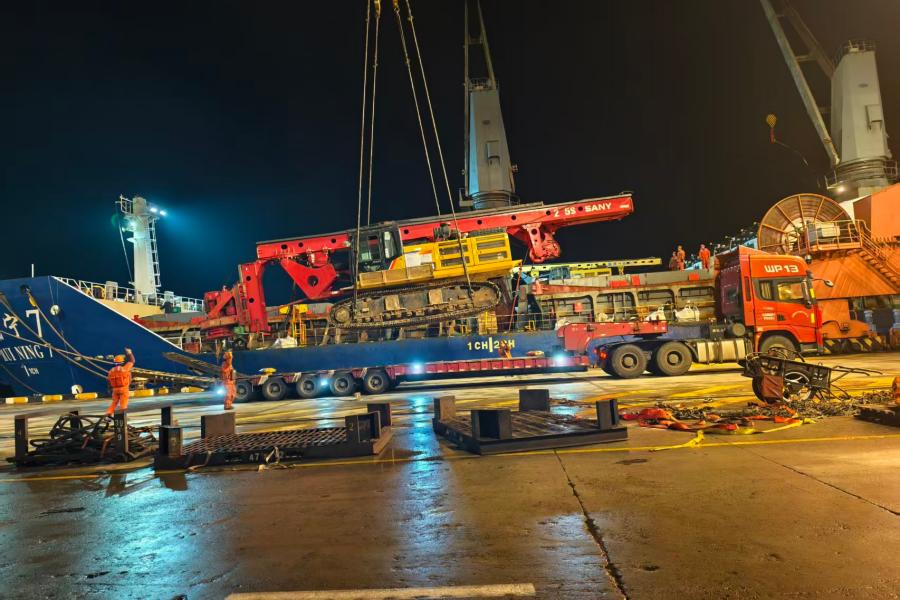
Transporting a used rotary drilling rig overseas is a complex process that involves dismantling, inland transportation, port handling, and ocean freight shipping. Because these machines are oversized and extremely heavy, international logistics must be carefully planned to ensure safe and efficient delivery.
Preparing the Rig for International Transport
Before export, the drilling rig must be inspected and prepared for shipping. This includes:
- Checking mechanical and hydraulic condition
- Cleaning and securing all components
- Recording machine specifications and weight
- Planning dismantling structure for transport
At this stage, logistics teams also confirm destination requirements such as import regulations and port restrictions.
Dismantling for Export Shipping
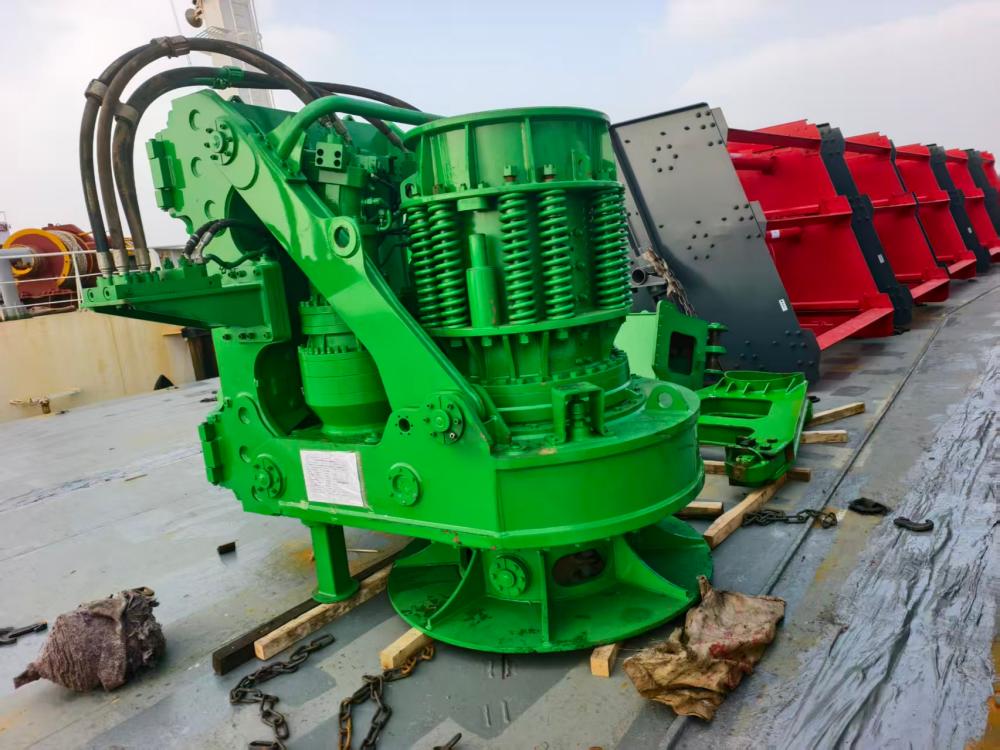
A full rotary drilling rig cannot be shipped in one piece, so it must be broken down into manageable parts.
Typical disassembly includes:
- Removing drilling tools (augers, buckets, casing tools)
- Detaching the Kelly bar
- Separating mast and chassis
- Removing counterweights
- Securing hydraulic systems
Each component is labeled, protected, and prepared for export handling.
Inland Transport to Port
After dismantling, all parts are transported to the export port using heavy-duty trucks.
Common transport equipment includes:
- Low-bed trailers for crawler base
- Flatbed trucks for mast and structural parts
- Modular trailers for oversized loads
During this stage, road permits and route planning are required due to oversized cargo regulations.
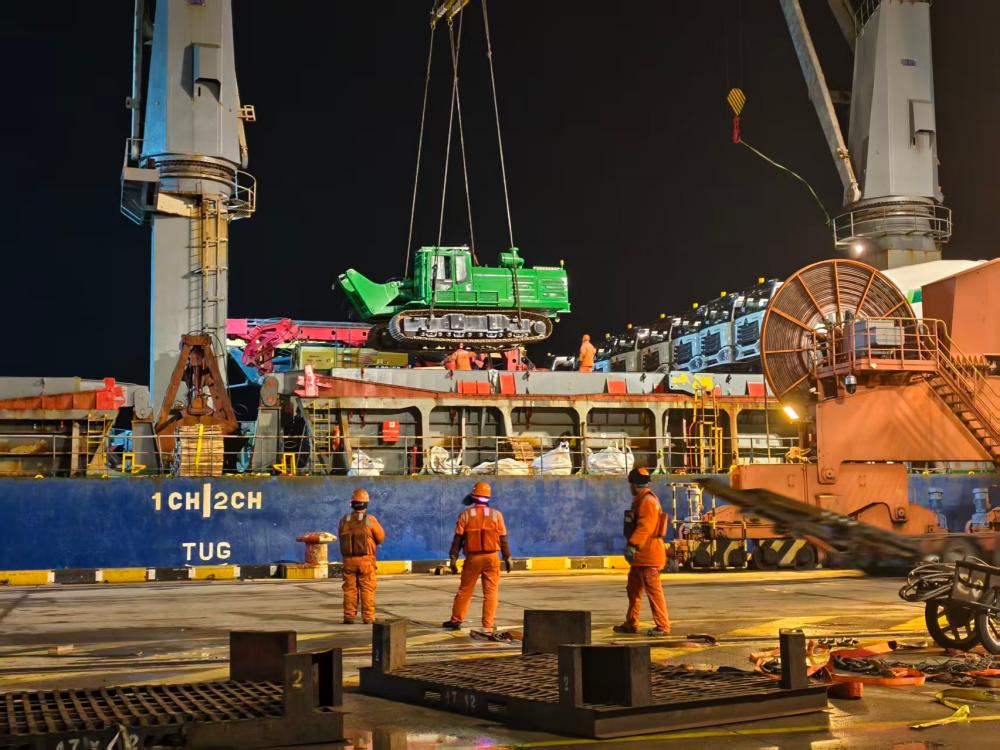
Port Handling and Export Loading Methods
At the port, the equipment is prepared for international shipping.
Main loading methods:
Ro-Ro Shipping (Roll-on/Roll-off)
If parts are still mobile, they are driven directly onto the vessel.
Flat Rack Container Shipping
Smaller disassembled components are fixed on flat rack containers.
Break Bulk Shipping
Heavy parts are lifted and loaded individually using cranes.
All equipment is securely fixed to prevent movement during ocean transport.
Ocean Freight to Overseas Destinations
Once loaded, the equipment is shipped to international destinations such as:
- Southeast Asia
- Middle East
- Africa
- South America
During sea transport, special attention is given to:
- Anti-corrosion protection
- Cargo stability
- Insurance coverage
- Transit time planning
Customs Clearance in Destination Country
After arrival, the rig must go through customs clearance. Required documents include:
- Bill of Lading
- Commercial Invoice
- Packing List
- Export Certificate
- Machine inspection records
Proper documentation ensures smooth import without delays.
Final Delivery and Site Assembly
After customs clearance:
- Equipment is transported to the job site
- Components are reassembled
- Full machine testing is conducted
- The rig is put into operation
At this stage, the drilling rig is fully ready for construction work.
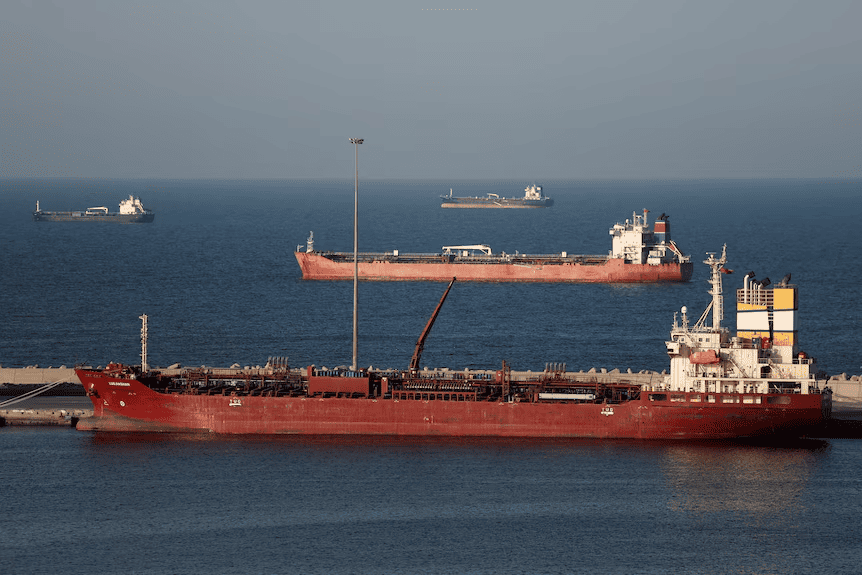
Impact of the Strait of Hormuz Disruption on Ocean Freight
In recent years, global ocean freight routes have been affected by geopolitical instability in key shipping corridors, especially the Strait of Hormuz. As one of the most important passages for international maritime trade, any disruption or partial closure in this region has a direct impact on heavy equipment transportation, including used rotary drilling rigs.
When the Strait of Hormuz is restricted, shipping lines are often forced to reroute vessels through longer alternative paths, such as detouring around the Arabian Peninsula or using transshipment hubs in Oman, the UAE, or India. This results in longer transit times, higher fuel consumption, and increased freight costs. In addition, war-risk insurance premiums and port congestion further raise overall logistics expenses.
For oversized cargo like drilling rigs, these changes also reduce vessel availability for break-bulk shipments, making booking schedules more competitive and less predictable. As a result, exporters and buyers must plan shipments earlier and work closely with experienced freight forwarders to secure stable routing and minimize delays.
Conclusion
Shipping a used rotary drilling rig overseas requires a structured logistics process that includes dismantling, inland transport, port operations, and ocean freight. Each step must be carefully coordinated to ensure safety, compliance, and cost efficiency.
For international buyers, working with experienced equipment suppliers and logistics teams is essential to ensure smooth delivery from origin to job site.
Rotary drilling rigs are transported by dismantling them into major components such as the mast, Kelly bar, and chassis. These parts are then shipped using Ro-Ro, flat rack containers, or break bulk vessels.
The best method depends on the size and weight of the equipment. Break bulk shipping is commonly used for large components, while flat rack containers are suitable for smaller parts.
Shipping time varies by destination but typically ranges from 20 to 45 days, including inland transport, port handling, and ocean freight.
Common documents include the Bill of Lading, Commercial Invoice, Packing List, export certificates, and machine inspection reports.
Disruptions in the Strait of Hormuz can increase transit time, raise freight costs, and limit vessel availability, especially for oversized cargo like drilling rigs.