
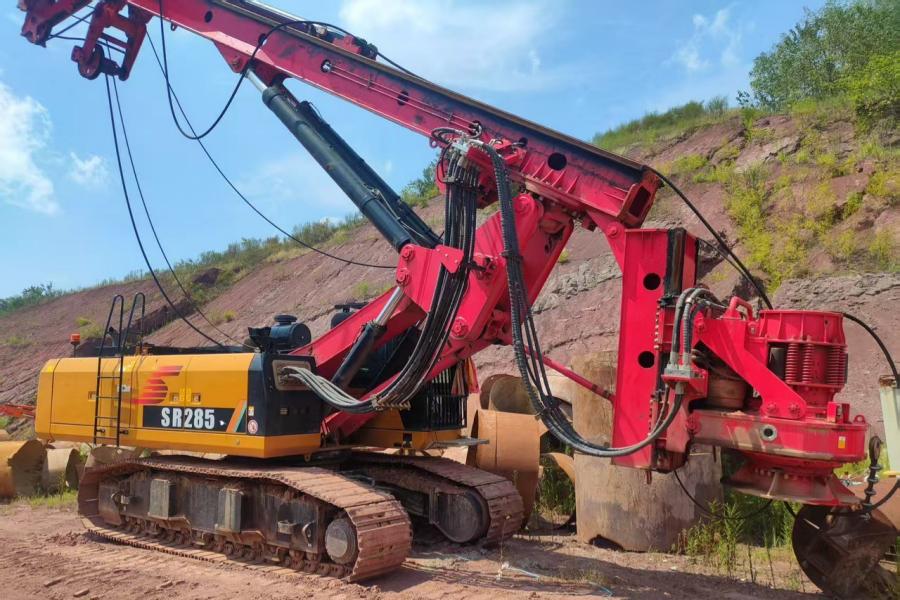
Buying a used rotary drilling rig is not simply a matter of comparing model, year, and price. A machine that looks clean and works normally during a short demonstration may still have hidden issues in the engine, hydraulic system, undercarriage, slewing mechanism, or drilling structure.
For contractors, dealers, and equipment buyers, a proper inspection before purchase can help avoid unexpected repair costs and downtime after delivery. This is especially important for used rotary drilling rigs, which often operate under high loads and demanding foundation conditions.
This guide covers the key areas to inspect before buying a used rotary drilling rig, from identification and operating hours to the engine, hydraulic system, drilling structure, undercarriage, and actual machine performance.
What Is a Used Rotary Drilling Rig?
A used rotary drilling rig is a previously operated foundation drilling machine offered for resale or continued use. It is commonly used for bored piles, cast-in-place piles, bridge foundations, building foundations, and other deep foundation projects.
Unlike new equipment, a used rig has an existing operating and maintenance history. Its condition can vary depending on working environment, maintenance, previous repairs, and component replacement.
The main advantage of used equipment is its lower initial purchase cost. A well-maintained rig can still provide reliable performance while reducing the capital investment required for foundation projects.
When comparing used rotary drilling rigs, buyers should consider not only the purchase price but also remaining service life, working capability, maintenance requirements, and overall operating costs.
Why Should You Inspect a Used Rotary Drilling Rig Before Buying?
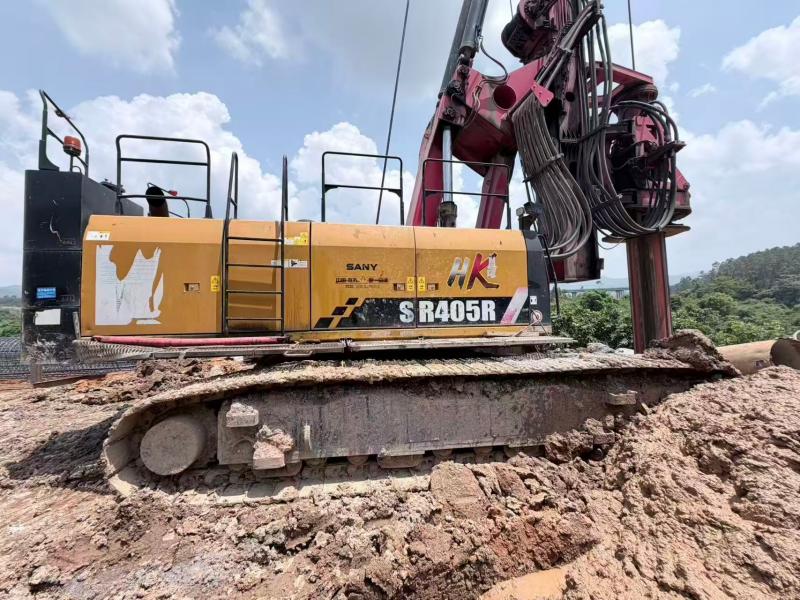
A used rotary drilling rig may look clean and operate normally during a short demonstration, but its actual condition can be very different from its appearance. Previous operating conditions, maintenance practices, repairs, and component replacements can all affect the machine’s remaining service life.
A proper pre-purchase inspection helps buyers:
- Identify potential mechanical or hydraulic problems
- Confirm the machine’s actual condition
- Check whether operating hours match physical wear
- Understand previous repairs and component replacements
- Estimate possible maintenance and replacement costs
- Reduce the risk of unexpected downtime after delivery
For high-value equipment, a detailed inspection is a relatively small investment compared with the potential cost of major repairs or prolonged downtime. It also gives buyers a stronger basis for negotiating the purchase price and agreeing on warranty or after-sales terms.
The purpose of an inspection is not to find a machine with absolutely no wear or previous repairs. Instead, it is to understand what condition the machine is in, what work has been carried out, what may need attention, and whether the overall cost is justified by its remaining working life.
Verify the Machine Identity and Basic Information
Before inspecting the mechanical condition, confirm that the machine you are looking at is actually the machine described by the seller.
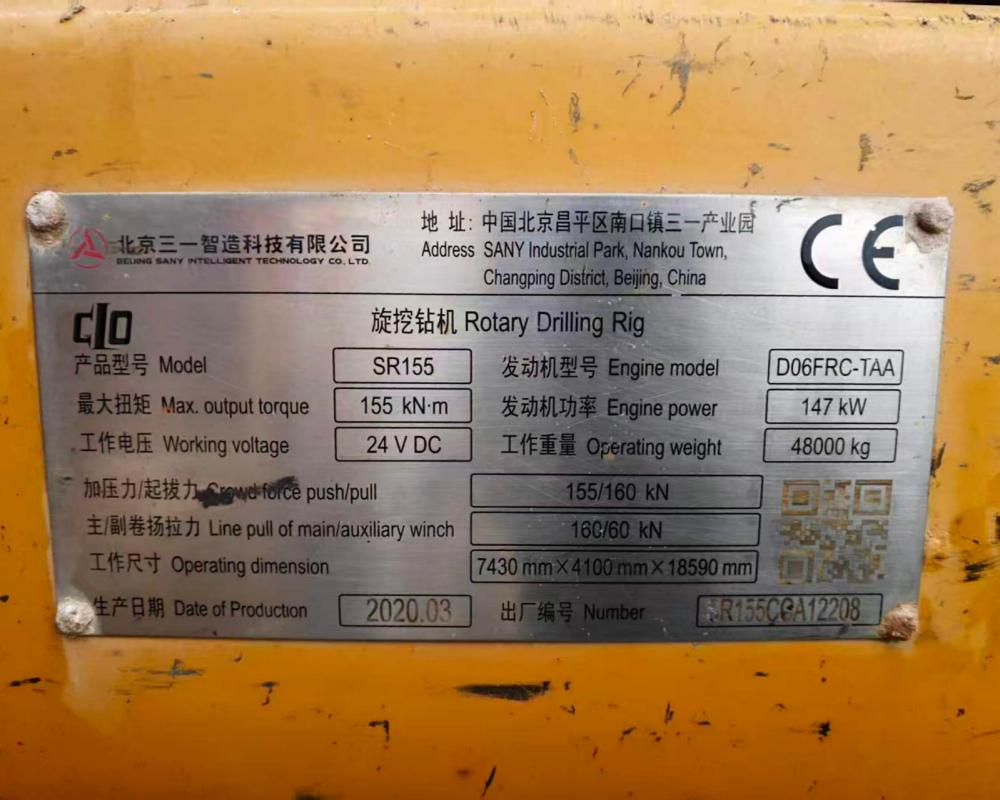
Check the Serial Number and Identification Plate
Start with the machine’s:
- Manufacturer
- Model
- Serial number
- Production year
- Chassis or frame number
- Engine model and serial number
The identification plate, frame/chassis number, and available documentation should be consistent.
If the machine has missing, altered, or unclear identification markings, treat this as a serious warning sign and investigate the machine’s history before proceeding.
For imported used rotary drilling rigs, also check whether the documentation matches the machine being offered, particularly when purchasing from an overseas supplier.
Check the Machine History
If available, request:
- Maintenance records
- Previous inspection reports
- Service invoices
- Major repair records
- Component replacement records
- Previous operating location
- Import or export documentation
A machine with a clear maintenance history is generally easier to evaluate than one with no service records.
Check the Actual Operating Hours — But Don’t Rely on the Hour Meter Alone
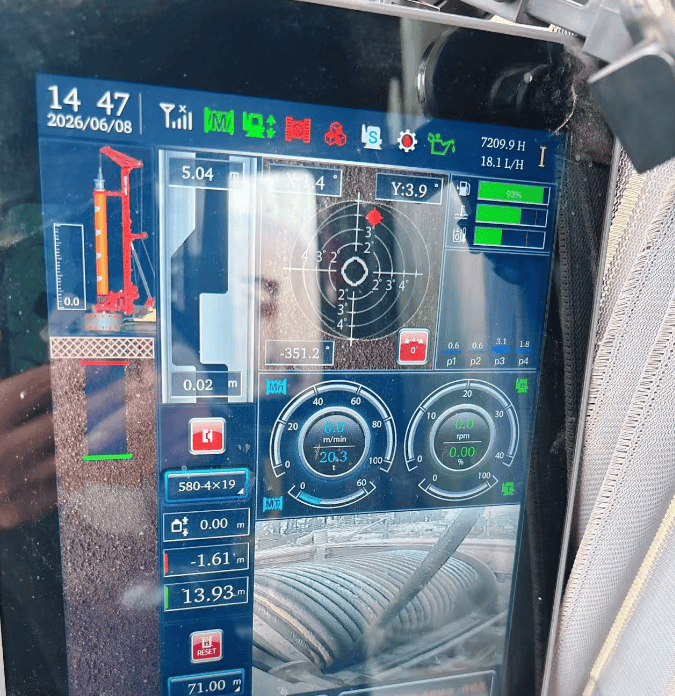
The hour meter is useful, but it should not be treated as the only indication of machine usage.
A used rotary drilling rig with relatively low indicated hours should still show a condition consistent with those hours. Compare the hour meter with the physical condition of the machine.
Look for consistency between the indicated hours and:
- Operator controls
- Pedals and switches
- Seat and cabin condition
- Track and undercarriage wear
- Kelly bar condition
- Drilling tools
- Hydraulic components
- Engine condition
- Maintenance records
For example, a machine showing unusually low hours but displaying extensive wear on its tracks, Kelly bar, drilling tools, pedals, and operator controls deserves closer inspection.
Why Operating Hours Matter
High working hours do not automatically mean a machine is unsuitable.
A well-maintained rotary drilling rig with substantial operating hours can sometimes be a better purchase than a low-hour machine with poor maintenance.
Instead of asking only:
“How many hours has the machine worked?”
A better question is:
“Do the operating hours, maintenance history, and physical condition tell the same story?”
Inspect the Engine Carefully
The engine is one of the most important components to inspect because engine repairs can be expensive and may affect the machine’s availability.
Check for:
- Oil leaks
- Coolant leaks
- Fuel leaks
- Excessive oil contamination
- Unusual engine noise
- Excessive vibration
- Exhaust smoke
- Starting performance
- Coolant temperature
- Oil pressure, where available
- Engine fault codes
Look for Signs of Previous Repairs
Major engine repairs often require components to be removed and reinstalled. During inspection, look carefully at accessible bolts, fasteners, covers, hoses, and connection points.
Signs such as:
- Fresh tool marks
- Damaged bolt heads
- Recently disturbed fasteners
- Fresh sealant
- Mismatched components
- New paint around an otherwise older component
may indicate previous repair work.
However, a repair history is not necessarily a reason to reject a machine. A professionally rebuilt engine with documented parts and service records can be preferable to an original engine that has been poorly maintained.
The key is to determine what was repaired, why it was repaired, and how the work was carried out.
Inspect the Hydraulic System
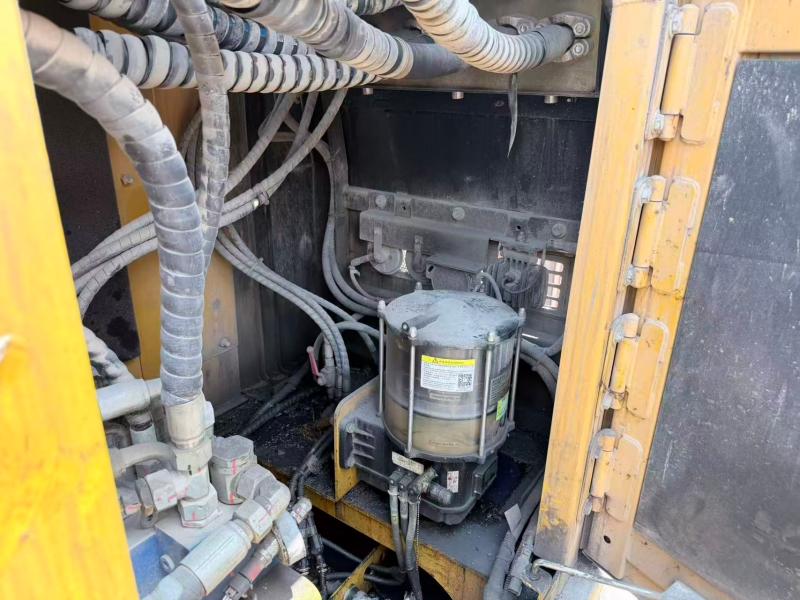
The hydraulic system is critical to rotary drilling rig performance. It controls many of the machine’s major functions, including drilling, crowding, slewing, winching, and traveling.
Pay particular attention to:
- Main hydraulic pumps
- Main control valve
- Hydraulic cylinders
- Hydraulic motors
- Hydraulic hoses
- Hydraulic tank
- Hydraulic fittings
- Hydraulic oil condition
- Oil leaks
Check the Hydraulic Pumps
Look for signs of:
- Oil leakage
- Replaced hoses or fittings
- Damaged fasteners
- Unusual noise
- Excessive vibration
- Slow or inconsistent movement
During operation, listen for abnormal pump noise and observe whether hydraulic functions respond smoothly.
A pump that becomes excessively noisy under load or shows unstable pressure may require further testing.
Check the Main Control Valve
Inspect the valve block and surrounding area for oil leakage.
Also test whether different machine functions operate smoothly without abnormal hesitation or pressure fluctuations.
Inspect the Main Structure and Drilling Components
The structural condition of a used rotary drilling rig is just as important as its engine and hydraulic system.
Inspect:
- Main frame
- Mast
- Boom
- Leader components
- Welding areas
- Pin connections
- Hydraulic cylinder mounting points
- Kelly bar
- Kelly bar drive system
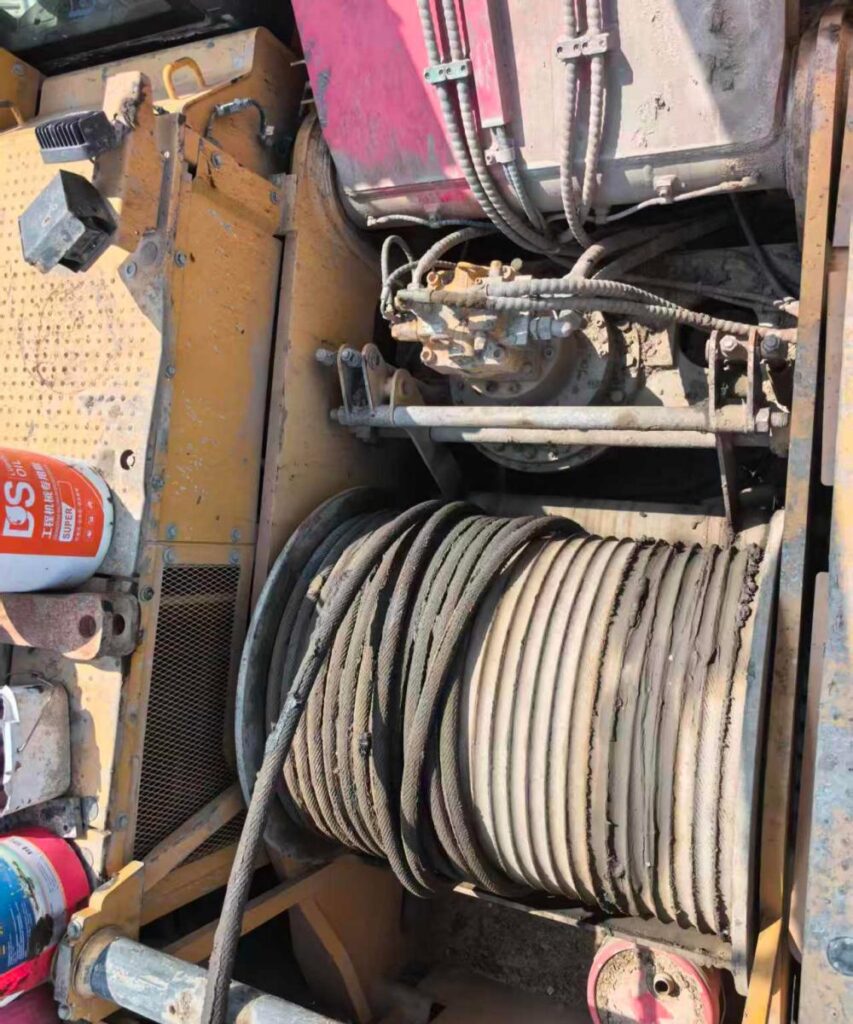
- Winches and wire ropes
Look Carefully for Weld Repairs
Pay particular attention to areas around:
- Boom and mast connections
- Structural joints
- Cylinder mounts
- Main frame
- High-load connection points
A repair weld does not automatically mean the machine should be rejected. What matters is where the repair was made, why it was necessary, and whether the repair was professionally executed.
Heavy welding, cracking, deformation, or repeated repairs in high-load structural areas should receive additional engineering inspection.
Inspect the Slewing System and Bearing
The upper structure of a rotary drilling rig must rotate smoothly and maintain stability under working loads.
During inspection, check the slewing system for:
- Excessive rotational play
- Abnormal noise
- Uneven movement
- Oil leakage
- Unusual vibration
With the machine safely positioned, the operator can perform controlled slewing movements while an experienced technician observes the connection between the upper structure and lower frame.
Excessive play should be investigated because repairs to the slewing system and bearing can be costly.
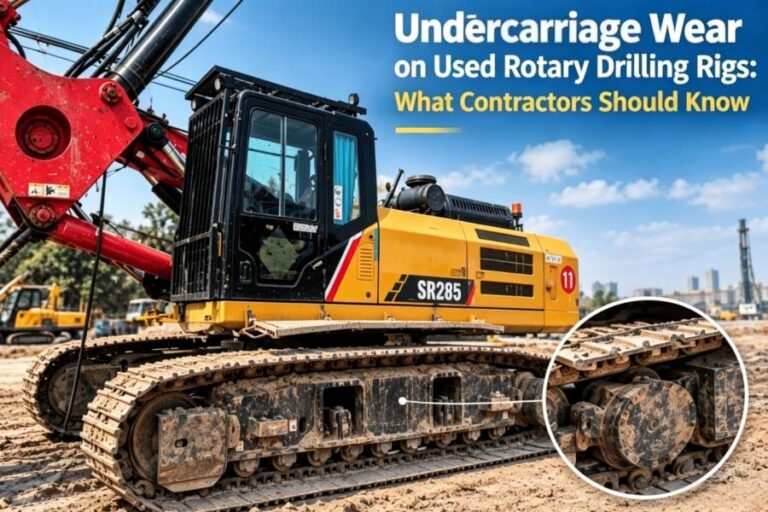
Check the Undercarriage and Tracks
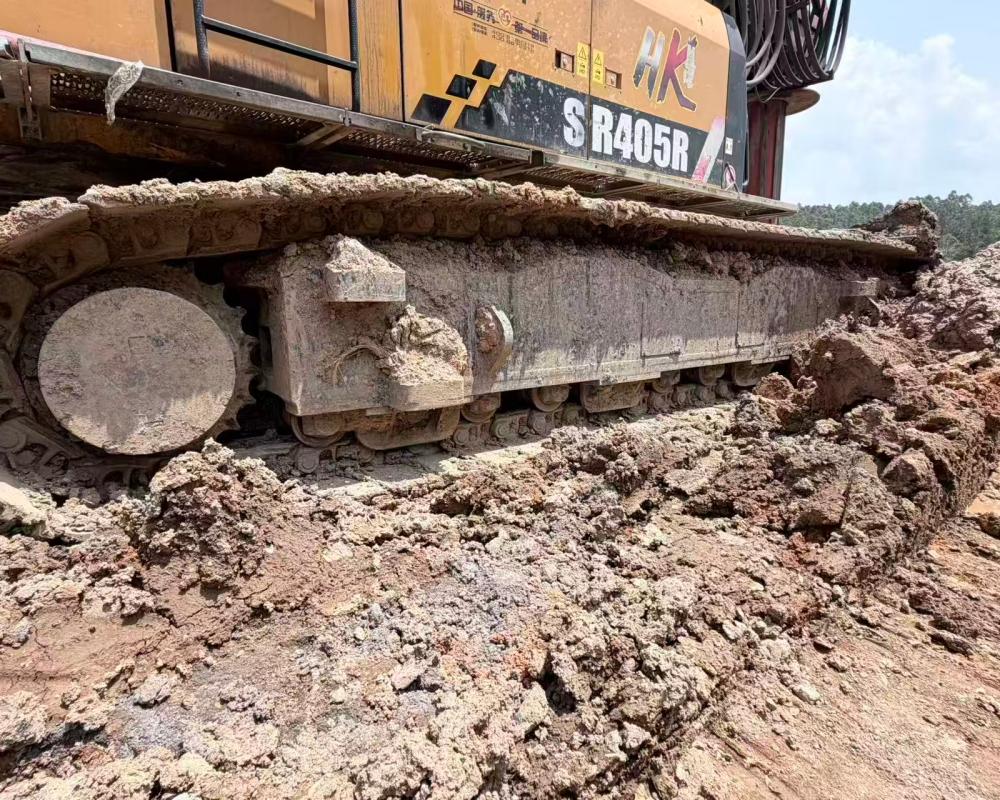
The undercarriage is another area where wear can accumulate, particularly on machines that have worked extensively on rough or abrasive sites.
Inspect:
- Track shoes
- Track chains
- Rollers
- Idlers
- Sprockets
- Track tension
- Travel motors
- Final drives
Don’t Look Only at the Track Shoes
Track shoe appearance alone does not tell the whole story.
A machine may have relatively good-looking track shoes but significant wear in the chains, rollers, sprockets, or other undercarriage components.
During the test drive, check whether the machine:
- Travels smoothly
- Moves straight
- Turns correctly
- Has sufficient travel power
- Can counter-rotate properly, where the machine design allows it
Uneven travel performance can indicate issues that require further diagnosis.
Inspect the Paint — But Don’t Judge the Machine by Appearance Alone
Fresh paint can make an older rotary drilling rig look almost new.
That does not necessarily mean there is a problem. Repainting is common when used equipment is prepared for resale.
The important question is why the machine was repainted.
Look for:
- Differences in paint texture
- Color differences between panels
- Overspray
- Paint around bolts and hydraulic fittings
- Fresh paint over welding repairs
- Uneven surfaces underneath the paint
Pay particular attention to structural areas.
If a machine has been completely repainted, combine the paint inspection with a check of welds, fasteners, panels, and repair history rather than assuming that repainting itself indicates a major problem.
Check for Oil Leaks and Abnormal Wear
Walk around the machine and inspect it before starting the engine.
Check for:
- Engine oil leaks
- Hydraulic oil leaks
- Coolant leakage
- Gearbox oil leakage
- Hydraulic cylinder seal leakage
- Wet hose connections
- Oil accumulation around pumps and valves
A small amount of surface oil around an old component may not indicate a major failure, but active leakage should be investigated.
Also look underneath the machine. Oil stains on the frame or ground can sometimes reveal leaks that are difficult to see from above.
Operational and Performance Testing
Start With a Cold Engine
If possible, inspect the machine before it has been warmed up.
Check:
- Starting performance
- Engine noise
- Exhaust smoke
- Battery condition
- Initial hydraulic response
A cold start can reveal issues that may be less noticeable after the engine has reached operating temperature.
Test the Main Machine Functions
Operate the machine through its major functions, including:
- Engine at idle and higher RPM
- Main winch
- Auxiliary winch, if equipped
- Slewing
- Boom and mast functions
- Crowd system
- Kelly bar movement
- Travel
- Drilling-related functions
Pay attention to whether movements are smooth, responsive, and consistent.
Test Engine and Hydraulic Performance Under Load
A machine that performs normally at idle may behave differently under working load.
Observe:
- Engine response
- RPM stability
- Coolant temperature
- Exhaust smoke
- Hydraulic response
- Winch performance
- Crowd force
- Slewing performance
- Travel performance
- Simultaneous hydraulic functions
Where possible, use appropriate diagnostic equipment to verify engine and hydraulic parameters against the manufacturer’s specifications.
Listen for Abnormal Noise and Vibration
During operation, pay attention to unusual sounds or vibration from:
- Engine
- Hydraulic pumps
- Gearboxes
- Slewing system
- Travel motors
- Winches
Changes in noise or vibration between no-load and loaded operation can provide useful clues about the condition of mechanical and hydraulic components.
Inspect the Cabin and Electrical System
The operator’s cabin can provide another indication of the machine’s working history.
Check:
- Control joysticks
- Switches
- Displays
- Air conditioning
- Warning indicators
- Cameras
- Work lights
- Horn
- Wipers
- Safety switches
- Wiring and connectors
More importantly, check whether the dashboard displays active or historical fault codes.
Electronic diagnostic systems can provide valuable information that may not be visible during a normal walk-around inspection.
Use a Four-Step Inspection Method
For buyers evaluating several used rotary drilling rigs, a structured inspection process is more reliable than simply looking at the machine and taking it for a short drive.
A practical approach is:
Step 1: Look
Inspect:
- Identification numbers
- Paint
- Welds
- Engine
- Hydraulic system
- Kelly bar
- Undercarriage
- Oil leaks
- Component condition
Step 2: Listen
Listen for abnormal sounds from:
- Engine
- Hydraulic pumps
- Slewing system
- Winches
- Travel motors
- Gearboxes
Step 3: Operate
Test the machine through:
- Engine operation
- Hydraulic functions
- Winching
- Slewing
- Traveling
- Mast and boom movements
- Drilling-related functions
Where practical, testing under realistic working conditions is much more informative than a few minutes of unloaded operation.
Step 4: Verify
Before payment, verify:
- Machine identification
- Serial numbers
- Documents
- Maintenance history
- Working hours
- Repair history
- Included accessories
- Purchase contract
- Warranty or after-sales terms
Be Careful With the Purchase Contract
A detailed inspection is important, but the purchase agreement is equally important.
The contract should clearly identify:
- Manufacturer
- Model
- Production year
- Machine serial number
- Frame/chassis number
- Engine information
- Agreed machine condition
- Included equipment
- Spare parts, if any
- Delivery terms
- Payment terms
- Inspection arrangements
- Warranty or agreed after-sales support
The machine delivered should match the machine described in the contract.
For international purchases, buyers should also confirm shipping documents, customs-related documentation, ownership documents, and any other paperwork required in the destination market.
Consider a Professional Pre-Purchase Inspection
For a high-value used rotary drilling rig, an independent inspection can be worth the additional cost.
A qualified technician can perform checks that are difficult to complete through visual inspection alone, such as:
- Hydraulic pressure testing
- Engine diagnostics
- Oil analysis
- Electrical diagnostics
- Component condition assessment
- Structural inspection
- Undercarriage measurements
This is particularly useful when buying remotely or purchasing a machine from another country.
A few hours of professional inspection can potentially prevent much larger repair and downtime costs later.
Common Mistakes When Buying a Used Rotary Drilling Rig
Several mistakes are easy to make when evaluating used equipment.
Choosing Based Only on Price
A low purchase price does not necessarily mean a lower total cost.
Consider:
Purchase Price + Repairs + Parts + Transportation + Downtime = Actual Cost
Trusting the Hour Meter Completely
Operating hours should be compared with the machine’s physical condition and service history.
Focusing Too Much on Paint
A clean appearance does not tell you much about the condition of the engine, hydraulic system, undercarriage, or drilling structure.
Testing Only at Idle
Many problems appear only when the machine is operating under load.
Ignoring the Kelly Bar
The Kelly bar is a major working component and can represent a significant future maintenance expense if heavily worn.
Skipping the Documentation Check
A mechanically sound machine can still create problems if identification numbers and ownership or import documents are inconsistent.
Conclusion
Buying a used rotary drilling rig requires more than checking its age, operating hours, and appearance. The condition of the engine, hydraulic system, drilling structure, Kelly bar, slewing system, undercarriage, and control system should all be evaluated before making a purchase decision.
A machine with higher operating hours is not necessarily a bad investment if it has been properly maintained and major components are in good condition. Likewise, a low-hour machine with questionable records or extensive repairs may carry significant risks.
The most reliable approach is to combine visual inspection, operating tests, maintenance records, component checks, and professional diagnostics. For high-value equipment, taking the time to inspect the machine properly before purchase can make a major difference to long-term operating costs and reliability.
FAQs : Buying a Used Rotary Drilling Rig
Check the machine’s identification, operating hours, maintenance history, engine, hydraulic system, structural components, Kelly bar, undercarriage, electrical system, and actual operating performance. Purchase and ownership documents should also be verified before payment.
Not necessarily. A used rotary drilling rig with high operating hours can still be a good investment if it has been properly maintained and major components remain in good condition. Operating hours should be evaluated together with physical wear and maintenance records.
Look for repair records as well as physical signs such as fresh tool marks, disturbed fasteners, fresh sealant, mismatched components, welding repairs, or newer components on an older machine. These signs should be checked against the machine’s service history.
Yes. A proper test should include a cold start, engine operation, hydraulic functions, winches, slewing, mast and boom movements, travel, and drilling-related functions. Where possible, the machine should also be evaluated under working load.
For a high-value machine, a professional pre-purchase inspection is strongly recommended, especially when buying remotely or internationally. A qualified technician can perform hydraulic pressure testing, engine diagnostics, structural inspection, oil analysis, and other checks that may not be possible through a visual inspection alone.