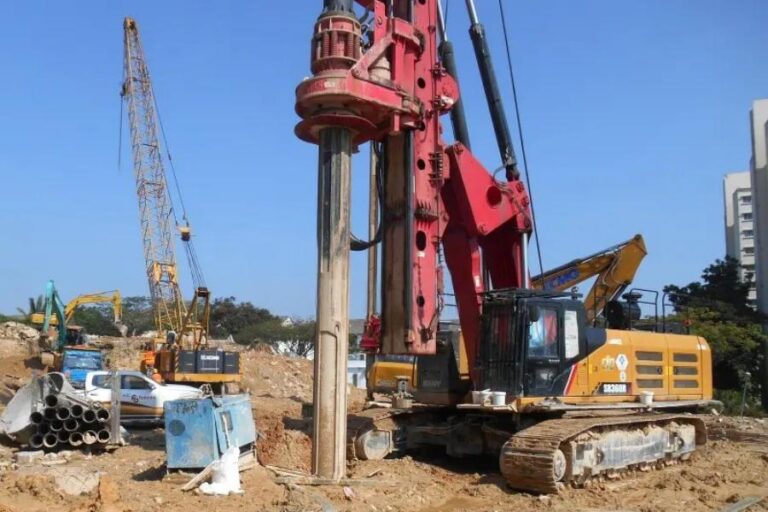
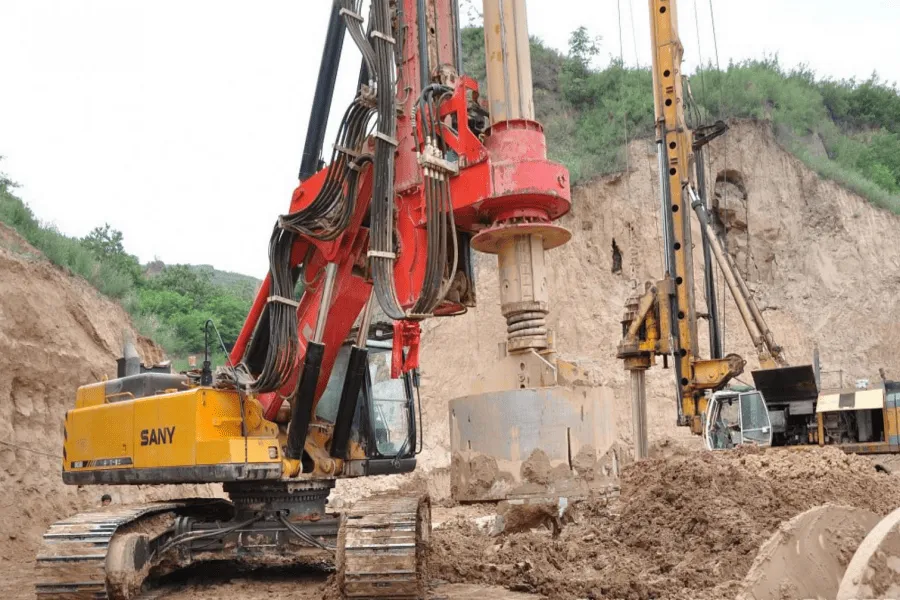
Selecting a used drilling rig for a piling project requires more than comparing the machine’s maximum drilling diameter. Pile diameter, drilling depth, formation strength, rotary torque, Kelly bar configuration, crowd force, and drilling tools all affect the actual performance of a rotary drilling rig.
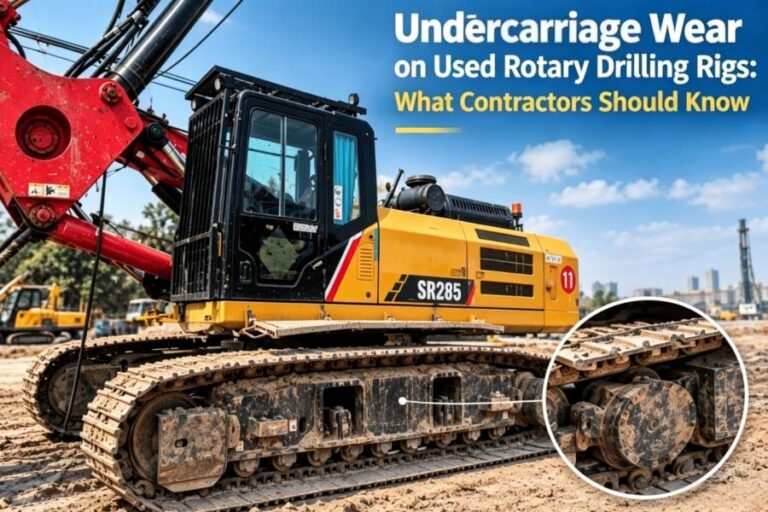
For contractors purchasing used equipment, the machine’s original specifications are only the starting point. The actual configuration and condition of the rotary head, Kelly bar, hydraulic system, main winch, and undercarriage should also be evaluated.
SANY and XCMG offer a broad range of rotary drilling rigs that cover medium-sized building piles through large-diameter foundation work. Models such as the SANY SR155, SR215, SR235, SR285 and SR360, together with XCMG XR180, XR220, XR240 and XR280, provide useful examples for matching machine capacity to different pile requirements.
Match Pile Diameter With Rig Capacity
Pile diameter determines the size of the drilling tool, but it does not independently determine the required rig.
A 1,500 mm pile drilled through soft clay may require considerably less machine capacity than a 1,500 mm pile drilled through dense gravel or weathered rock. The same applies to drilling depth. As the hole becomes deeper, the weight of the Kelly bar and drilling tool increases, while extraction loads become more significant.
When evaluating a used drilling rig, compare the required pile diameter with:
- Rated rotary torque
- Kelly bar configuration
- Maximum drilling depth
- Crowd force
- Main winch capacity
- Operating weight
- Compatible drilling tools
The objective is not to select the largest machine available, but to find a rig with sufficient operating margin for the actual project.
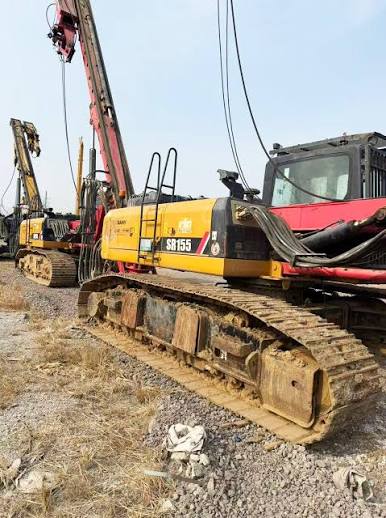
Smaller Piles: SANY SR155 and Similar Rigs
For building foundations, retaining structures, and other projects involving relatively small or medium pile diameters, a compact rotary drilling rig can provide better overall economics.
The SANY SR155 is an example of a smaller-class rotary drilling rig that can be considered for projects where access, transportation, and operating cost are important factors.
It can be a practical choice when the project involves:
- Medium or smaller pile diameters
- Moderate drilling depths
- Urban construction sites
- Limited working space
- Relatively manageable formations
A smaller rig can also reduce mobilization costs compared with using a large foundation rig for a project that does not require its additional capacity.
However, buyers should verify the actual Kelly bar and tooling configuration of the used SR155 rather than selecting the machine based solely on the model designation.
Medium-Diameter Piles: SANY SR215 and SR235
The SANY SR215 and SR235 represent a higher-capacity class suitable for a wider range of bored piling applications.
These machines can be considered for projects involving approximately 1,500–2,000 mm class piles, depending on drilling depth, formation, tooling, and machine configuration.
The SR235 is particularly useful as an example because its factory specifications can support large-diameter drilling configurations. SANY lists a maximum drilling diameter of up to 2,000 mm for certain SR235 configurations.
For a used SR235, however, buyers should check:
- Actual Kelly bar length and type
- Rotary head condition
- Rated torque
- Crowd system performance
- Main winch condition
- Hydraulic system pressure and response
- Wear on the Kelly bar and drilling tools
A machine advertised as capable of drilling a certain maximum diameter does not mean that it will achieve that diameter efficiently in every geological formation.
Larger Piles: SANY SR285 and XCMG XR240
When pile diameter increases toward the 2,000 mm range, the required machine capacity becomes more significant.
The SANY SR285 and XCMG XR240 are examples of rigs that can be evaluated for larger-diameter bored piling.
XCMG’s XR240E, for example, is rated at approximately 240 kN·m of maximum output torque and has published drilling configurations extending to large diameters and significant depths.
SANY’s SR285R-MIII is listed with a maximum drilling diameter of up to 2,200 mm under specified configurations.
For these machines, selection should focus on the relationship between tool diameter, torque, Kelly bar length, and formation resistance.
For example, a 2,000 mm pile in soft soil does not impose the same load on the rotary system as a 2,000 mm pile drilled through dense gravel and weathered rock.
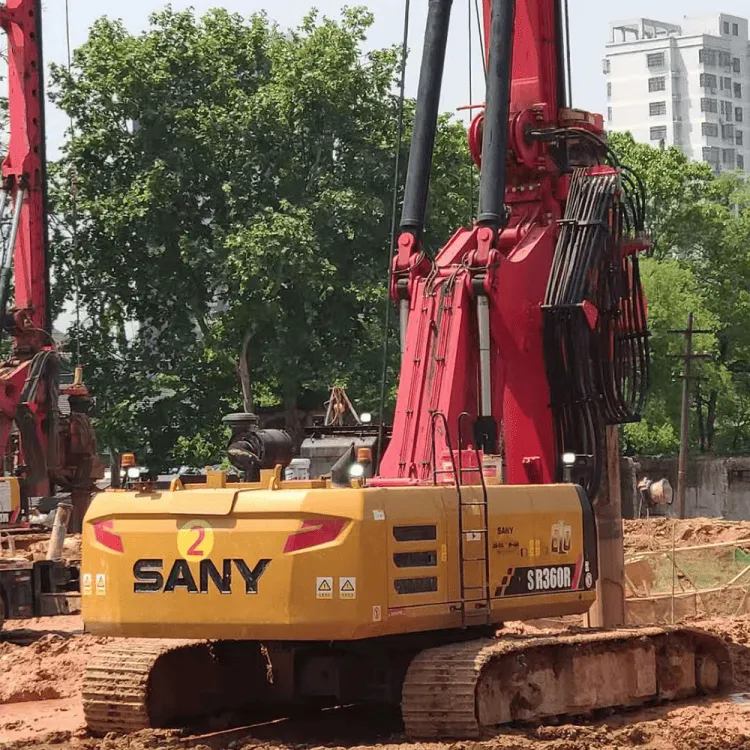
Large-Diameter and Deep Piles: SANY SR360 and XCMG XR280 Class
For major infrastructure projects, bridge foundations, and deep bored piles, a larger rig may be required.
The SANY SR360 is an example of a heavy-class rotary drilling rig designed for larger foundation applications. Certain SR360 configurations are rated for drilling diameters up to approximately 2,500 mm and drilling depths approaching 100 m.
The XCMG XR280 class is another option to consider when a project requires higher torque and greater drilling capacity.
At this level, buyers should evaluate more than the maximum drilling diameter. Particular attention should be given to:
- Rotary torque
- Kelly bar type and length
- Maximum crowd force
- Main winch capacity
- Machine operating weight
- Mast and structural condition
- Hydraulic system performance
For deep piles, the Kelly bar configuration can be as important as the rated maximum diameter.
Why Kelly Bar Configuration Matters
Two used drilling rigs of the same model can have different practical drilling capabilities because they may be equipped with different Kelly bars.
For example, a project requiring:
Ø1,800 mm pile × 40 m drilling depth
needs to be evaluated against the actual Kelly bar configuration, not simply the machine’s maximum drilling depth shown in a general catalogue.
Important factors include:
- Number of Kelly bar sections
- Extended length
- Kelly bar type
- Kelly bar diameter
- Locking mechanism
- Wear condition
- Compatibility with the rotary head
When purchasing used equipment, inspect the Kelly bar for wear on the locking surfaces, deformation, cracks, and excessive clearance. Significant wear can affect drilling efficiency even when the base machine remains mechanically sound.
Ground Conditions Can Change the Required Rig Class
Pile diameter alone is not enough to determine rig capacity.
Consider two projects with the same Ø1,800 mm pile:
Project A:
25 m depth, clay and medium-density sand.
Project B:
35 m depth, dense gravel followed by weathered rock.
Project B may require a higher-capacity machine because of the increased torque, crowd force, drilling time, and tool resistance.
For harder formations, the rig may also need to work with:
- Rock augers
- Heavy-duty drilling buckets
- Core barrels
- Roller bits
- Casing systems
This is why a SANY SR285 or SR360 may be more appropriate than a smaller rig for certain large-diameter rock or mixed-ground applications, even when the nominal pile diameter is similar.
Compare the Machine and Tool as One Drilling System
A used rotary drilling rig should not be evaluated separately from its drilling tools.
For example, a contractor may purchase an SR235 for a 1,500 mm bored pile project. If the rig is supplied with a suitable Kelly bar and drilling bucket, it may perform efficiently in the intended formation.
For a rock project with the same pile diameter, however, the required configuration may include a rock auger or core barrel, and the machine may need greater torque and crowd force.
The complete system should therefore be considered:
Base Rig + Rotary Head + Kelly Bar + Drilling Tool + Ground Conditions
This provides a more accurate assessment of the machine’s suitability than comparing maximum drilling diameter alone.
Used Drilling Rig Selection: A Practical Comparison
The following table can be used as a starting point when comparing common used rotary drilling rigs:
| Model | Typical Position | Suitable Project Direction |
|---|---|---|
| SANY SR155 | Compact / medium class | Smaller building and foundation piles |
| SANY SR215 | Medium class | General bored piling |
| SANY SR235 | Medium-heavy class | Medium to large bored piles |
| SANY SR285 | Heavy class | Larger-diameter and deeper foundation piles |
| SANY SR360 | Heavy-duty class | Large-diameter infrastructure piles |
| XCMG XR180 | Medium class | Building and general foundation projects |
| XCMG XR220 | Medium-heavy class | Medium and large bored piles |
| XCMG XR240 | Heavy class | Larger-diameter foundation work |
| XCMG XR280 | Heavy-duty class | Deep and large-diameter piling |
These categories are not fixed operating limits. The actual capability of a used machine depends on its year, configuration, Kelly bar, tooling, geological conditions, and mechanical condition.
What Should Used Equipment Buyers Prioritize?
Once the required pile diameter and drilling depth are established, buyers should evaluate the used machine in the following order:
1. Project requirements
Pile diameter, depth, geology, and construction method.
2. Rig configuration
Torque, crowd force, Kelly bar, winch capacity, and drilling depth.
3. Tool compatibility
Drilling bucket, auger, core barrel, casing, and other attachments.
4. Mechanical condition
Rotary head, hydraulic system, engine, main winch, Kelly bar, and undercarriage.
5. Transportation and operating cost
Overall machine weight, dimensions, mobilization requirements, and expected fuel and maintenance costs.
This approach helps contractors avoid choosing a used rig simply because it has a larger published maximum drilling diameter.
Choosing the Right Used Drilling Rig
There is no single best used drilling rig for every pile size. A SANY SR155 may be more economical for a compact foundation project, while an SR235 or XCMG XR240 may provide a better balance for medium and large bored piles. For larger infrastructure projects, machines such as the SANY SR285, SR360, or XCMG XR280 can offer the additional torque, drilling depth, and structural capacity required.
For MaxTop, the most important selection principle is simple:
Choose the rig according to the complete drilling requirement—not the maximum pile diameter printed in the specification sheet.
The actual Kelly bar, rotary torque, drilling tools, geology, depth, and machine condition should all be considered before purchasing a used drilling rig.
FAQ
Pile diameter should be evaluated together with drilling depth, ground conditions, rotary torque, crowd force, Kelly bar configuration, and drilling tools. A larger pile does not always require the largest available rig.
The SANY SR235 can be suitable for medium to large bored piles depending on its specific configuration. SANY lists a maximum drilling diameter of up to 2,000 mm for certain SR235 configurations, but actual performance depends on geology, Kelly bar, tooling, and machine condition.
The SR285 belongs to a higher-capacity class than the SR235, offering greater drilling capacity for larger and deeper foundation applications. The appropriate model depends on pile diameter, depth, geological conditions, and required drilling tools.
Kelly bar length and type directly affect achievable drilling depth and compatibility with the rotary head and drilling tools. Used equipment should be checked for Kelly bar wear, deformation, locking condition, and actual configuration.
SANY and XCMG offer a wide range of rotary drilling rigs for different piling applications. Models such as the SANY SR155, SR215, SR235, SR285, SR360 and XCMG XR180, XR220, XR240, and XR280 can be considered according to project requirements and the actual condition of each used machine.