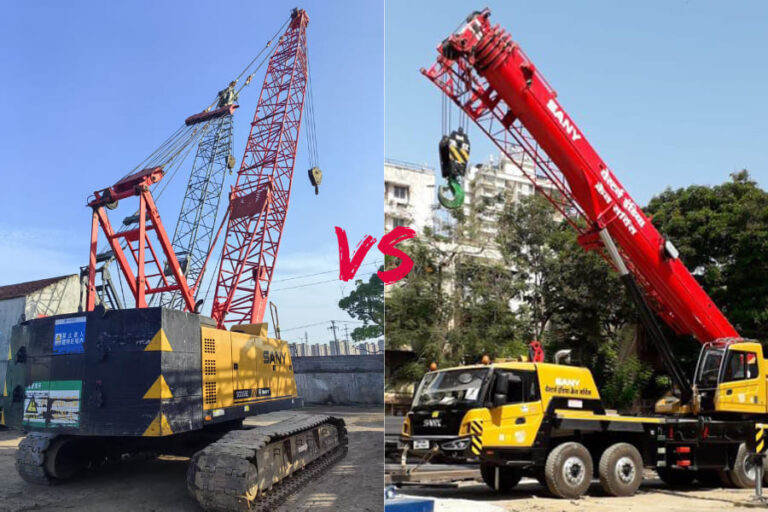

In modern construction and infrastructure projects, choosing the right crane can significantly impact efficiency, safety, and overall project cost. Among the most widely used mobile cranes are truck cranes and all terrain cranes.
Although both are designed for lifting and transportation, they differ greatly in chassis design, mobility, lifting performance, and application scenarios. Understanding these differences will help contractors and equipment buyers select the most suitable machine for their projects.
What Is a Truck Crane?
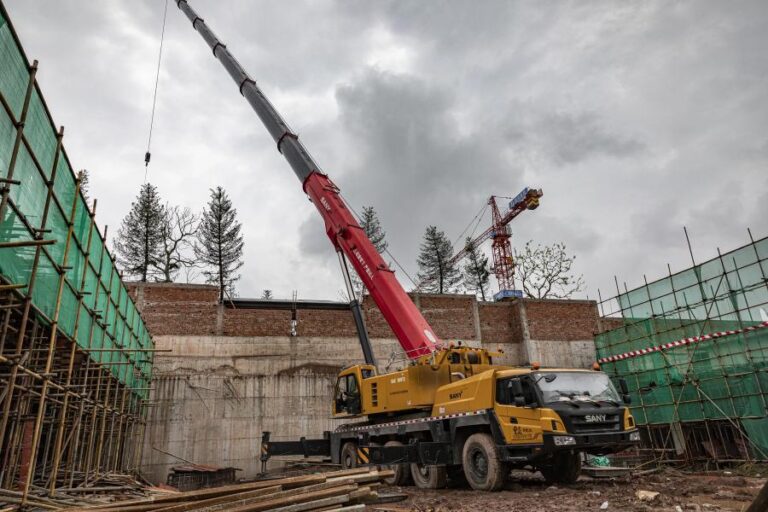
A truck crane is mounted on a standard or specially designed truck chassis. It combines lifting capability with road mobility, making it ideal for projects that require frequent relocation.
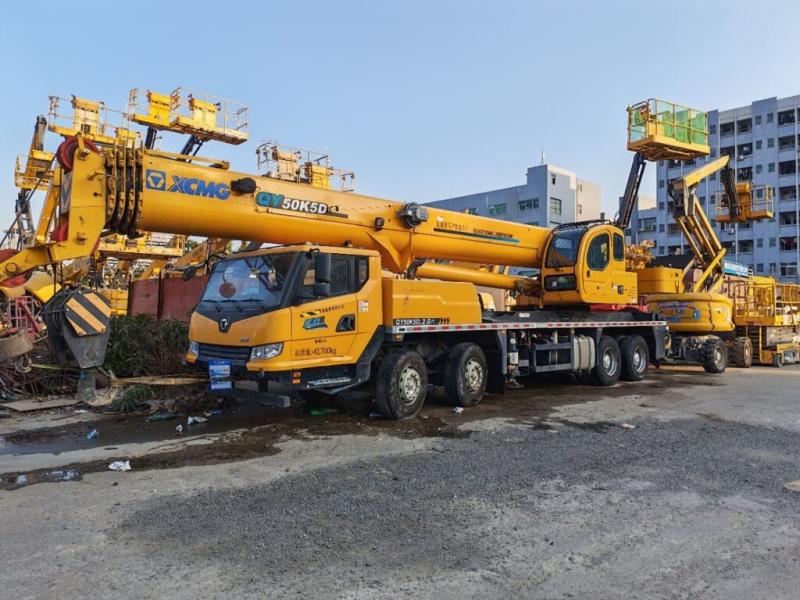
A typical example is the XCMG 50K5D Truck Crane, which is widely used in construction, logistics, and urban lifting operations.
Key Features:
- Mounted on commercial truck chassis
- High travel speed on highways
- Easy and fast mobilization
- Lower cost compared to larger cranes
Typical Applications:
- Urban construction projects
- Roadside lifting operations
- Equipment installation
- Medium to light lifting tasks
What Is an All Terrain Crane?
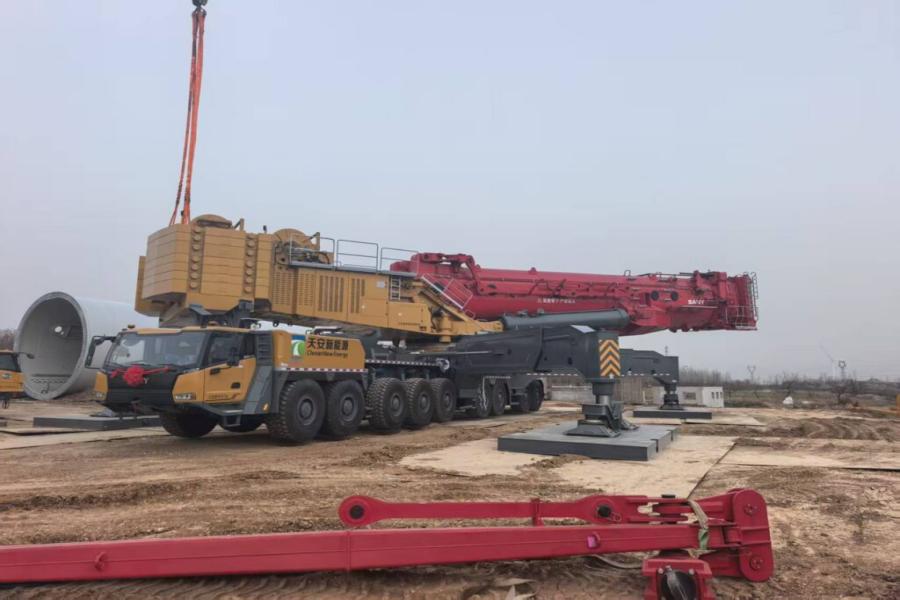
An all terrain crane is a high-performance mobile crane that combines the advantages of truck cranes and rough terrain cranes. It is designed for both highway travel and off-road performance.
A good example is the Sany SAC1300T All Terrain Crane, known for its strong lifting capacity and advanced chassis system.
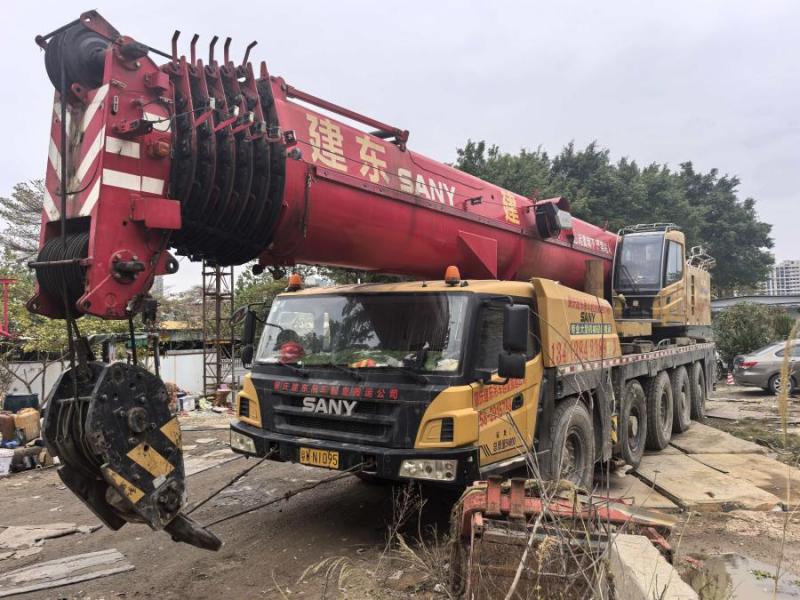
Key Features:
- Multi-axle specialized chassis
- All-wheel drive and all-wheel steering
- High ground clearance
- Advanced suspension system (hydropneumatic)
- Excellent off-road capability
Typical Applications:
- Wind power installation
- Bridge and infrastructure projects
- Large-scale construction sites
- Complex terrain operations
Key Differences Between Truck Crane and All Terrain Crane
Chassis Design
The most fundamental difference lies in the chassis.
- Truck Crane:
Uses a commercial or modified truck chassis. Simple structure, easy maintenance. - All Terrain Crane:
Uses a purpose-built multi-axle chassis with advanced suspension and steering systems.
Result : All terrain cranes offer better load distribution, stability, and off-road capability.
Mobility and Travel Capability
- Truck Crane:
- Fast on highways
- Limited off-road ability
- All Terrain Crane:
- Fast highway travel
- Strong off-road performance
- Multiple steering modes (e.g., crab steering)
Result : All terrain cranes can handle both paved roads and rough terrain, while truck cranes are mainly for road use.
Lifting Performance and Stability
- Truck Crane:
- Suitable for light to medium lifting
- Stability depends heavily on outriggers
- All Terrain Crane:
- Higher lifting capacity
- Better stability due to heavier structure and advanced design
Result : All terrain cranes are better for heavy-duty lifting and large-radius operations.
Boom Technology
- Truck Crane:
- Standard telescopic boom
- Moderate material strength
- All Terrain Crane:
- High-strength steel (often ≥960 MPa)
- Advanced boom design for higher rigidity and lighter weight
Result : All terrain cranes provide longer reach and better performance under load.
Control System
- Truck Crane:
- Traditional control systems
- Simpler electrical architecture
- All Terrain Crane:
- CAN-bus control system
- Multiple ECU integration
- Advanced diagnostics and monitoring
Result: All terrain cranes offer higher automation, safety, and precision control.
Weight and Transportation
- Truck Crane:
- Lighter overall weight
- Easier transport and lower logistics cost
- All Terrain Crane:
- Heavier machine
- Higher transport and mobilization cost
Cost and Maintenance
- Truck Crane:
- Lower purchase cost
- Easier maintenance
- High cost-performance ratio
- All Terrain Crane:
- Higher initial investment
- More complex maintenance
- Higher performance and versatility
Which One Should You Choose?
Choose a Truck Crane If:
- You need fast relocation between sites
- Work is mainly on roads or flat surfaces
- Budget is limited
- Lifting tasks are medium or light-duty
Example: XCMG 50K5D Truck Crane
Choose an All Terrain Crane If:
- You work in complex or rough terrain
- Projects require heavy lifting capacity
- Stability and safety are critical
- You need a multi-purpose high-end crane
Example: Sany SAC1300T All Terrain Crane
Future Trend: Hybrid Advantages
Modern crane development is moving toward combining the strengths of both types. All terrain cranes are increasingly designed to:
- Improve road performance
- Reduce fuel consumption
- Enhance intelligent control systems
This makes them a preferred solution for large-scale global infrastructure projects.
Conclusion
While both truck cranes and all terrain cranes belong to the mobile crane category, their differences are significant:
- Truck cranes focus on mobility and cost efficiency
- All terrain cranes focus on performance, versatility, and heavy-duty capability
Choosing the right crane depends on your project requirements, terrain conditions, and budget. Making the correct decision can improve productivity, reduce costs, and ensure safe operations.
FAQ
The main difference is the chassis design and mobility—truck cranes are road-focused, while all terrain cranes can operate both on-road and off-road.
All terrain cranes are specifically designed for rough and uneven ground conditions.
Yes, they generally have higher purchase and maintenance costs due to advanced technology and performance.
They can handle medium lifting tasks, but for heavy-duty operations, all terrain cranes are more suitable.
Truck cranes are typically more suitable due to their mobility and cost efficiency.