When purchasing a used drilling rig from another country, buyers often focus on the machine’s model, working hours, engine condition, and overall performance. However, engine emission standards are another important factor, especially when the equipment will be imported into a market with specific environmental regulations.
Different countries have introduced emission requirements for non-road diesel machinery, including rotary drilling rigs, excavators, and other construction equipment. Standards such as EPA Tier 4, EU Stage V, and China IV establish different requirements for engine emissions.
Understanding these standards can help buyers assess equipment compatibility, prepare import documents, and avoid unexpected compliance issues.
Why Engine Emission Standards Matter When Buying Used Drilling Rigs
A rotary drilling rig is generally classified as non-road mobile machinery because it is designed for construction operations rather than regular road transportation.
Its diesel engine produces exhaust pollutants, including:
- Nitrogen oxides (NOx)
- Particulate matter (PM)
- Carbon monoxide (CO)
- Hydrocarbons (HC)
Emission regulations set limits on these pollutants to reduce air pollution. The applicable requirements may depend on the destination country, engine power category, engine model, manufacturing date, and whether the machine is being imported or placed on the market for the first time.
For international buyers, checking the engine’s emission compliance before shipment is important. A machine that can operate legally in its original market may not automatically meet the requirements of its destination market.
Major Engine Emission Standards in International Markets
Several major markets have established emission standards for non-road diesel engines. Buyers should understand the main differences before selecting a used drilling rig.
1. EPA Tier 4 – United States
The United States Environmental Protection Agency (EPA) regulates emissions from non-road diesel engines used in heavy equipment, including excavators and other construction machinery. Its regulations establish multiple emission tiers, with Tier 4 being the latest major tier for non-road diesel engines.
EPA Tier 4 is the latest major tier of federal emission standards for non-road diesel engines. It introduced stricter limits for pollutants such as nitrogen oxides and particulate matter.
Depending on engine design and power category, Tier 4 engines may use emission control technologies such as:
- Diesel Particulate Filters (DPF)
- Selective Catalytic Reduction (SCR)
- Diesel Oxidation Catalysts (DOC)
- Exhaust Gas Recirculation (EGR)
What buyers should check:
When importing a used drilling rig into the United States, buyers should verify the engine’s EPA certification, model year, engine identification information, and applicable import requirements.
Importantly, EPA emission requirements can also apply to used non-road engines and equipment. A machine’s age alone does not guarantee that it can be imported without additional compliance procedures.
2. EU Stage V – European Union
The European Union regulates emissions from non-road mobile machinery under a dedicated regulatory framework. According to the European Commission’s non-road mobile machinery emissions regulations, Regulation (EU) 2016/1628 establishes emission limits and type-approval requirements for engines used in this equipment category.
It covers a wide range of construction equipment, including machinery used in foundation engineering.
Under Regulation (EU) 2016/1628, Stage V emission requirements vary according to engine category and power range. The regulation also establishes type-approval procedures and requirements for gaseous and particulate pollutant emissions from non-road mobile machinery engines.. They regulate several exhaust pollutants and include particulate number requirements for applicable engine categories.
Depending on the engine configuration, emission control systems may include:
- Diesel Particulate Filters (DPF)
- Selective Catalytic Reduction (SCR)
- Diesel Oxidation Catalysts (DOC)
What buyers should check:
For used drilling rigs intended for the European market, buyers should confirm the engine’s type-approval status, identification markings, and the applicable rules for the machine’s import and placement on the market.
The production year should not be used as the only indicator of Stage V compliance. Engine category, power range, approval information, and applicable transition provisions also need to be considered.
3. China IV – China
China IV is the fourth-stage emission standard for non-road diesel mobile machinery.
It applies to relevant machinery and diesel engines, including construction equipment and piling machinery.
China IV emission requirements for non-road diesel mobile machinery are covered by GB 20891-2014 and HJ 1014-2020, published by China’s Ministry of Ecology and Environment. HJ 1014-2020 specifies Stage IV emission control technical requirements for applicable non-road diesel machinery and its engines.
What buyers should check:
When evaluating a drilling rig manufactured or previously operated in China, buyers should confirm:
- Engine manufacturer and model
- Engine identification plate
- Applicable emission stage
- Engine power rating
- Available emission compliance documentation
China IV identification should be verified through the actual engine documentation rather than assumed from the machine’s manufacturing year.
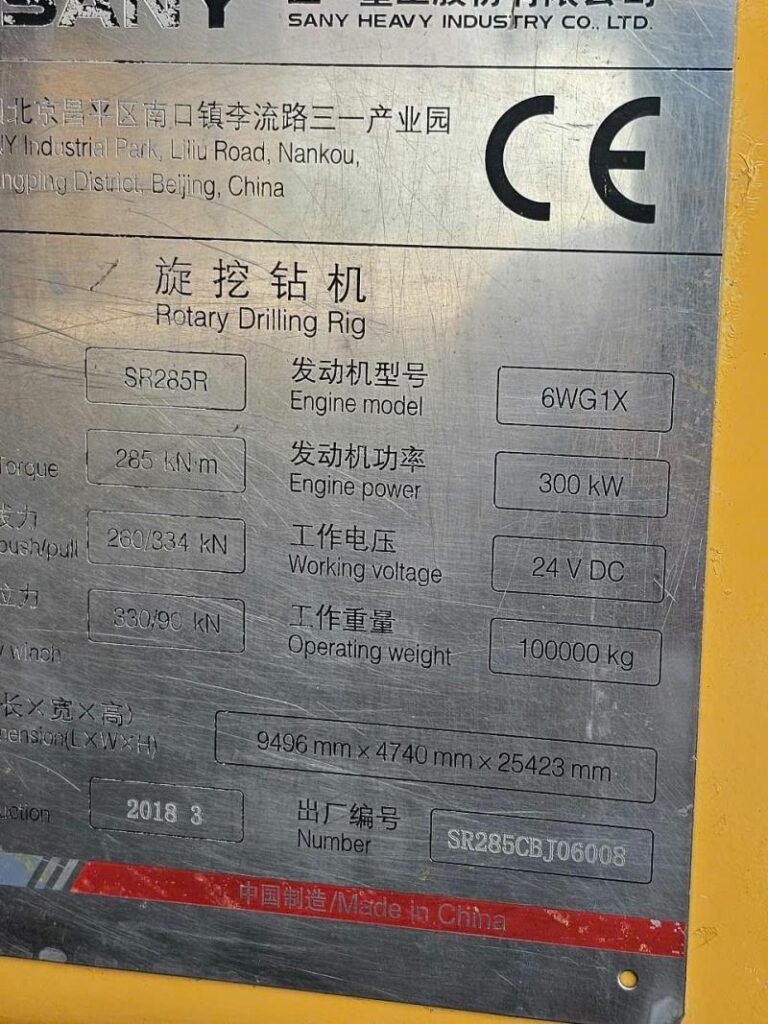
How to Identify the Emission Standard of a Used Drilling Rig
Before purchasing a used rotary drilling rig, buyers should request clear information about the engine and its emission configuration.
The following checks can help establish the machine’s emission status.
| Inspection Item | Information to Verify |
|---|---|
| Engine nameplate | Manufacturer, engine model and serial number |
| Engine manufacturing date | Production date and model year |
| Engine power | Rated output in kW |
| Emission label | EPA Tier, EU Stage or applicable local standard |
| Type-approval information | Approval number and supporting documents |
| Exhaust after-treatment | DPF, SCR, DOC or other installed systems |
| Maintenance records | Previous servicing and emission system maintenance |
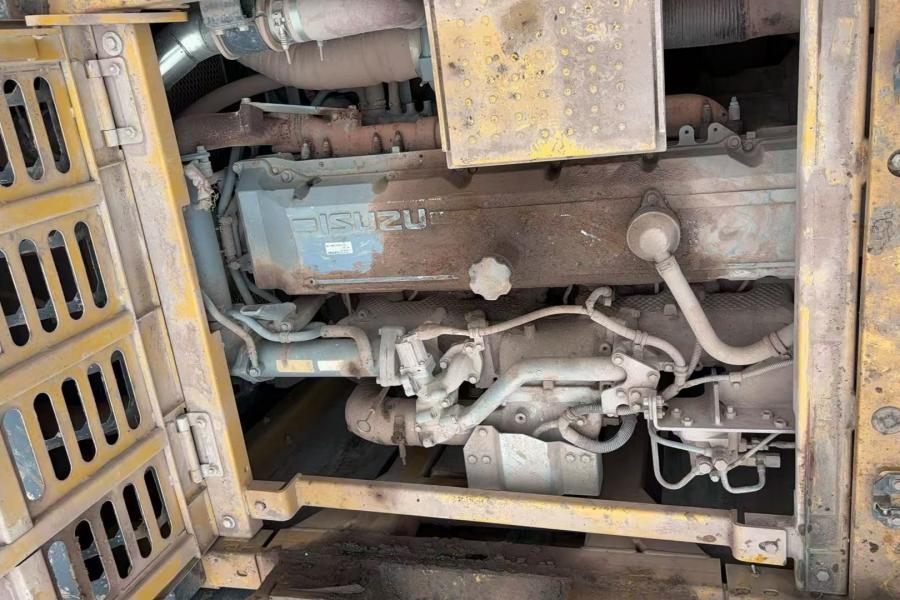
The engine nameplate and emission label are particularly important. If the original label is missing or difficult to read, buyers should request supporting documentation from the engine manufacturer or equipment supplier.
Why Engine Configuration Matters Beyond the Emission Label
Two drilling rigs with similar model years may have different engine configurations depending on the destination market and original equipment specification.
For example, an engine designed for one market may use a different exhaust after-treatment system from an engine supplied for another market.
Buyers should pay attention to the following components:
Diesel Particulate Filter (DPF)
A DPF captures particulate matter from diesel exhaust. Its condition, regeneration history, and maintenance records are important when evaluating equipment fitted with this system.
Selective Catalytic Reduction (SCR)
SCR systems reduce nitrogen oxide emissions by using a urea-based solution, commonly known as DEF or AdBlue. Buyers should check the condition of the dosing system, sensors, and related components.
Diesel Oxidation Catalyst (DOC)
A DOC helps reduce certain exhaust pollutants through catalytic oxidation. Its condition should be considered as part of the engine’s exhaust system inspection.
Not every drilling rig uses all these technologies. The actual configuration depends on the engine model and its emission certification.
Questions to Ask Before Importing a Used Drilling Rig
Before finalizing an international purchase, buyers should clarify several points with the equipment supplier.
- What is the engine manufacturer and exact model?
- Which emission standard does the engine meet?
- Is the original engine emission label available?
- Does the machine have a DPF, SCR, or other after-treatment system?
- Are engine certification documents available?
- Does the destination country allow the import and operation of this specific machine?
- Are there additional inspection, registration, or environmental requirements?
Buyers should also consult the relevant customs authority or environmental regulator in the destination country. Import eligibility and local operating requirements are not always the same.
How MaxTop Supports International Used Drilling Rig Buyers
When purchasing a used drilling rig, understanding its engine configuration and emission information helps buyers make better decisions before shipment.
MaxTop Machinery supplies used rotary drilling rigs from established manufacturers such as SANY and XCMG. Buyers can request machine specifications, engine details, working hours, equipment photographs, and available inspection information before making a purchase decision.
Providing the destination country and intended application at the inquiry stage also helps clarify which technical documents and emission information may be required.
For international buyers, checking engine emission standards before shipment is an important part of evaluating a used drilling rig and preparing for its intended market.
Frequently Asked Questions
Check the engine identification plate, emission label, engine model and serial number. You can also request the engine’s certification documents or type-approval records to verify its emission level.
No. EPA Tier 4 and EU Stage V are separate regulatory standards with different testing procedures, emission limits and certification requirements. Compliance with one standard does not automatically mean compliance with the other.
Not automatically. Import eligibility depends on the applicable EU regulations, the machine’s original approval status, engine category, production date and import circumstances. Buyers should confirm requirements with the relevant authorities before purchasing.
No. The exhaust after-treatment configuration depends on the engine model, emission standard and production year. Some engines use DPF, SCR or DOC systems, while older models may have different configurations.
Buyers should request the engine identification details, emission certification documents (if available), equipment specifications, maintenance records and export documents. These records help verify the machine’s configuration and assess whether it meets the destination country’s import requirements.