
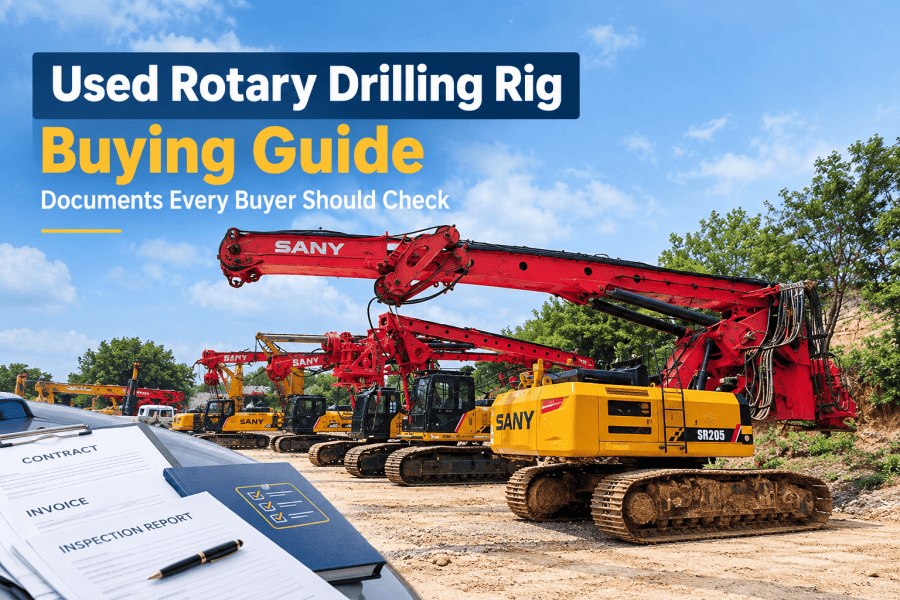
Buying a used rotary drilling rig internationally is not simply a matter of comparing machine prices and working hours. For overseas buyers, the condition of the equipment is only one part of the transaction. Ownership, machine identification, maintenance history, commercial documents, inspection records and import requirements can all affect the final cost and whether the machine can be cleared successfully.
A rotary drilling rig is also significantly more complex than many conventional used construction machines. Its drilling system, hydraulic components, mast structure, Kelly bar, engine and electronic systems all need to be considered during the purchasing process.
Before making a deposit or arranging shipment, international buyers should establish a complete document trail for the machine.
Why Documents Matter When Buying a Used Rotary Drilling Rig
A used drilling rig may look attractive in photographs, but photographs alone cannot establish its legal ownership, actual age, operating history or suitability for import into the destination country.
For an international transaction, buyers should be able to connect four things:
The machine → its identification → its history → the commercial transaction
If these four elements do not match, problems can arise later during payment, customs clearance, inspection, resale or registration.
For example, a machine may be advertised as a particular model and production year, while the serial number, identification plate or supporting documents indicate something different. Similarly, an apparently low-hour machine may have an incomplete maintenance history that makes the stated operating hours difficult to verify.
This is why documentation should be treated as part of the equipment evaluation rather than as paperwork handled only after the purchase has been agreed.
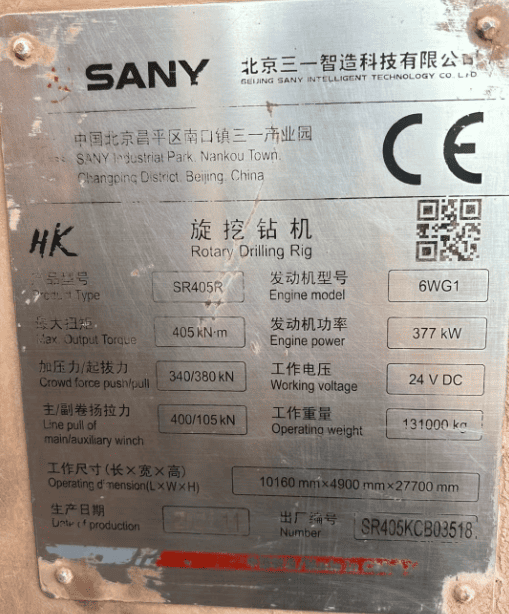
Start With Machine Identification
The first documents buyers should request are those that establish exactly which machine is being sold.
At minimum, check:
- Manufacturer
- Model
- Serial number
- Manufacturing year
- Engine model
- Engine number, where applicable
- Machine identification plate
- Main configuration and drilling system
- Included drilling tools and attachments
The serial number on the machine should correspond with the number shown on the seller’s documents.
For a used SANY, XCMG or other major-brand rotary drilling rig, buyers should also compare the actual machine configuration with the manufacturer’s model designation. Different production years or configurations of the same model can have different engine specifications, drilling depths, torque ratings or operating weights.
Buyer Tip
Ask the seller to provide clear photographs of the machine identification plate and serial number before discussing final payment.
Do not rely only on a model name such as “SR285” or “XR360.” The specific machine identification is more important than the model name appearing in an advertisement.
Verify Ownership Before Paying
Ownership documentation is particularly important when purchasing expensive used construction equipment internationally.
Buyers should ask the seller to demonstrate that the company or individual selling the machine has the legal right to sell it.
Depending on the country and transaction structure, relevant evidence may include:
- Previous purchase invoice
- Ownership certificate or registration document
- Sales contract
- Equipment registration records
- Customs import records, where applicable
- Company ownership records
- Financing or lien-release documentation, where applicable
The purpose is not simply to collect documents. The buyer needs to establish that the seller, machine and transaction are connected.
The company named as the seller should also be consistent with the commercial invoice, purchase contract and payment instructions.
A Simple Cross-Check
Before payment, compare:
Seller name → Contract → Commercial Invoice → Bank Account → Machine Documents
If these parties or details do not match, ask for an explanation and supporting documentation before proceeding.
Request the Maintenance History
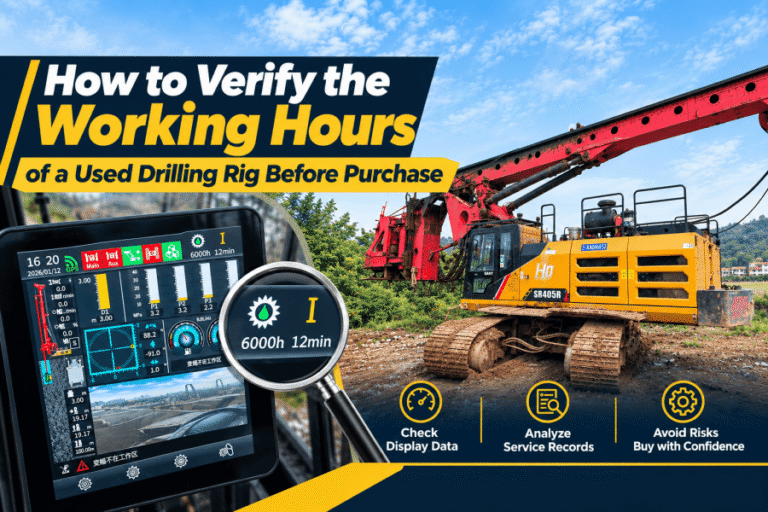
Maintenance records provide valuable evidence about how a used rotary drilling rig has been operated.
A professional buyer should not only ask:
“How many hours does the machine have?”
A better question is:
“Can the stated working hours be supported by historical records?”
Useful records may include:
- Routine maintenance invoices
- Engine service records
- Hydraulic system maintenance
- Filter replacement records
- Hydraulic oil replacement records
- Major component replacement records
- Previous inspection reports
- Repair invoices
- Service dates and corresponding hour-meter readings
The dates and working hours should form a reasonably consistent timeline.
For example, if a maintenance record from an earlier year shows a substantially higher hour-meter reading than the current machine, the buyer should investigate the discrepancy before proceeding.
Working hours should therefore be considered together with maintenance history, machine condition and electronic records rather than as an isolated number.
Check the Machine Condition Report
A machine condition report is another important document for an international buyer.
It should provide information about the actual condition of the machine at the time of sale.
Depending on the equipment and inspection scope, the report may cover:
Engine
- Starting performance
- Oil leaks
- Cooling system
- Exhaust condition
- Engine operating parameters
Hydraulic System
- Hydraulic pumps
- Main control valves
- Hydraulic cylinders
- Hoses and fittings
- Oil leakage
- Operating pressure
Drilling System
- Rotary drive
- Kelly bar
- Mast
- Winches
- Crowd system
- Drilling tools and attachments
Undercarriage
- Track chains
- Rollers
- Sprockets
- Idlers
- Track shoes
Electrical and Control System
- Display panel
- Sensors
- Control system
- Warning indicators
- Safety functions
The purpose of the condition report is to establish a documented baseline.
For overseas purchases, this is especially useful because the buyer may not be able to inspect the machine personally before shipment.
Understand Pre-Shipment Inspection Requirements
Pre-shipment inspection should not be confused with a general machine condition report.
A condition report primarily describes the equipment.
A pre-shipment inspection may instead be required by the regulations of the destination country, customs authority, importer or financing institution.
The exact requirements vary considerably between countries.
Depending on the destination, inspection may involve:
- Machine identification
- Manufacturing date
- Safety condition
- Environmental requirements
- Equipment condition
- Documentation
- Serial-number verification
- Emissions-related information
Buyers should therefore confirm the requirements before the machine is shipped, rather than waiting until it arrives at the destination port.
This is particularly important for older equipment because some countries impose restrictions based on manufacturing year, emissions requirements, equipment category or other import conditions.
Check Commercial Documents Before Making Payment
Once the machine itself has been verified, buyers should review the commercial documents.
Common documents include:
- Proforma Invoice
- Purchase Contract
- Commercial Invoice
- Packing List
- Bill of Lading
- Certificate of Origin, when applicable
- Export declaration documents
- Inspection or condition documents, where required
The commercial invoice should accurately describe the equipment.
For example, instead of using a vague description such as:
Used Machine
the documentation should identify the equipment appropriately, including relevant details such as manufacturer, model and serial number where required.
Accurate documentation helps reduce discrepancies between the physical machine, the commercial transaction and the customs declaration.
Do Not Treat Declared Value as a Strategy for Reducing Cost
One of the most serious mistakes in international used-equipment transactions is assuming that declaring an artificially low transaction value will automatically reduce the buyer’s total cost.
Customs authorities may assess whether the declared value is consistent with the transaction and supporting documentation.
Buyers should therefore retain:
- Purchase contract
- Commercial invoice
- Payment records
- Correspondence relating to the transaction
- Supporting valuation information when appropriate
If the declared value is questioned, incomplete or inconsistent documentation can create delays and additional costs.
A lower declared price is not necessarily a lower-cost transaction if it results in customs valuation disputes, additional inspection or clearance delays.
The better approach is accurate valuation supported by a complete transaction record.
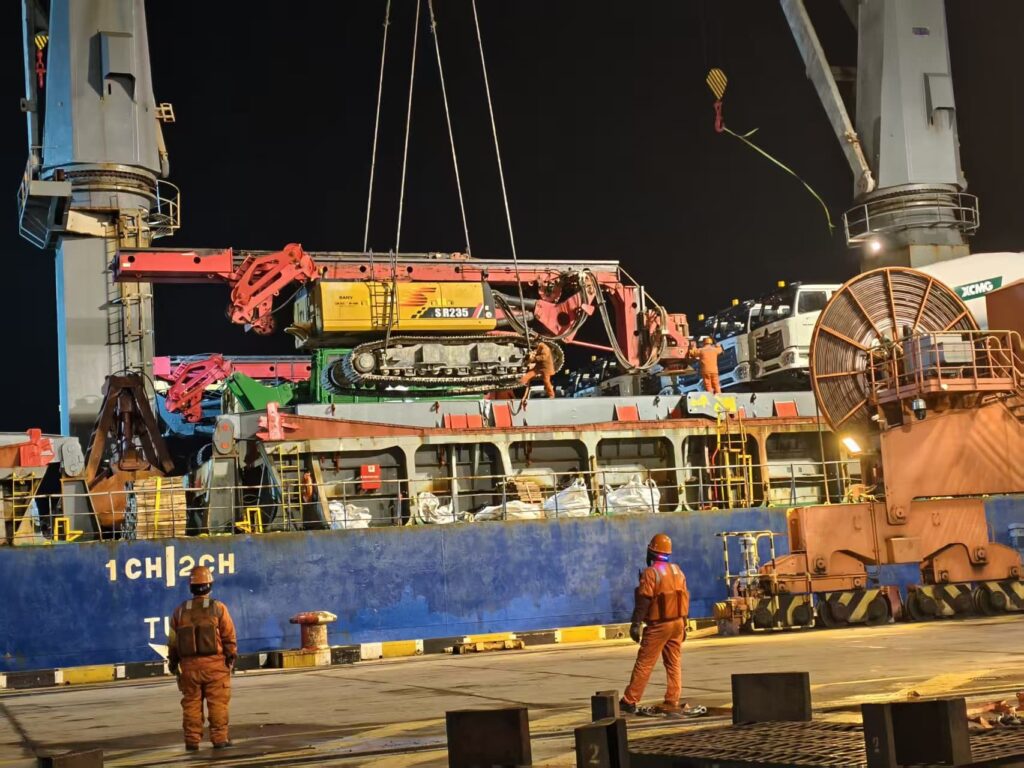
Check Import Requirements Before Choosing the Machine
This step should actually happen before the purchase is finalized.
Different countries may have different requirements concerning:
- Equipment age
- Engine emissions
- Safety requirements
- Environmental standards
- Import licenses
- Pre-shipment inspection
- Registration
- Customs classification
- Documentation
- Restrictions on certain categories of used machinery
This creates an important purchasing principle:
Do not first buy the machine and then ask whether it can be imported.
Instead:
Destination requirements → Machine selection → Document verification → Purchase → Inspection → Shipment
This sequence can significantly reduce the risk of buying a machine that later becomes difficult or uneconomical to import.
Consider the Total Landed Cost, Not Just the Machine Price
The advertised price of a used rotary drilling rig is only one component of the final investment.
An international buyer may also need to consider:
Machine price + inspection + inland transportation + export handling + ocean freight + insurance + customs duties + taxes + port charges + destination transportation + commissioning + repairs + spare parts
The exact charges depend on the destination country, customs classification, shipping method and transaction terms.
This is particularly important when comparing machines from different brands or different working-hour ranges.
A machine with a lower purchase price may not necessarily provide the lowest total cost if it requires significant refurbishment, has incomplete documentation or faces additional import requirements.
For international buyers, the more useful metric is often the total landed and operational cost, rather than the purchase price alone.
Why Working Hours Should Not Be the Only Purchasing Indicator
Working hours are important, but they should never be used as the sole measure of a used rotary drilling rig’s value.
Consider two machines:
Machine A
- Lower stated working hours
- Limited maintenance documentation
- Unknown operating history
- Significant component wear
Machine B
- Higher working hours
- Complete maintenance records
- Consistent service history
- Documented repairs and component replacement
- Good overall condition
Machine B may represent the lower-risk investment despite having more operating hours.
For this reason, buyers should evaluate:
Working hours + maintenance history + machine condition + ownership history + documentation + purchase price
as a combined package.
Questions to Ask a Used Rotary Drilling Rig Seller
Before placing an order, international buyers can use the following checklist.
Machine Information
- What is the exact model?
- What is the manufacturing year?
- What is the serial number?
- What are the current working hours?
- What engine is installed?
- What drilling configuration is included?
Ownership
- Who currently owns the machine?
- Can ownership documents be provided?
- Is the machine free from financing or other ownership restrictions?
Maintenance
- Are maintenance records available?
- When was the last major service?
- Have the hydraulic pumps or engine been repaired?
- Have major drilling components been replaced?
Condition
- Is a recent inspection report available?
- Can the seller provide operating videos?
- Are there any known hydraulic, engine or structural problems?
- What attachments are included?
International Trade
- Can the seller provide a commercial invoice?
- Can a packing list be provided?
- What export documents are available?
- Is a certificate of origin available if required?
- Are there destination-country inspection requirements that the buyer should arrange before shipment?
A Practical Document Checklist for Buyers
Before making the final payment, buyers should ideally have a document package containing the following:
| Document / Information | Why It Matters |
|---|---|
| Machine identification | Confirms the exact equipment |
| Serial number | Links the machine to its records |
| Manufacturing year | Important for valuation and import eligibility |
| Ownership documentation | Reduces ownership and title risks |
| Maintenance records | Helps establish operating history |
| Working-hour records | Supports the hour-meter reading |
| Condition report | Documents current machine condition |
| Purchase contract | Defines commercial terms |
| Commercial invoice | Supports the transaction value |
| Packing list | Supports shipping and customs processing |
| Bill of Lading | Confirms shipment details |
| Certificate of Origin | May be required for customs or preferential treatment |
| Inspection documents | May be required by the destination country |
Not every document is mandatory for every transaction. The exact requirements should be confirmed with the relevant customs authority, inspection body, freight forwarder or customs broker in the destination country.
Buying a Used Rotary Drilling Rig From an Experienced Exporter
For an overseas buyer, working with an experienced used-equipment supplier can simplify the purchasing process.
The supplier should be able to provide detailed machine information, photographs, videos, specifications and available documentation before the buyer commits to the transaction.
MaxTop Machinery supplies used rotary drilling rigs from established construction-equipment brands and supports international buyers looking for equipment for foundation drilling, piling and infrastructure projects.
When evaluating a machine, buyers should focus on more than the asking price. A well-documented machine with a clear history, identifiable condition and complete commercial information can provide significantly greater confidence during an international purchase.
Final Buyer Checklist
Before purchasing a used rotary drilling rig internationally, ask yourself:
Have I verified the machine’s identity?
Have I confirmed ownership?
Can the working hours be supported by historical records?
Have I reviewed the maintenance history?
Do I have a recent condition or inspection report?
Have I checked the import requirements of my country?
Are the contract, invoice and payment details consistent?
Have I calculated the total landed cost rather than only the machine price?
If the answer to these questions is yes, the transaction is much better positioned for a smooth purchase and import process.
For international buyers, good documentation is not simply paperwork. It is part of the risk-control system behind a successful used rotary drilling rig purchase.
FAQ
Check ownership documents, purchase invoice, maintenance records, machine specifications, inspection reports, and export documents.
Match the model, serial number, year, engine information, and machine plate with the seller’s documents.
Yes. Maintenance records help verify the machine’s history, condition, and reported working hours.
It depends on the destination country. Always confirm local import and inspection requirements before shipment.
No. Working hours should be evaluated together with maintenance history, structural condition, hydraulic performance, and overall machine condition.