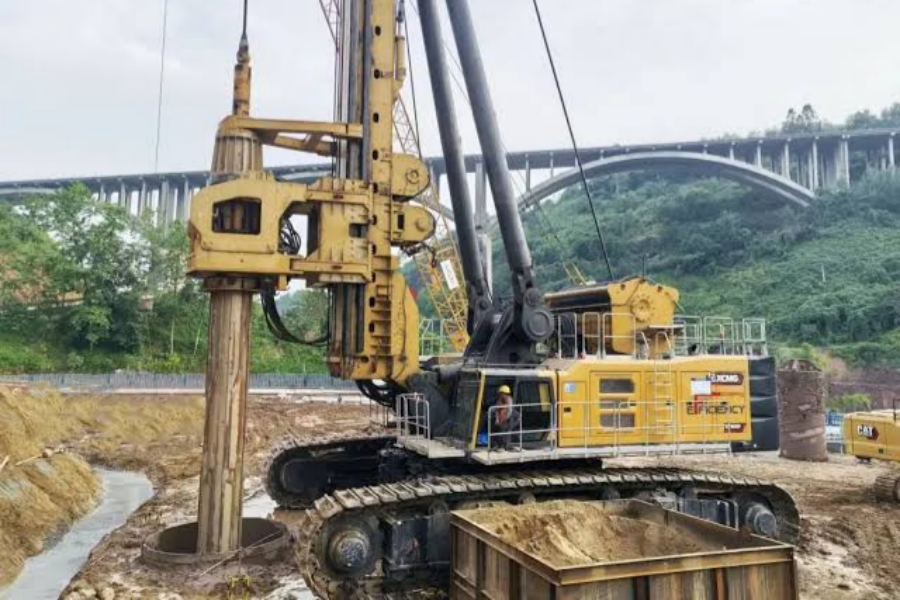
When comparing a used rotary drilling rig, buyers often look at the machine’s age, operating hours, drilling depth, and maximum drilling diameter. While these specifications are important, they do not tell the complete story of a rig’s drilling capability.
Rotary torque is another key specification that deserves careful attention.
Rotary torque determines how much rotational force a drilling rig can deliver to the Kelly bar and drilling tool. It affects the machine’s ability to overcome resistance from the ground and maintain effective cutting during drilling.
For contractors considering a used rotary drilling rig, understanding rotary torque is particularly important because the machine’s original rated torque and its current operating performance are not necessarily the same.
This guide explains what rotary torque means, how it relates to ground conditions and drilling tools, and how buyers can use torque specifications when comparing different used rotary drilling rigs.
What Is Rotary Torque on a Rotary Drilling Rig?
Rotary torque is the rotational force generated by the rotary drive of a drilling rig.
The power transmission can generally be understood as:
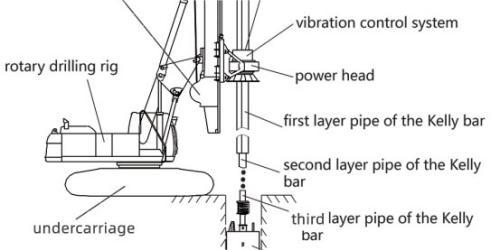
Engine → Hydraulic System → Rotary Drive → Kelly Bar → Drilling Tool
The rotary drive transfers torque through the Kelly bar to the drilling tool. The tool then uses this rotational force to cut, break, or excavate the formation.
Rotary torque is normally expressed in kN·m.
A higher torque rating means that the rotary system has greater capacity to overcome rotational resistance. However, this does not mean that a higher-torque machine is automatically the best choice for every project.
The required torque depends on several factors, including:
- Ground conditions
- Drilling diameter
- Drilling depth
- Drilling tool type
- Cutting tooth configuration
- Kelly bar configuration
- Required penetration rate
Therefore, torque should always be considered together with the complete drilling system.
Why Is Rotary Torque Important?
During drilling, the tool encounters resistance from the formation.
The amount of resistance can change considerably depending on the ground.
For example, drilling through soft clay is generally very different from drilling through dense gravel or hard rock.
As ground resistance increases, the rotary system must provide sufficient torque to keep the drilling tool rotating effectively.
Insufficient torque may result in:
- Reduced penetration
- Slower drilling cycles
- Increased tool loading
- Difficulty breaking hard formations
- Greater stress on the rotary system
Adequate torque, combined with the correct drilling tool and crowd force, allows the machine to maintain more stable drilling performance.
Rotary Torque and Different Ground Conditions
The relationship between torque and geology is one of the most important considerations when selecting a drilling rig.
Soft Soil
Soft clay, loose sand, and similar formations generally create relatively low cutting resistance.
In these conditions, maximum torque may not be the primary factor affecting productivity. Rotation speed, bucket design, spoil removal, and operating efficiency can be equally important.
Dense Sand and Gravel
Dense formations require more cutting force. Gravel and cobbles can also create intermittent loading as the drilling tool encounters larger particles.
A suitable torque reserve can help the rotary system maintain rotation when resistance increases.
Weathered Rock
Weathered rock can range from relatively weak material to highly fractured rock with harder sections.
The drilling tool becomes increasingly important in these conditions. Rock augers, core barrels, and heavy-duty drilling buckets may require greater torque than conventional soil buckets.
Hard Rock
Hard and abrasive rock places significantly greater demands on the drilling system.
Depending on the drilling method, tools may include:
- Rock augers
- Core barrels
- Roller-bit tools
- Heavy-duty rock buckets
- Bullet-tooth tools
In these applications, sufficient torque is important, but crowd force, cutting tool design, Kelly bar configuration, and hydraulic performance must also be considered.
Rotary Torque and Drilling Diameter
Drilling diameter has a direct influence on the resistance experienced by the drilling tool.
A larger drilling tool generally engages a greater volume of material and can require greater machine capacity.
For example, a rig drilling a 1,000 mm pile does not necessarily face the same rotary resistance as when drilling a 2,500 mm or 3,000 mm pile, even when working in the same formation.
This is why maximum drilling diameter should not be viewed independently from rotary torque.
When evaluating a used rig, buyers should consider:
Torque + Tool Diameter + Ground Condition
rather than asking only:
What is the maximum drilling diameter?
Rotary Torque and Kelly Bar
The Kelly bar is an essential part of the torque transmission system.
It transfers rotational force from the rotary drive to the drilling tool while also allowing the tool to move vertically during drilling.
Kelly bars are commonly available in:
- Friction Kelly Bar
- Interlocking Kelly Bar
The appropriate configuration depends on the required drilling depth, ground conditions, torque requirements, and rig configuration.
For demanding rock drilling applications, the Kelly bar must be capable of transmitting the required torque without excessive wear or deformation.
When purchasing a used rotary drilling rig, the Kelly bar should therefore be evaluated together with the rotary head rather than treated as a separate accessory.
Rotary Torque and Crowd Force: Why Both Matter
Torque is only one part of the drilling process.
Crowd force pushes the drilling tool into the formation, while rotary torque provides the rotational force needed to cut or break the material.
Consider drilling into hard rock.
The cutting teeth need sufficient downward force to engage the formation. At the same time, the rotary drive needs sufficient torque to rotate the tool against the resistance created by the rock.
If either parameter is inadequate, drilling performance can be affected.
This is why two rigs with similar torque ratings may perform differently on the same project if their crowd systems, Kelly bars, or drilling tools are different.
Used Rotary Drilling Rig Examples from MaxTop
The importance of rotary torque can be illustrated by comparing different used rotary drilling rig classes.
MaxTop offers used rotary drilling rigs from manufacturers such as SANY, Bauer, XCMG, and other major brands. Within the SANY range, different models provide different levels of rotary capacity for different foundation applications.
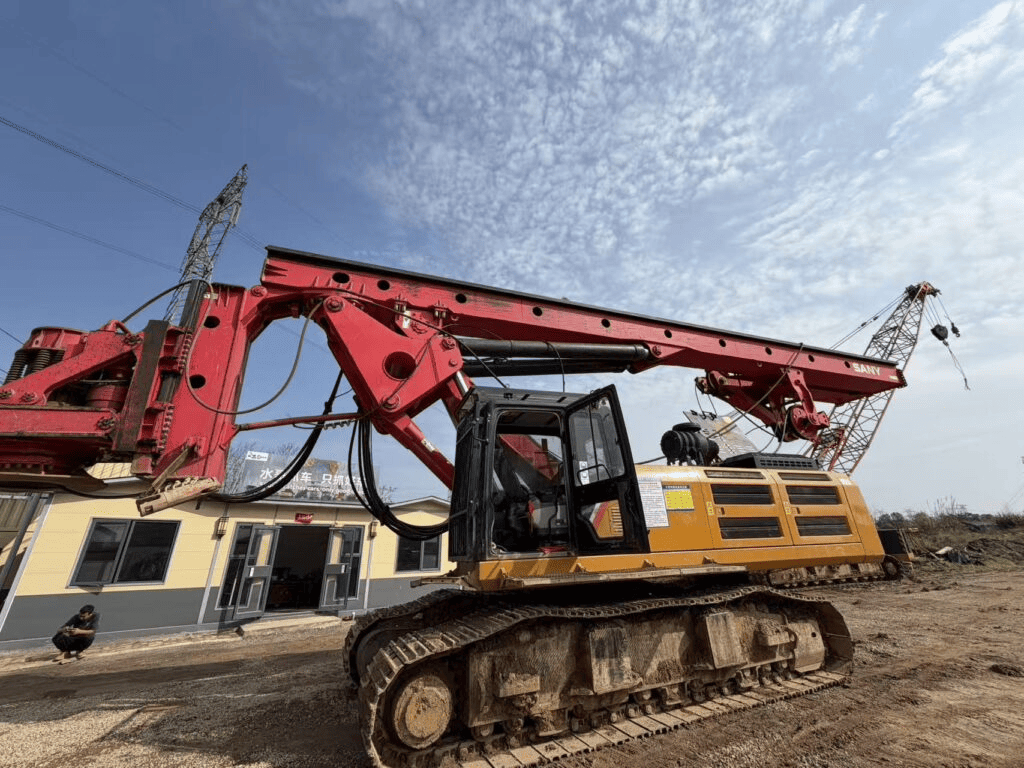
SANY SR205
The SANY SR205 is a medium-capacity rotary drilling rig suitable for a wide range of foundation drilling applications.
Its maximum output torque is approximately 205 kN·m, depending on configuration.
A machine in this class can be suitable for projects involving medium-diameter bored piles and general foundation work.
When evaluating a used SR205, the important question is not simply whether 205 kN·m was the original specification.
Buyers should also consider whether the rotary system can still operate smoothly under load and whether the Kelly bar and drilling tools are appropriate for the intended formation.
SANY SR235
The SANY SR235 provides approximately 235 kN·m of maximum output torque, depending on machine configuration.
This places it in a higher capacity class than the SR205 and makes it suitable for a broader range of bored piling applications.
For a used SR235, torque should be evaluated alongside:
- Maximum drilling diameter
- Kelly bar configuration
- Crowd force
- Drilling depth
- Hydraulic system condition
- Intended ground conditions
For contractors working across different soil and rock conditions, this type of balanced configuration can be more useful than simply selecting the machine with the highest available torque.
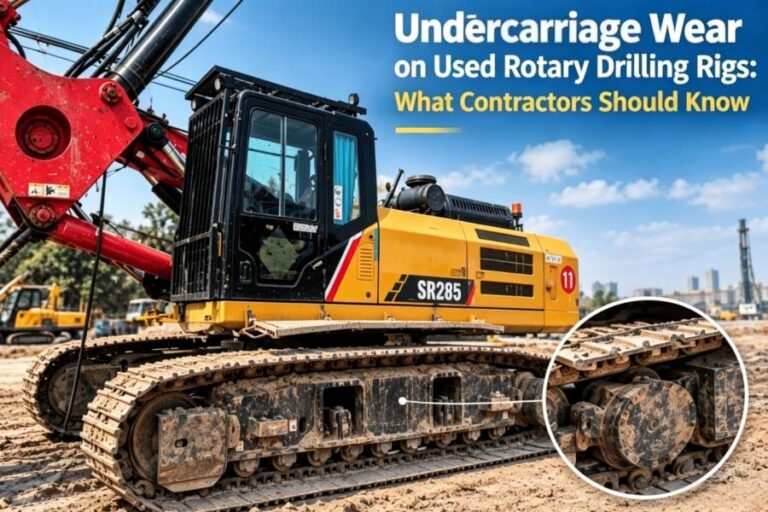
SANY SR285
The SANY SR285 provides approximately 285 kN·m of maximum output torque.
Its larger torque capacity makes it suitable for applications requiring greater drilling capacity, including larger-diameter bored piles and demanding foundation projects.
However, the additional capacity also means that the condition of the rotary system becomes particularly important when purchasing a used machine.
The rotary gearbox, hydraulic motors, Kelly bar, and structural components should all be evaluated as part of the machine’s overall condition.
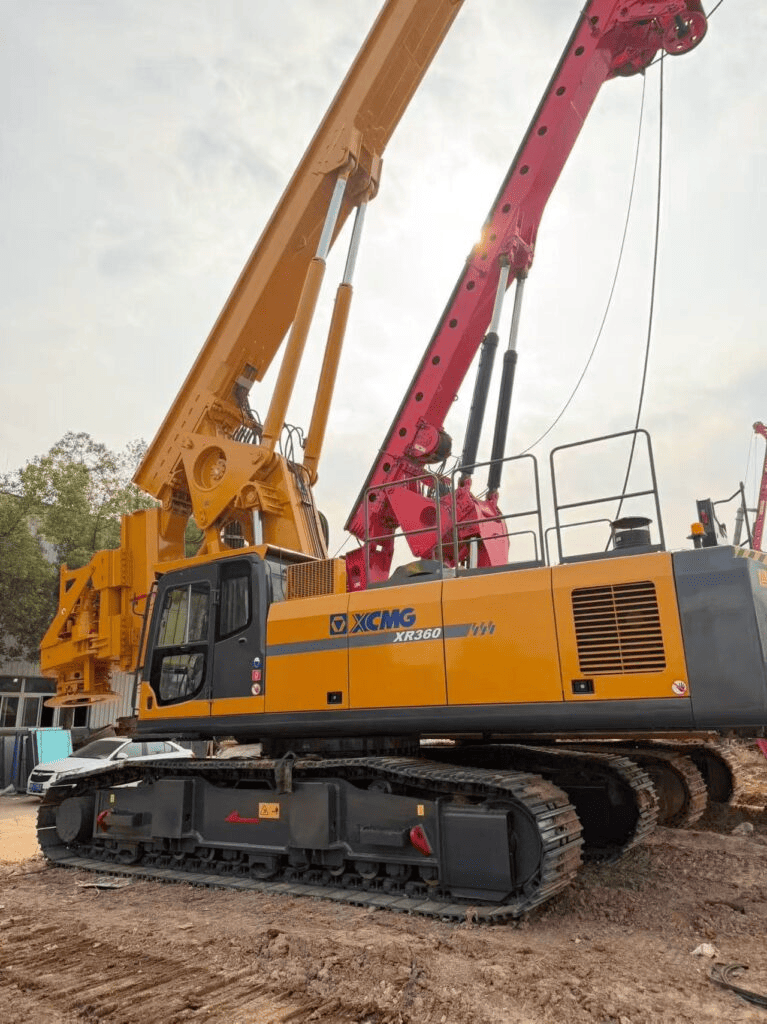
XCMG SR360R
The XCMG SR360 is a heavier-duty rotary drilling rig with approximately 360 kN·m of maximum output torque, depending on configuration.
Machines in this class can be used for deep foundation and large-diameter piling applications where greater drilling capacity is required.
The higher torque provides additional capacity for overcoming ground resistance, but project suitability still depends on the complete machine configuration.
For example, a contractor drilling deep piles through weathered rock may need to consider torque together with:
- Interlocking Kelly bar
- Rock drilling tools
- Crowd force
- Main winch capacity
- Required drilling depth
SANY SR415
The SANY SR415 represents a higher-capacity class, with approximately 415 kN·m of rated output torque, depending on configuration.
This type of rig is intended for demanding foundation applications involving large drilling diameters and deep piles.
The SR415 demonstrates an important point about rotary torque: increasing torque is generally accompanied by increases in overall machine capacity.
A heavy-duty rig may have greater structural capacity, crowd force, winch capacity, and drilling capability, but it can also involve higher transportation and operating costs.
Therefore, contractors should select the machine according to the actual project rather than simply choosing the model with the highest torque.
Comparing Used Rotary Drilling Rigs by Torque
The following examples show how rotary torque can vary between different machine classes:
| Model | Approx. Maximum Output Torque | Typical Equipment Class |
|---|---|---|
| SANY SR205 | 205 kN·m | Medium-duty |
| SANY SR235 | 235 kN·m | Medium to heavy-duty |
| SANY SR285 | 285 kN·m | Heavy-duty |
| XCMG XR360R | 360 kN·m | Heavy-duty |
| SANY SR415 | 415 kN·m | Large-capacity |
These figures are provided as examples and may vary according to production year and machine configuration.
More importantly, the table should not be interpreted as a ranking of which machine is “better.”
A 205 kN·m rig can be the right choice for one project, while a 415 kN·m rig may be necessary for another.
The correct choice depends on the work the machine needs to perform.
How to Evaluate Rotary Torque on a Used Rig
When buying a used rotary drilling rig, buyers should evaluate both the original specification and the current condition of the rotary system.
Check the Original Specification
Confirm:
- Rated rotary torque
- Maximum drilling diameter
- Maximum drilling depth
- Rotation speed
- Crowd force
- Kelly bar configuration
The exact production year and configuration should also be verified because specifications can vary between machine versions.
Check Hydraulic Performance
The hydraulic system is fundamental to rotary performance.
Inspect the condition of:
- Hydraulic pumps
- Hydraulic motors
- Control valves
- Hydraulic hoses
- Hydraulic oil system
Unstable operation, abnormal noise, excessive leakage, or abnormal pressure behavior may indicate the need for further inspection.
Inspect the Rotary Head
The rotary head should operate smoothly without abnormal noise or excessive vibration.
The rotary gearbox and related components should be checked for:
- Oil leakage
- Abnormal noise
- Excessive backlash
- Vibration
- Visible damage
Inspect the Kelly Bar
The Kelly bar should be inspected for wear, deformation, damage, and connection condition.
Particular attention should be given to the areas that transmit torque during drilling.
Perform an Operating Test
Whenever practical, the machine should be tested under realistic operating conditions.
Observing the rotary system under load can provide much more useful information than simply watching the rotary head rotate without resistance.
Does Higher Torque Always Mean Better Performance?
Higher torque provides greater capacity to overcome drilling resistance, but it is only one part of overall drilling performance.
A drilling rig with excessive capacity may be inefficient for a small foundation project.
For example, using a large heavy-duty machine for shallow piles in soft soil may increase:
- Transportation costs
- Fuel consumption
- Maintenance costs
- Mobilization requirements
On the other hand, an undersized rig may struggle when drilling large-diameter piles through hard formations.
The objective is therefore to find the right balance between machine capacity and project requirements.
What Should Buyers Consider Besides Rotary Torque?
When comparing used rotary drilling rigs, consider the following parameters together:
Rotary Torque
Determines the available rotational force.
Crowd Force
Determines the force available to push the drilling tool into the ground.
Drilling Diameter
Determines the size of the pile and the cutting load placed on the drilling system.
Drilling Depth
Determines the required Kelly bar configuration and overall machine capability.
Kelly Bar
Transfers torque from the rotary head to the drilling tool.
Drilling Tools
Different formations require different tools and cutting systems.
Hydraulic System
Provides the power required for rotary and other machine functions.
Machine Condition
Determines how closely the used machine can perform relative to its original specifications.
A Practical Way to Compare Used Rotary Drilling Rigs
Instead of comparing machines based on one specification, buyers can follow a simple sequence:
Step 1 — Identify the ground conditions
Determine whether the project involves soil, gravel, weathered rock, or hard rock.
Step 2 — Determine pile requirements
Establish the required pile diameter and drilling depth.
Step 3 — Select suitable drilling tools
Choose the appropriate bucket, auger, core barrel, roller-bit tool, or other drilling tool.
Step 4 — Determine required machine capacity
Consider rotary torque, crowd force, winch capacity, and Kelly bar configuration.
Step 5 — Evaluate the used machine
Inspect the hydraulic system, rotary head, Kelly bar, engine, undercarriage, and maintenance history.
Step 6 — Compare total operating requirements
Consider transportation, fuel consumption, maintenance, spare parts, and expected productivity.
This approach provides a more realistic basis for selecting used equipment than relying on torque or working hours alone.
Final Thoughts
Rotary torque is an important specification when evaluating a used rotary drilling rig, particularly for large-diameter piling, dense formations, and rock drilling.
However, torque should never be considered in isolation.
The actual drilling performance of a used rig depends on the interaction between the rotary system, hydraulic system, Kelly bar, crowd force, drilling tools, geological conditions, and machine condition.
The SANY SR205, SR235, SR285, SR415, and XCMG SR360 provide useful examples of how rotary capacity can vary across different used rotary drilling rig classes.
For buyers, the most important question is not:
“Which used drilling rig has the highest torque?”
It is:
“Which used rotary drilling rig has the right torque and overall configuration for my project?”
Matching the machine to the actual pile diameter, drilling depth, geological conditions, and drilling tools can help contractors achieve better productivity while avoiding unnecessary equipment and operating costs.
FAQ
Rotary torque is the rotational force generated by the rotary drive and transferred through the Kelly bar to the drilling tool. It helps the tool overcome resistance from soil, gravel, weathered rock, and hard rock during drilling.
Rotary torque affects the rig’s ability to maintain effective drilling under different ground conditions. When evaluating a used rig, buyers should consider the original torque rating together with the current condition of the rotary head, hydraulic system, Kelly bar, and drilling tools.
Not necessarily. Higher torque provides greater capacity for demanding formations, but the appropriate rig depends on pile diameter, drilling depth, geology, Kelly bar configuration, drilling tools, and project requirements. A smaller rig may be more economical for projects with relatively soft ground and smaller piles.
The Kelly bar transfers rotational torque from the rotary drive to the drilling tool. Its diameter, length, section configuration, and friction or interlocking design should be compatible with the rig and drilling application. Excessive wear or damage to the Kelly bar can also affect torque transmission.
Check the manufacturer’s original torque specification and inspect the hydraulic system, rotary gearbox, rotary head, Kelly bar, and control system. If possible, operate the machine under load to evaluate rotation stability, abnormal noise, vibration, hydraulic performance, and overall rotary system response.