
The rapid growth of the global wind energy industry has significantly increased the demand for heavy lifting equipment. From transporting tower sections to installing nacelles and blades at heights exceeding 100 meters, crane selection plays a critical role in wind farm construction efficiency, safety, and project cost control.
Compared with conventional infrastructure projects, wind turbine installation requires cranes with higher lifting capacities, longer boom systems, stronger ground adaptability, and better stability under complex weather conditions. Different stages of wind farm construction also require different crane configurations depending on turbine size, terrain conditions, transportation access, and installation methods.
Understanding the most common crane configurations used in wind energy projects helps contractors and equipment owners select suitable lifting solutions for both onshore and offshore wind farm construction.
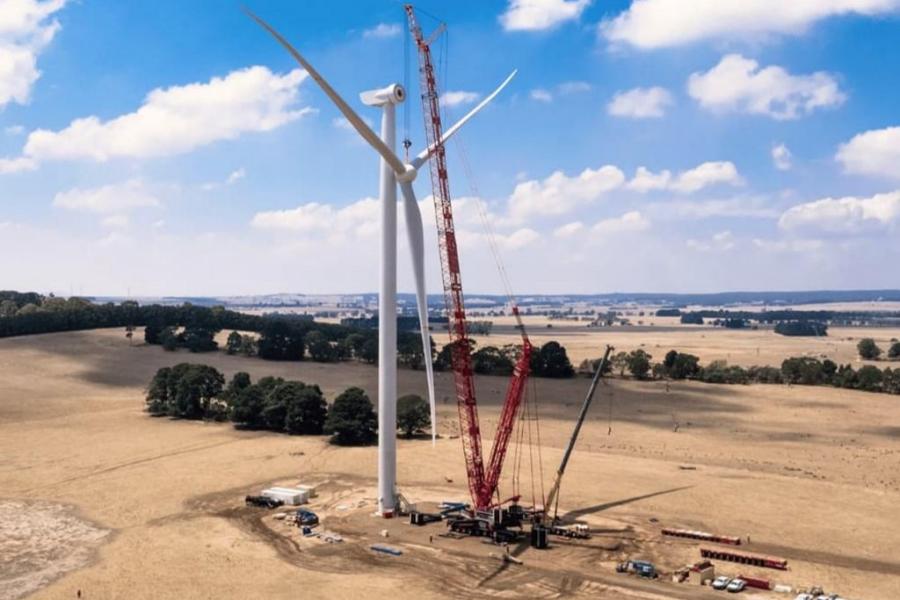
Main Lifting Crane Configuration
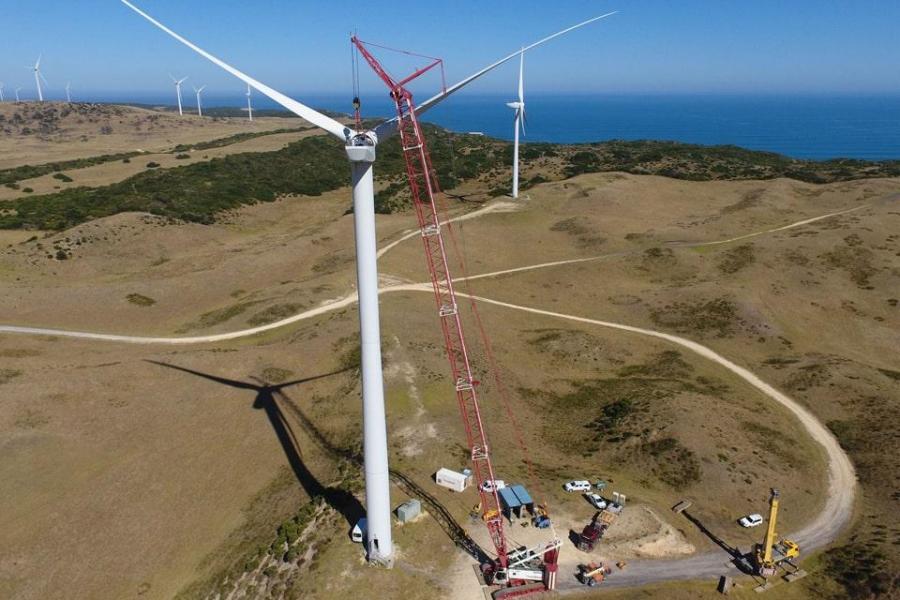
The main lifting crane is the core equipment during wind turbine installation. It is responsible for lifting heavy components such as tower sections, nacelles, hubs, and blades.
For modern wind farms, crawler cranes are the most widely used option because of their excellent lifting performance and ground adaptability.
Typical configurations include:
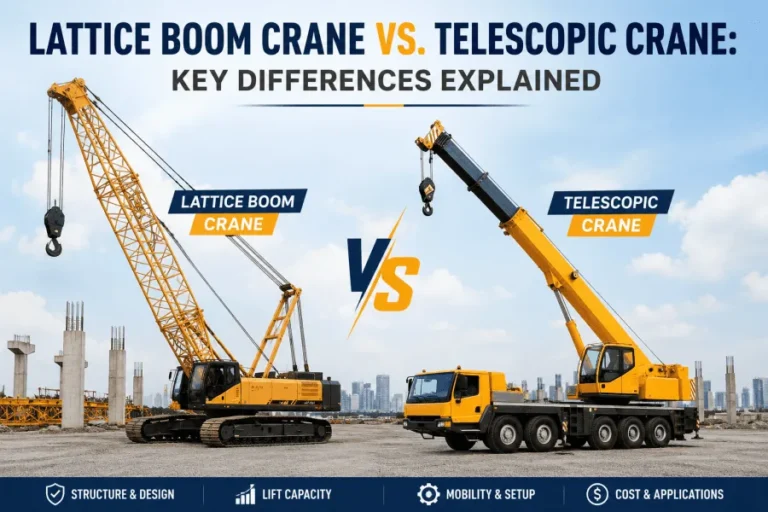
- Lattice boom crawler cranes
- Heavy-duty crawler cranes with fixed jib
- Ring crane systems
- Large-capacity all terrain cranes
Among these, lattice boom crawler cranes remain the industry standard for most onshore wind projects.
Typical Main Crane Capacities
| Wind Turbine Size | Common Main Crane Capacity |
|---|---|
| 2 MW | 400–600 ton |
| 3–5 MW | 600–1000 ton |
| 6 MW+ | 1000 ton and above |
As wind turbines become taller and heavier, crane boom length and lifting radius become increasingly important.
Crawler Crane with Main Boom and Fixed Jib
One of the most common configurations in onshore wind energy construction combines:
- Main boom
- Fixed jib
- Superlift counterweight system
This configuration provides:
- Extended lifting height
- Increased lifting moment
- Better stability at long radius
The fixed jib allows cranes to handle high hub-height turbines while maintaining lifting capacity.
Superlift systems are commonly added to improve crane performance when handling nacelles and blades at large working radii.
This configuration is widely used for:
- 3 MW to 6 MW wind turbines
- Mountain wind farms
- Remote onshore projects
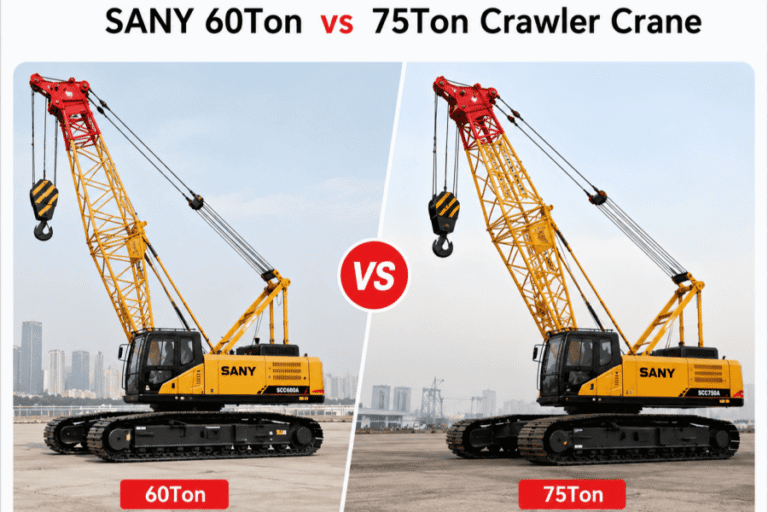
Several SANY crawler crane models are commonly seen in wind energy projects, including:
- SANY SCC850A-6
- SANY SCC1000A
- SANY SCC1500A
- SANY SCC2500A
These models are widely used in tower erection, nacelle lifting, and blade installation across many onshore wind farm projects.
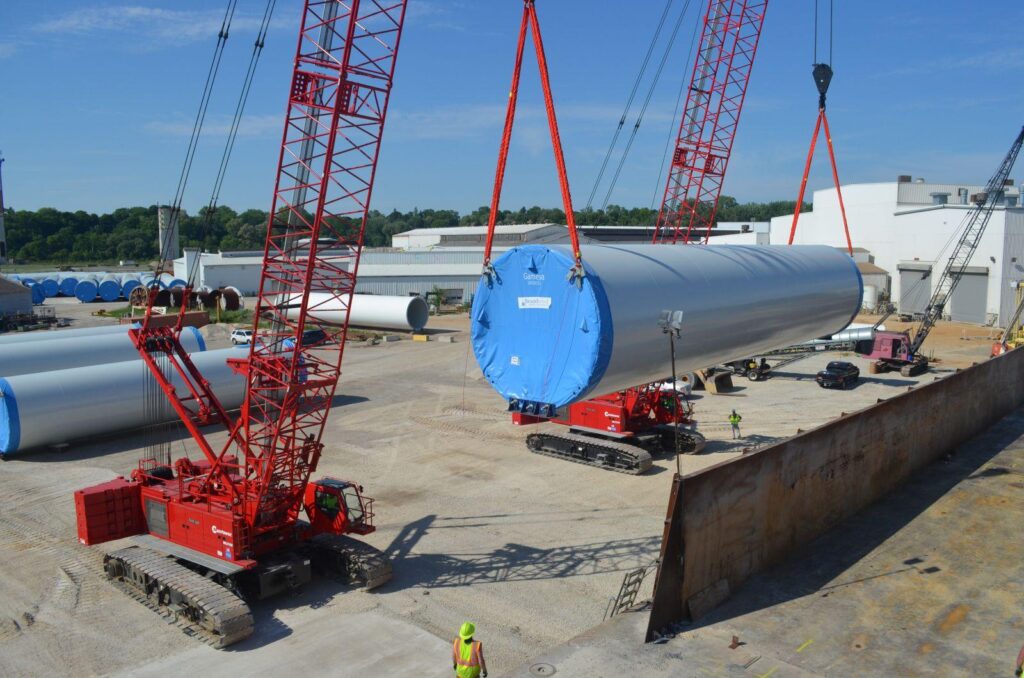
Twin Crane Configuration
Some wind turbine components, especially long blades, require tandem lifting using two cranes.
In this configuration:
- One crane controls the root section
- The second crane controls the blade tip
This method improves lifting stability and helps prevent blade deformation during installation.
Twin crane operations are often used in:
- Large blade installation
- Restricted lifting areas
- Strong wind conditions
- Complex terrain projects
Proper coordination between operators is essential because synchronized lifting directly affects safety and installation precision.
Tail Crane Configuration
During tower erection, a smaller auxiliary crane, often called a tail crane, is commonly used alongside the main crane.
Its functions include:
- Assisting with component positioning
- Rotating tower sections
- Supporting assembly work
- Handling rigging equipment
Tail cranes are usually:
- Truck cranes
- Rough terrain cranes
- Smaller crawler cranes
Compared with the main crane, auxiliary cranes require less lifting capacity but improve overall installation efficiency significantly.
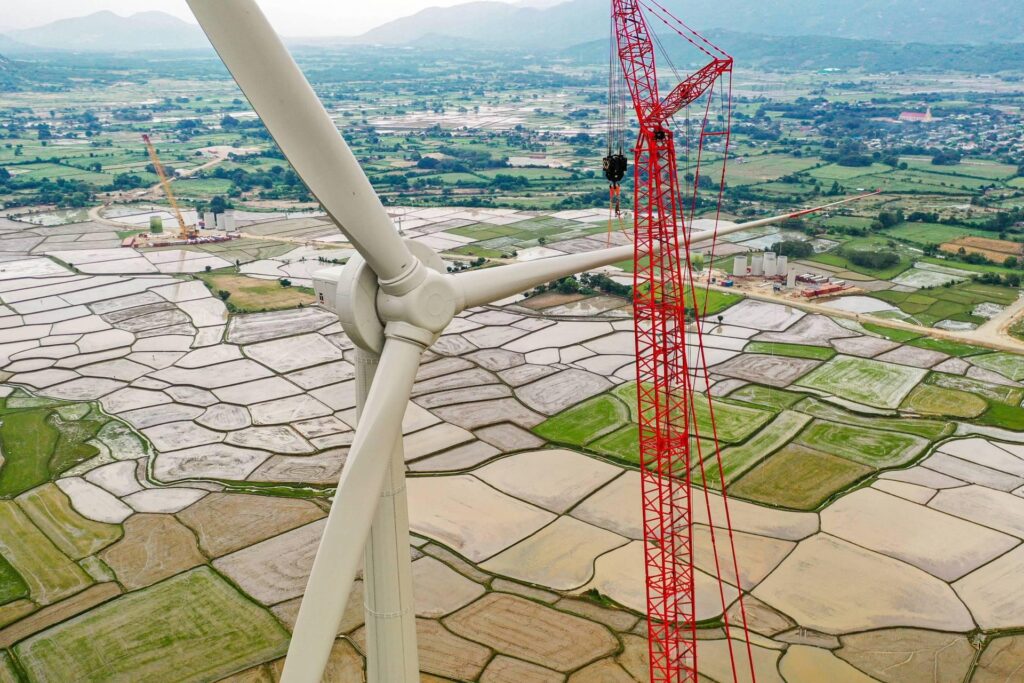
Superlift Configuration
Superlift systems are widely used in large-capacity crawler cranes for wind power projects.
The configuration includes:
- Additional counterweight trays
- Superlift mast
- Counterweight radius adjustment system
The purpose is to:
- Increase lifting capacity
- Improve stability
- Reduce boom stress
This configuration is particularly important for:
- Large nacelle installation
- Long boom operation
- Heavy offshore wind components
Without superlift systems, many modern wind turbine lifts would exceed safe crane operating limits.
Luffing Jib Configuration
For very tall wind turbines, luffing jib configurations are often used.
Compared with fixed jibs, luffing jibs provide:
- Greater lifting height
- Improved flexibility
- Better performance in confined areas
This configuration is suitable for:
- High hub-height turbines
- Limited installation space
- Steep terrain conditions
Luffing jib systems are increasingly common as turbine hub heights continue to rise worldwide.
Ring Crane Systems
Ultra-large wind energy projects may use ring crane systems.
Ring cranes offer:
- Extremely high lifting capacity
- Excellent stability
- Large working radius
They are commonly used for:
- Offshore wind projects
- Heavy industrial lifting
- Large turbine pre-assembly operations
However, ring crane transportation and assembly require substantial preparation and cost, making them suitable mainly for large-scale projects.
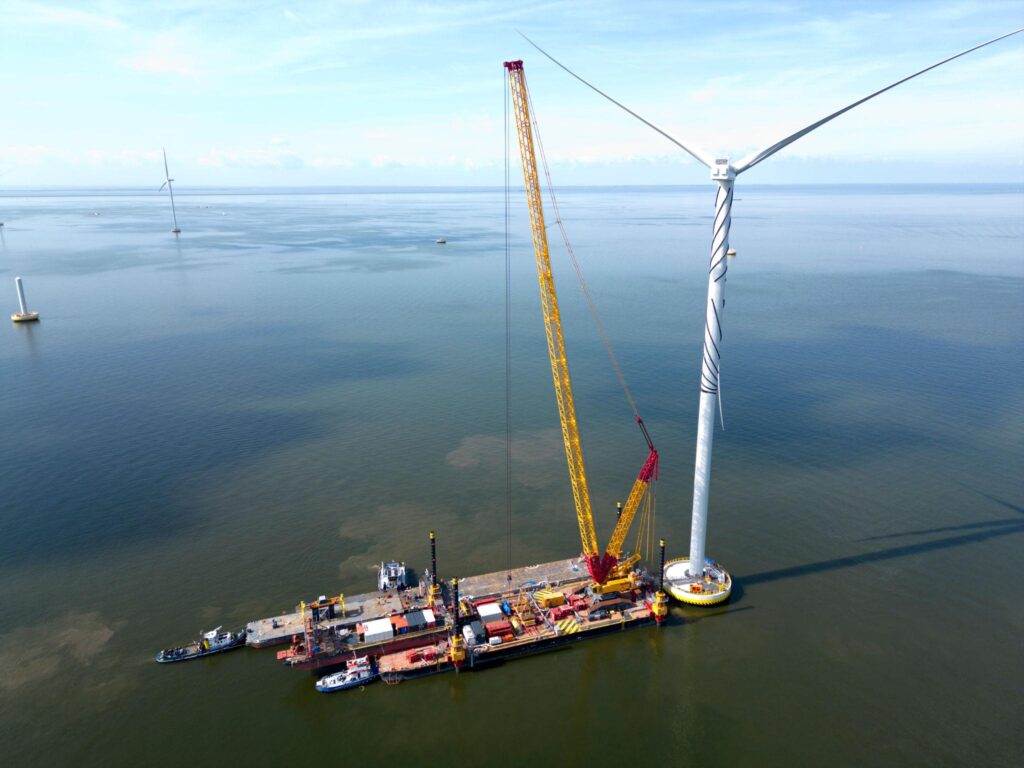
Offshore Wind Installation Crane Configuration
Offshore wind projects involve different crane systems compared with onshore installations.
Common offshore lifting equipment includes:
- Jack-up vessel cranes
- Heavy-lift marine cranes
- Floating cranes
These cranes must handle:
- Harsh marine environments
- Vessel movement
- High wind speeds
- Corrosion exposure
Offshore wind installation cranes generally feature:
- Advanced stabilization systems
- High lifting capacities
- Specialized marine lifting technology
As offshore wind farms expand globally, demand for specialized offshore lifting solutions continues to increase.
Factors Affecting Crane Configuration Selection
Several factors influence crane selection for wind energy projects.
Turbine Size
Larger turbines require higher lifting capacity and longer boom systems.
Hub Height
Higher towers demand greater hook height and longer jib configurations.
Site Terrain
Mountainous or soft ground conditions may favor crawler cranes due to lower ground pressure.
Transportation Access
Remote wind farms may limit crane size due to road restrictions.
Weather Conditions
Wind speed significantly affects crane operation and lifting safety.
Project Schedule
Faster installation schedules may require multiple cranes operating simultaneously.
Ground Preparation and Crane Stability
Wind farm construction sites often involve uneven terrain and soft soil conditions.
Proper ground preparation is critical for:
- Crane stability
- Safety compliance
- Load distribution
Typical preparation work includes:
- Crane pads
- Gravel reinforcement
- Temporary access roads
- Ground bearing pressure testing
Improper ground conditions can result in crane instability and severe safety risks during lifting operations.
Growing Demand for Large-Capacity Wind Cranes
The global transition toward renewable energy continues to increase the demand for large lifting equipment.
Modern wind turbines are becoming:
- Taller
- Heavier
- More complex
As a result, wind power contractors increasingly rely on:
- Heavy crawler cranes
- Advanced boom configurations
- Superlift systems
- Specialized transportation solutions
Used crawler cranes with wind power configurations have also become popular in international markets due to lower acquisition costs and shorter delivery times.
For many contractors, selecting the right crane configuration directly affects installation efficiency, project safety, and long-term operational success in wind energy construction.
FAQ:
Crawler cranes are the most commonly used equipment for wind turbine installation due to their high lifting capacity, stability, and adaptability to soft or uneven ground conditions in wind farm projects.
Crawler cranes are preferred because they offer strong lifting performance, long boom configurations, and low ground pressure, making them suitable for large wind turbine components such as tower sections, nacelles, and blades.
A superlift system is an additional counterweight configuration used on crawler cranes to increase lifting capacity and stability. It is essential for heavy wind turbine components and long boom operations.
Tandem lifting, or twin crane operation, is used when handling long or flexible components such as wind turbine blades. It involves two cranes working together to ensure balance and safety during installation.
Key factors include turbine size, hub height, site terrain, transportation access, weather conditions, and project schedule. These factors determine whether crawler cranes, superlift systems, or tandem lifting configurations are required.