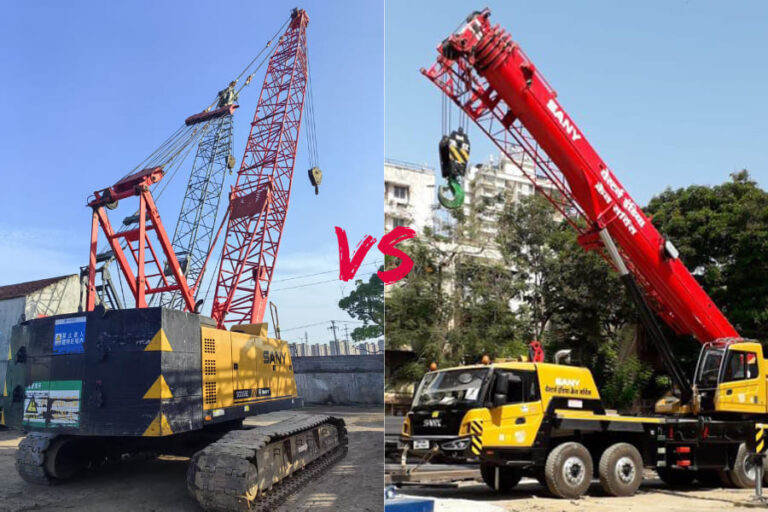

In today’s construction and heavy haul industries, mobility and lifting performance are the key points. The all terrain crane is an integration of the two functions and is certainly one of the most flexible lifting machines that finds wide applications in mega infrastructure projects.
An all-terrain crane is a type of mobile crane that merges the highway travel capability of truck cranes with the off-road performance of rough terrain cranes. With advanced engineering, powerful multi-axle chassis, and sophisticated hydraulic systems, these cranes can travel long distances on public roads and then operate efficiently on uneven construction sites.
Because of their flexibility and lifting capacity, all-terrain cranes are widely used in construction, bridge building, wind power installation, petrochemical projects, and infrastructure development.
The Basic Structure of an All Terrain Crane
An all-terrain crane is composed of several key components that work together to perform lifting operations efficiently and safely.
1. Multi-Axle Carrier (Chassis)
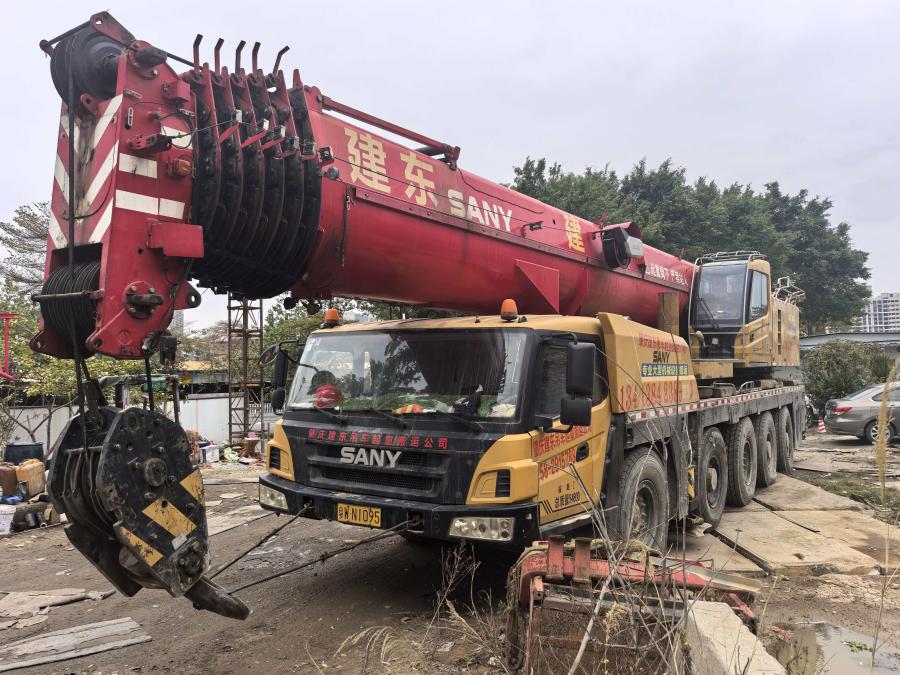
The carrier is the mobile base of the crane. Most all-terrain cranes use a multi-axle chassis with all-wheel steering and all-wheel drive, which provides excellent mobility and stability. Depending on the lifting capacity, the crane may have four to nine axles, allowing it to transport heavy equipment while maintaining balance during operation.
2. Telescopic Boom
The telescopic boom is the main lifting structure. It consists of multiple sections that can extend or retract hydraulically. This design allows the crane to adjust its working radius and lifting height according to the job requirements.
Modern all-terrain cranes can reach boom lengths of 50–100 meters or more, especially when equipped with lattice jibs or extensions.
3. Hydraulic System
The hydraulic system powers the crane’s key movements, including boom extension, hoisting, slewing, and lifting operations. Advanced hydraulic technology ensures smooth, precise, and efficient movement while maintaining strong lifting performance.
4. Electronic Control and Safety Systems
Modern cranes incorporate electronic monitoring systems that improve safety and operational efficiency. Features such as load moment indicators (LMI), automatic safety cut-offs, and intelligent control panels help operators monitor load conditions and prevent overloading.
Key Features of All Terrain Cranes
Excellent Mobility
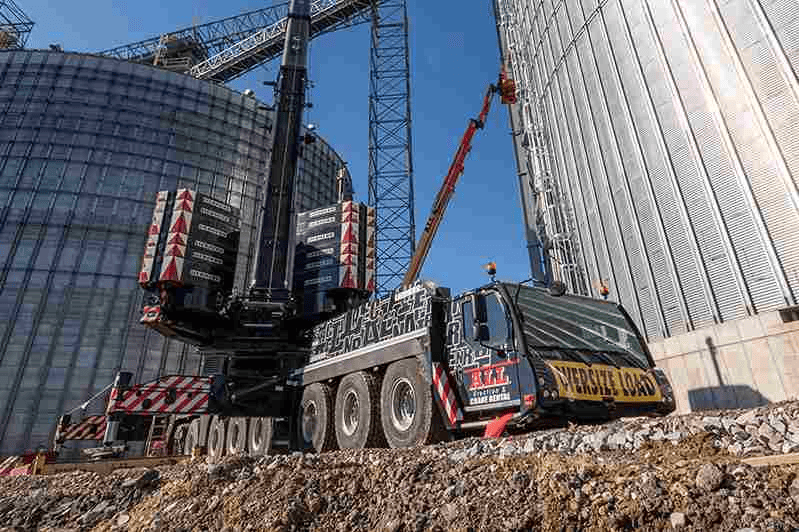
One of the most distinctive advantages of all-terrain cranes is their exceptional mobility. Thanks to multi-axle steering and powerful engines, these cranes can travel at highway speeds between job sites.
At the same time, their off-road capability allows them to operate in challenging environments such as:
- Muddy construction sites
- Sandy ground
- Uneven terrain
- Mountainous roads
- Remote infrastructure projects
This dual capability reduces transportation costs and improves project efficiency.
Powerful Lifting Capacity
All-terrain cranes are designed for heavy-duty lifting operations. Depending on the model, lifting capacities typically range from 40 tons to more than 1,000 tons.
This makes them suitable for handling large construction materials, heavy equipment, and structural components used in infrastructure projects.
Flexible Telescopic Boom Design
The telescopic boom system provides significant operational flexibility. Operators can extend or retract the boom sections to adapt to different lifting distances and heights.
In many construction scenarios, the crane can lift loads from long distances without repositioning the machine, which improves productivity and reduces setup time.
Advanced Control and Safety Technology
Modern all-terrain cranes use advanced electronic control systems and hydraulic technologies to ensure precise movement and safe lifting operations.
Operators can control multiple functions simultaneously, including:
- Boom extension and retraction
- Hook lifting and lowering
- Slewing operations
- Load monitoring
These technologies improve both operational safety and lifting accuracy, especially when working in tight construction spaces.
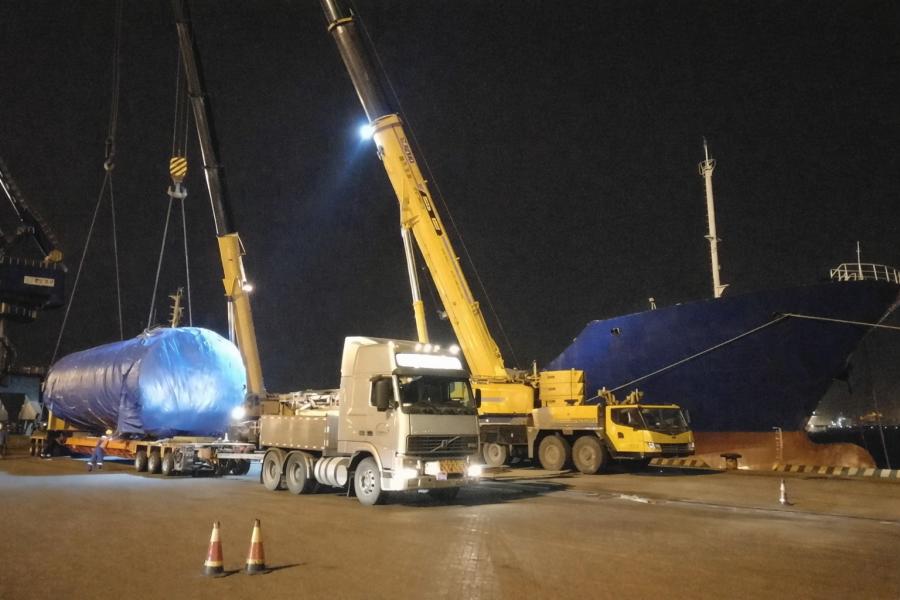
How Do All Terrain Cranes Work?
The operation of an all-terrain crane involves several coordinated steps.
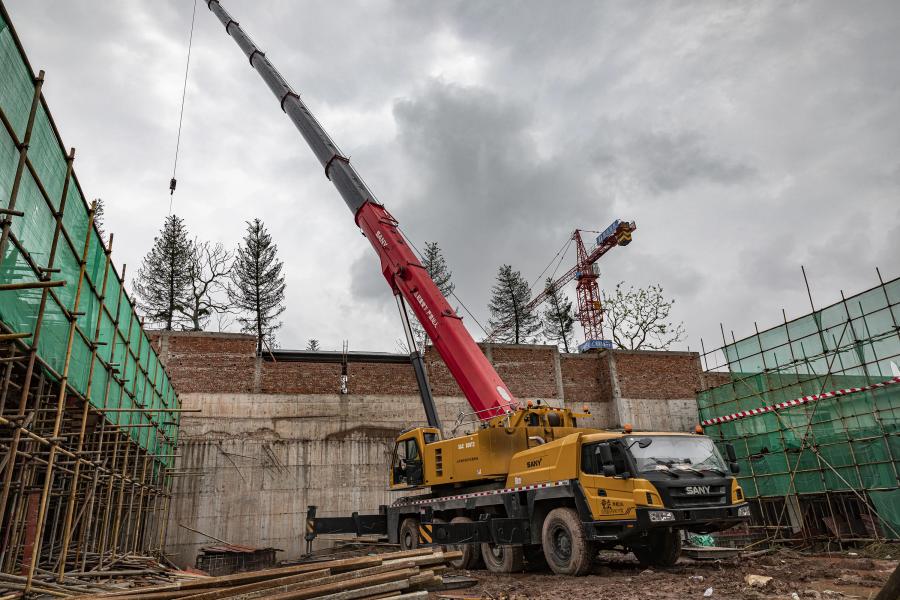
First, the crane travels to the job site using its road-capable carrier. Once it arrives, the operator deploys hydraulic outriggers to stabilize the machine. These outriggers distribute the crane’s weight across the ground and provide a stable lifting platform.
Next, the boom is extended to the required height and working radius. The lifting hook and hoist system are then used to attach the load.
During the lifting process, the crane’s hydraulic winch system raises or lowers the load while the slewing system rotates the boom to position the load accurately. Throughout the operation, the onboard computer monitors load conditions and ensures the crane remains within safe operating limits.
Common Applications of All Terrain Cranes
Due to their strong lifting capacity and excellent mobility, all-terrain cranes are widely used in many industries, including:
- High-rise building construction
- Bridge and highway projects
- Wind turbine installation
- Oil and gas facility construction
- Port and dock operations
- Large infrastructure projects
Their ability to move quickly between sites while maintaining heavy lifting performance makes them one of the most valuable machines in modern construction.
Advantages of Using All Terrain Cranes
Compared with other crane types, all-terrain cranes offer several significant advantages:
- High mobility for long-distance transportation
- Excellent off-road capability
- Large lifting capacity
- Flexible telescopic boom design
- Advanced safety and control systems
- Suitable for both urban and remote construction sites
These advantages allow contractors to complete lifting operations faster, safer, and more efficiently.
Conclusion
All-terrain cranes represent one of the most advanced developments in mobile crane technology. By combining highway mobility, off-road capability, and powerful lifting performance, they provide a flexible solution for a wide range of heavy lifting tasks.
As global infrastructure development continues to grow, the demand for reliable lifting equipment is increasing. With ongoing technological innovation, all-terrain cranes will continue to play an essential role in modern construction and industrial projects.
FAQ
An all terrain crane is a type of mobile crane designed to operate both on highways and rough construction sites. It combines the high-speed mobility of truck cranes with the off-road capability of rough terrain cranes, making it suitable for heavy lifting in complex environments.
All terrain cranes typically feature multi-axle carriers, all-wheel drive, telescopic booms, advanced hydraulic systems, and electronic control technology. These features allow the crane to travel long distances and perform precise lifting operations on challenging job sites.
The lifting capacity of an all terrain crane varies depending on the model. Smaller models may lift around 40 tons, while larger cranes can exceed 1,000 tons. These cranes are widely used for heavy lifting in infrastructure and industrial projects.
All terrain cranes are commonly used in construction sites, bridge projects, wind farm installation, oil and gas facilities, ports, and large infrastructure developments. Their mobility and lifting capacity make them ideal for projects that require both transportation and heavy lifting.
An all terrain crane is designed for both road travel and off-road operation, while a rough terrain crane is mainly intended for off-road construction sites and usually cannot travel long distances on public roads. All terrain cranes offer greater versatility and mobility.