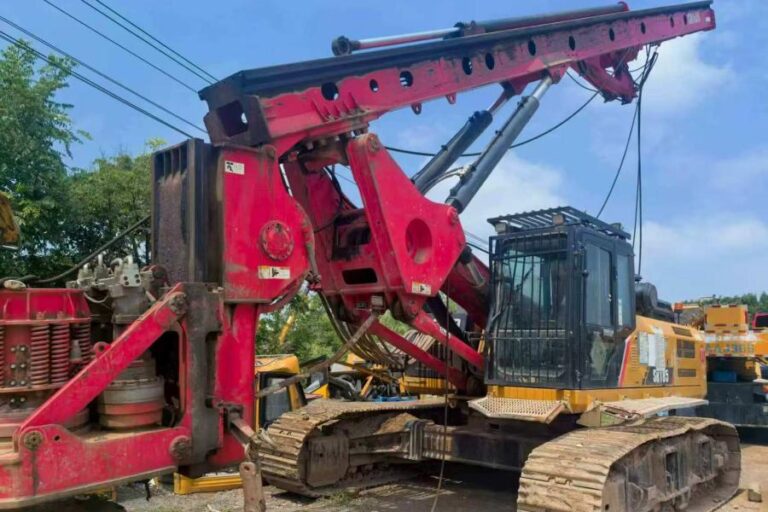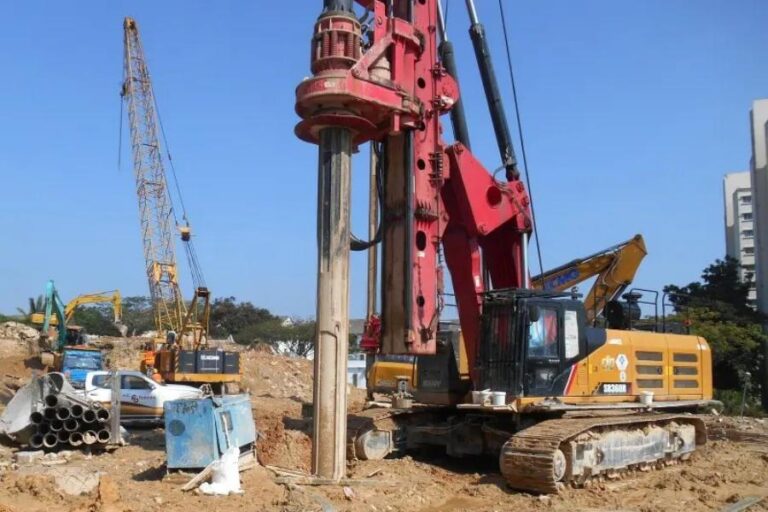
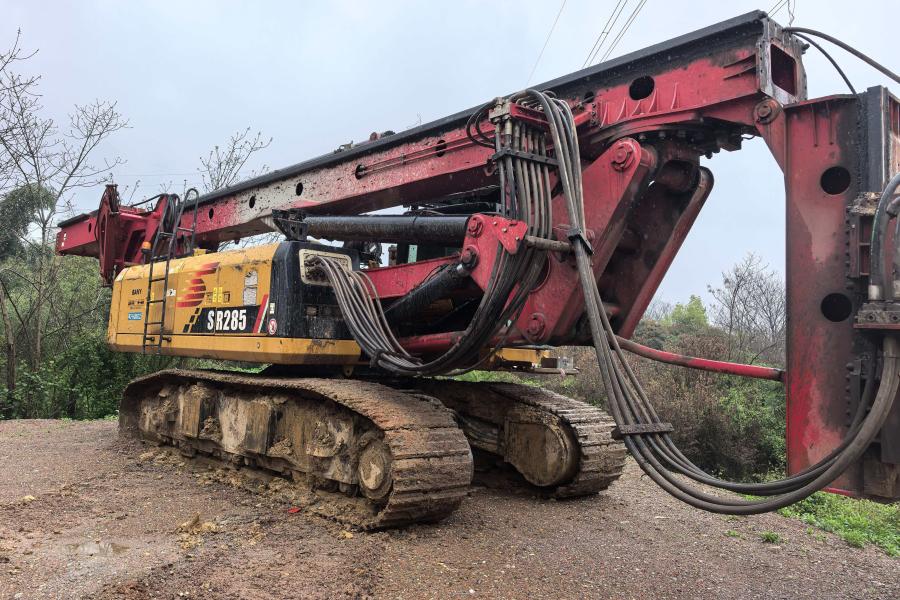
Buying a used drilling rig involves more than evaluating the machine’s operating hours, drilling capacity, and overall condition. Spare parts availability is another important factor that can affect maintenance planning, operating costs, and project schedules.
For contractors and foundation engineering companies, a used rotary drilling rig must remain productive under demanding site conditions. If essential components are difficult to source or incompatible with the machine, even a well-maintained rig can experience unexpected downtime.
Before purchasing a used drilling rig, buyers should evaluate the availability of replacement parts, confirm component compatibility, and understand the level of technical support available after delivery.
Check Spare Parts Availability for the Specific Rig Model
Spare parts availability varies by manufacturer, model, production year, and machine configuration. Components for widely used drilling rigs may be easier to source than those for discontinued or less common models.
Before making a purchase, buyers should confirm whether the following parts are readily available:
- Engine components: Filters, belts, sensors, pumps, and other service parts.
- Hydraulic components: Hydraulic hoses, seals, valves, pumps, and motors.
- Electrical components: Sensors, relays, switches, wiring harnesses, and control modules.
- Drilling system components: Kelly bar , drilling tools, drive adapters, and related connections.
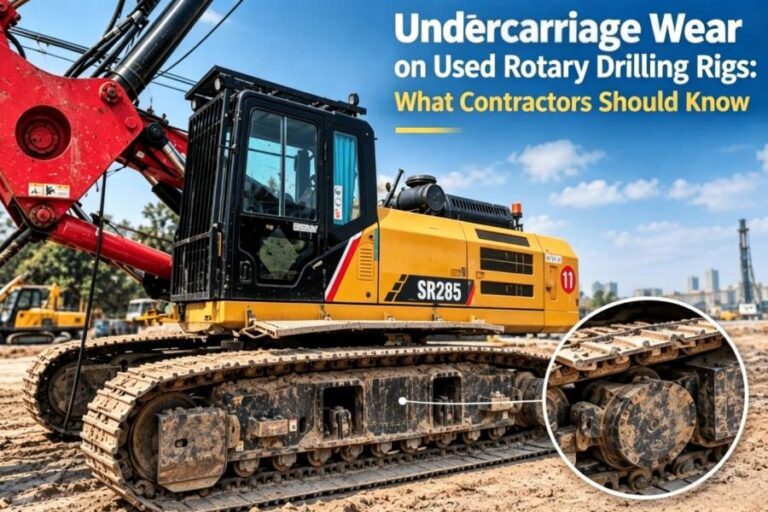
- Undercarriage parts: Track rollers, idlers, sprockets, and track shoes.
Not every component requires the same level of attention. Buyers should prioritize parts that are essential for machine operation and those that commonly require replacement during normal service.
It is also worth checking whether parts are available locally or must be imported. International sourcing can increase delivery times and make project scheduling more difficult.
Verify Spare Parts Compatibility
A part that looks similar to the original component is not necessarily suitable for the machine. Differences in dimensions, mounting points, hydraulic specifications, electrical connections, or control systems can prevent proper installation.
Compatibility checks are particularly important when purchasing older drilling rigs or machines that have undergone previous repairs or modifications.
Before ordering replacement parts, confirm the following information:
- Machine manufacturer, model, and production year.
- Machine serial number and relevant component identification numbers.
- Original part numbers, where available.
- Dimensions, mounting interfaces, and connection specifications.
- Hydraulic pressure, flow requirements, or electrical specifications where applicable.
For major components, buyers should request technical documentation or confirmation from a qualified supplier.
Drilling tools and Kelly bar connections deserve particular attention. Incorrect dimensions or incompatible drive connections can affect installation, power transmission, and drilling performance.
Confirming compatibility before purchase helps reduce ordering errors, installation delays, and unnecessary replacement costs.
Identify Wear Parts That May Need Replacement
Used drilling rigs often contain components with different levels of wear. Some parts may have substantial remaining service life, while others may require replacement soon after delivery.
Buyers should inspect wear-related components and consider their replacement requirements when estimating the initial investment.
Important items to check include:
- Kelly bar sections, locking mechanisms, and connection areas.
- Drilling buckets, cutting edges, teeth, and wear plates.
- Hydraulic hoses, seals, and visible leakage points.
- Undercarriage components and track condition.
- Engine filters, belts, and scheduled service items.
- Pins, bushings, and other mechanical connection points.
The inspection should distinguish between normal wear and damage that could affect safe operation or equipment performance.
Where possible, request maintenance records, previous replacement details, and inspection photographs. These records can help buyers determine which parts may need immediate attention and which can remain in service.
A practical approach is to prepare a preliminary spare parts list before finalizing the purchase. This makes it easier to estimate initial servicing requirements and prepare the machine for its next project.
Compare Spare Parts Costs and Delivery Lead Times
The purchase price of a used drilling rig does not represent its entire ownership cost. Replacement parts, transportation, labor, and downtime can all contribute to operating expenses.
A low-priced machine may become more expensive to operate if critical components are costly or difficult to obtain.
Buyers should compare several factors when evaluating spare parts supply:
| Factor | What to Check |
|---|---|
| Parts pricing | Obtain quotations for essential and frequently replaced components. |
| Delivery lead time | Confirm estimated dispatch and delivery times. |
| Shipping costs | Consider freight charges, customs clearance, and import duties. |
| Local availability | Check whether parts can be sourced from regional suppliers. |
| Alternative supply | Determine whether qualified alternative parts are available. |
| Technical support | Confirm assistance with identification, installation, and troubleshooting. |
For projects with strict deadlines, delivery lead time may be just as important as the price of the part itself.
Buyers should also distinguish between readily available service items and specialized electronic or hydraulic components that may require longer procurement periods.
For critical components, obtaining quotations before purchasing the rig provides a more realistic picture of future operating expenses.
Evaluate the Supplier’s Spare Parts Support
The seller’s ability to provide accurate equipment information can make a significant difference when purchasing used machinery.
A reliable supplier should be able to explain the machine’s configuration, provide available maintenance records, and help identify components that may require attention.
Before committing to a purchase, buyers should ask:
- Can the supplier provide the machine’s model and serial number?
- Are maintenance and repair records available?
- Can the supplier assist with identifying compatible replacement parts?
- Is technical support available after delivery?
- Can the supplier provide photographs or inspection information for relevant components?
- Are any spare parts included in the transaction?
Buyers should verify the scope of support rather than assume that every used machine comes with a parts warranty or ongoing technical assistance.
Clear communication before the transaction helps establish realistic expectations and reduces uncertainty during subsequent maintenance.
Consider Parts Availability in the Destination Market
A used drilling rig may be purchased in one country and operated in another. This makes destination-market support an important part of the purchasing decision.
The availability of qualified technicians, regional parts distributors, and compatible service components can differ significantly between markets.
For international buyers, several additional checks are worthwhile:
Local service capability: Determine whether technicians in the destination market can maintain the engine, hydraulic system, electrical controls, and drilling equipment.
Import requirements: Check whether replacement parts are subject to specific customs procedures, documentation requirements, or import restrictions.
Regional supplier coverage: Identify suppliers that can provide commonly required components without excessive delivery delays.
Critical spare parts planning: Consider keeping essential filters, seals, hoses, or other appropriate service items in stock when local supply is limited.
The required stock level should depend on project duration, machine utilization, local supply conditions, and the consequences of equipment downtime.
Planning these requirements before shipment can help contractors prepare the rig for operation after arrival.
Prepare a Spare Parts Checklist Before Finalizing the Purchase
A structured checklist makes it easier to compare different used drilling rigs and identify potential procurement risks.
Before placing an order, buyers can review the following items:
- Confirm the machine model, serial number, and configuration.
- Check the availability of essential service and replacement parts.
- Verify compatibility for major components and drilling tools.
- Inspect wear parts and identify likely replacement requirements.
- Request quotations for critical spare parts.
- Compare estimated delivery times and shipping costs.
- Review available maintenance and repair records.
- Confirm the supplier’s technical support arrangements.
- Evaluate parts availability in the destination market.
- Include expected initial replacement costs in the purchase budget.
Completing these checks alongside the machine inspection provides a more comprehensive basis for evaluating the equipment.
Make a More Informed Used Drilling Rig Purchase
Spare parts availability is an important consideration when evaluating a used drilling rig. Buyers who check component compatibility, identify potential wear-related replacements, compare supply costs, and verify technical support can make better-informed purchasing decisions.
A thorough assessment should combine the machine’s operating condition with its expected maintenance requirements and the availability of suitable replacement components. This approach helps contractors manage procurement risks and prepare equipment for future foundation construction projects.
At Maxtop Used Machinery, buyers can evaluate used drilling equipment based on their project requirements, machine specifications, and operational needs. Contact the team to discuss available equipment and obtain further information before making a purchasing decision.
FAQ:
Availability depends on the manufacturer, model, production year, component type, and destination market. Common service parts may be relatively easy to source, while specialized electronic, hydraulic, or discontinued components may require additional lead time.
Start with components essential to machine operation, including engine service parts, hydraulic components, electrical controls, undercarriage parts, and drilling system connections. The priority should reflect the machine’s inspection results and intended working conditions.
Provide the machine model, serial number, component part number, and relevant technical specifications to the supplier. For critical components, confirm dimensions and interface requirements before ordering rather than relying on visual similarity alone.
Yes. Difficult-to-source components, expensive replacement parts, and long delivery times can increase the total cost of ownership. Buyers should factor these risks into their overall assessment rather than comparing machines solely by purchase price.
Not always. The decision depends on the machine’s condition, the planned project, local supply availability, and delivery lead times. Purchasing essential service items in advance may be practical when replacement parts are difficult to obtain at the job site.