
In modern foundation engineering, selecting the right piling equipment is crucial for construction efficiency, safety, and project cost control. Two commonly used technologies in deep foundation construction are Rotary Drilling Rigs and CFA (Continuous Flight Auger) Piling Rigs.
Although both machines are used to construct pile foundations, they differ significantly in working principles, construction methods, soil suitability, and project applications. Understanding the differences between these two systems helps contractors choose the most suitable equipment for their specific project requirements.
This article explains the key differences between rotary drilling rigs and CFA piling rigs, including their working methods, advantages, and typical applications.
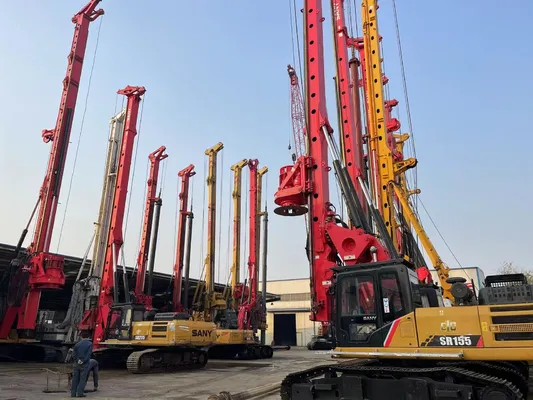
What Is a Rotary Drilling Rig?
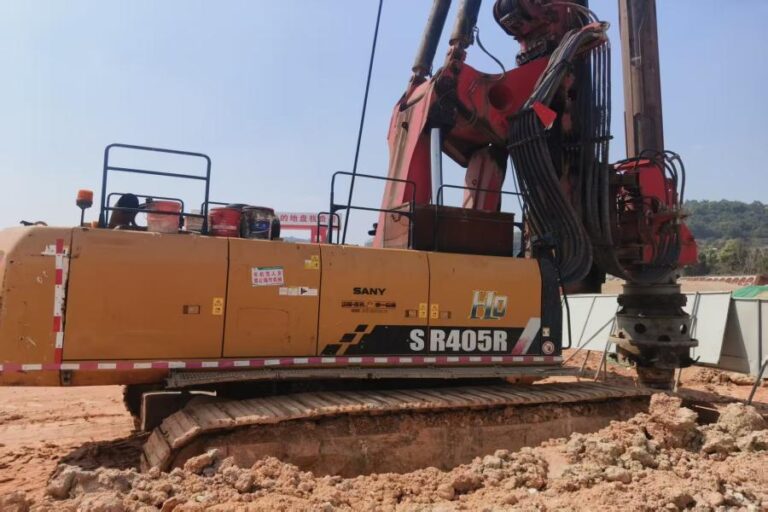
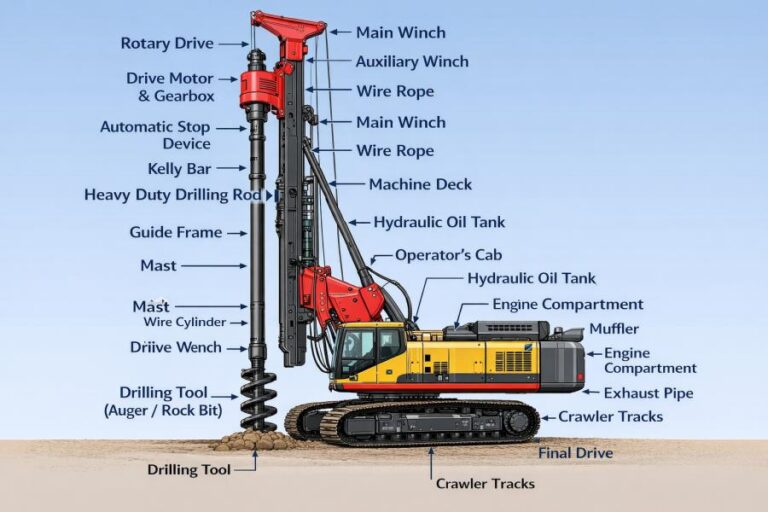
A rotary drilling rig is a heavy foundation construction machine designed for drilling deep holes in the ground to form bored piles. It uses rotary torque and specialized drilling tools to cut through soil, gravel, or rock layers.
Rotary drilling rigs typically operate with tools such as:
- Kelly bars
- Drilling buckets
- Augers
- Core barrels
- Rock drilling tools
During operation, the drilling tool rotates and penetrates the ground while removing soil or rock from the borehole. After the required depth is reached, reinforcement cages are installed and concrete is poured, often using a tremie pipe system for underwater concrete placement.
Key Features of Rotary Drilling Rigs
- Suitable for deep and large-diameter piles
- Capable of drilling through hard soil and rock formations
- Flexible drilling tools for different geological conditions
- High torque and strong drilling capability
Typical Applications
Rotary drilling rigs are widely used in:
- High-rise building foundations
- Bridge and highway construction
- Wind power projects
- Metro and railway infrastructure
- Large-scale industrial foundations
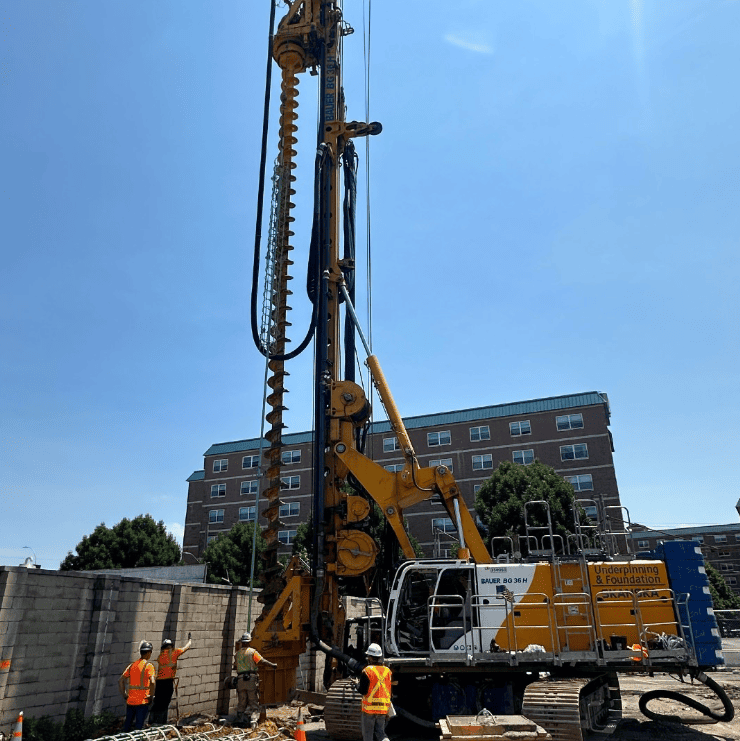
What Is a CFA Piling Rig?
A CFA piling rig (Continuous Flight Auger piling rig) is a specialized machine used to install piles using a continuous auger drilling system. Unlike rotary drilling rigs, CFA rigs drill and pour concrete simultaneously without removing the auger completely from the ground during drilling.
The auger drills into the soil while transporting excavated material upward along the helical flights. Once the required depth is reached, concrete is pumped through the hollow stem of the auger as the auger is gradually withdrawn from the borehole.
After the concrete is placed, a reinforcement cage is inserted into the fresh concrete.
Key Features of CFA Piling Rigs
- Continuous drilling and concreting process
- Minimal ground vibration and noise
- Faster pile installation in suitable soils
- Efficient for medium-depth foundation piles
Typical Applications
CFA piling rigs are commonly used in:
- Urban construction projects
- Residential building foundations
- Commercial buildings
- Noise-sensitive environments
- Soft to medium soil conditions
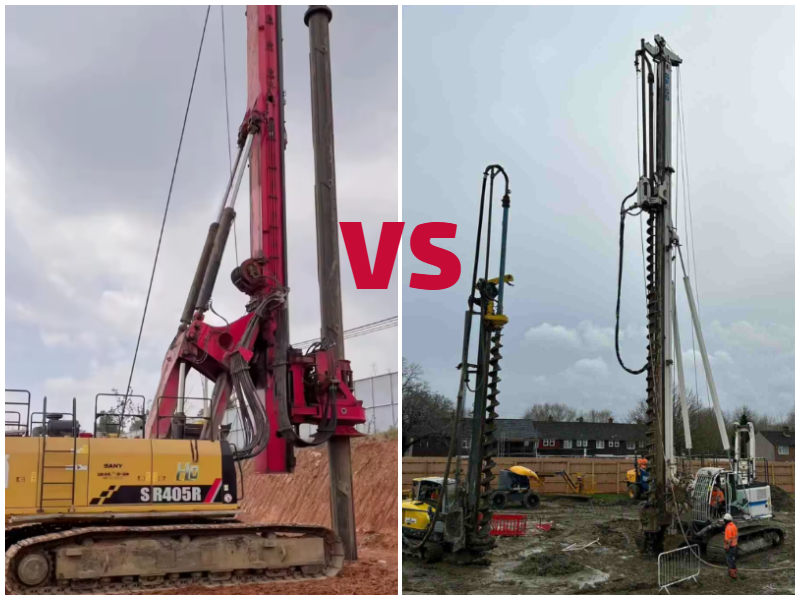
Key Differences Between Rotary Drilling Rigs and CFA Piling Rigs
Although both machines are used for pile foundation construction, their design and operating methods are quite different.
| Feature | Rotary Drilling Rig | CFA Piling Rig |
|---|---|---|
| Drilling Method | Rotary drilling with various tools | Continuous auger drilling |
| Soil Removal | Excavated soil is removed from borehole | Soil transported along auger flights |
| Concrete Placement | Concrete poured after drilling | Concrete pumped during auger withdrawal |
| Suitable Soil | Soft soil, gravel, and rock layers | Soft to medium soils |
| Pile Diameter | Large diameter piles possible | Usually medium diameter piles |
| Maximum Depth | Can reach very deep foundations | Generally medium depth |
| Construction Speed | Moderate | Faster in suitable conditions |
| Noise & Vibration | Moderate | Low vibration and noise |
Advantages of Rotary Drilling Rigs
Rotary drilling rigs offer several advantages in complex foundation projects:
Strong drilling capability
They can penetrate hard rock layers and difficult geological formations.
High flexibility
Different drilling tools allow the rig to adapt to various soil conditions.
Large pile diameter and depth
Rotary drilling rigs are ideal for large infrastructure projects requiring deep foundations.
Wide application range
They are used in bridges, offshore structures, wind farms, and heavy industrial construction.
Advantages of CFA Piling Rigs
CFA piling rigs also provide important benefits for certain types of projects:
High construction efficiency
Continuous drilling and concreting significantly reduce installation time.
Low noise and vibration
This makes CFA piling suitable for urban construction areas.
Reduced borehole collapse risk
Concrete is pumped immediately during auger withdrawal, stabilizing the borehole.
Cost-effective for medium-depth piles
CFA piling can be more economical in appropriate soil conditions.
Which One Should You Choose?
Choosing between a rotary drilling rig and a CFA piling rig depends on several project factors:
- Soil and geological conditions
- Required pile diameter and depth
- Construction environment
- Project budget and timeline
For large infrastructure projects or hard geological formations, rotary drilling rigs are typically the preferred solution due to their powerful drilling capability and flexibility.
For urban projects with soft soils and strict vibration limits, CFA piling rigs can provide faster and more efficient pile installation.
Conclusion
Both rotary drilling rigs and CFA piling rigs play essential roles in modern foundation construction. While rotary drilling rigs offer greater flexibility and stronger drilling performance for complex geological conditions, CFA piling rigs provide efficient and low-vibration pile installation in softer soils.
Understanding the differences between these two technologies allows contractors and engineers to select the most appropriate equipment for their project, ensuring safe, efficient, and cost-effective foundation construction.
FAQ
The main difference is the construction method. A rotary drilling rig drills the borehole first and then pours concrete, while a CFA piling rig drills and pumps concrete simultaneously through a hollow auger during withdrawal.
A rotary drilling rig is typically used for deep foundations, large-diameter piles, and projects involving hard soil, gravel, or rock layers. It is widely used in bridges, wind farms, high-rise buildings, and large infrastructure construction.
CFA piling rigs work best in soft to medium soils such as clay, sand, and silt. They are commonly used in urban construction projects where low vibration and minimal noise are required.
Yes, CFA piles are generally faster to install because drilling and concrete placement occur in a continuous process. This reduces construction time compared to traditional bored pile methods using rotary drilling rigs.
CFA piling is often preferred for urban construction because it produces less vibration and noise. Rotary drilling rigs are usually selected when deeper piles or more complex geological conditions are involved.