
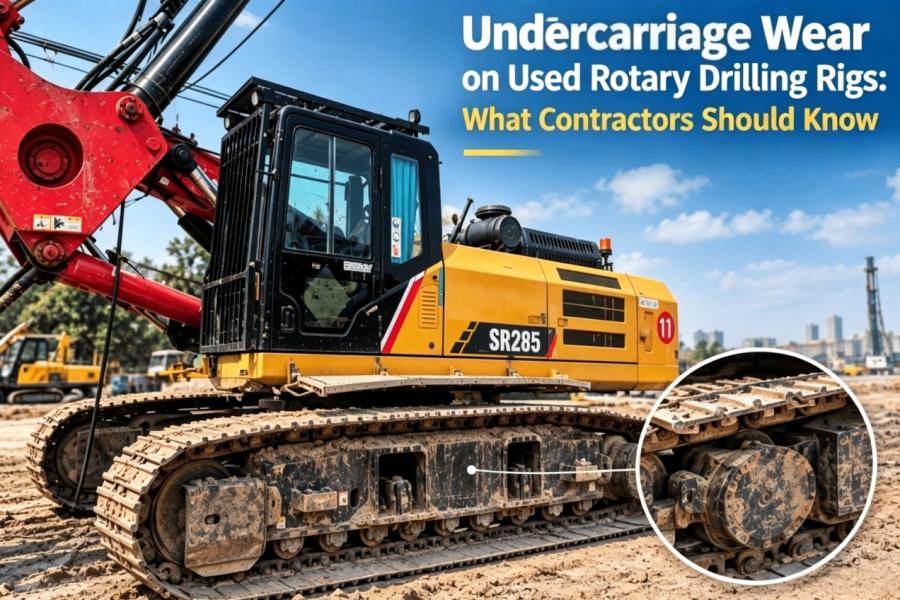
The undercarriage supports a rotary drilling rig during travel, positioning, and drilling operations. On a used rig, worn track components can affect machine mobility, stability, and maintenance costs. Before purchasing a used rotary drilling rig, contractors should inspect the crawler undercarriage and determine whether the wear is consistent with the machine’s operating history and intended working conditions.
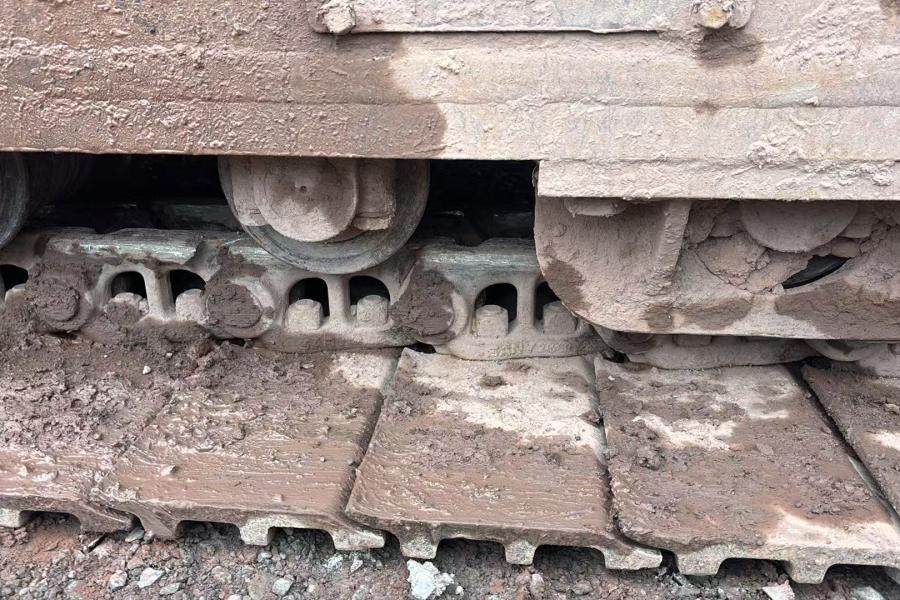
Key Undercarriage Components to Inspect
1. Track Shoes and Track Links
Track shoes provide ground contact, while track links form the crawler chain. Inspect the shoes for bent plates, cracks, damaged grouser bars, and uneven wear. Check the track links and connecting pins for excessive play, abnormal movement, or signs of damage.
Worn track shoes can reduce traction on loose or uneven ground. Damaged links and pins may increase the risk of track problems during machine travel.
2. Track Rollers and Carrier Rollers
Track rollers support the machine’s weight and guide the track chain along the lower side of the undercarriage. Carrier rollers support the upper track run.
Check for oil leakage, damaged seals, uneven roller wear, and rollers that do not rotate freely. Flat spots or unusual wear patterns may indicate prolonged operation under demanding conditions or a component that requires further inspection.
3. Idlers and Sprockets
The front idler guides the track chain and helps maintain its alignment. The sprocket engages with the track links to transmit drive force.
Inspect the idler for damage, misalignment, and abnormal wear. Check sprocket teeth for excessive wear, deformation, or an irregular tooth profile. Worn sprockets and track links should be assessed together because wear in one component can affect the engagement of the other.
4. Track Tensioning System
Track tension must follow the machine manufacturer’s specifications and the applicable inspection procedure. Excessive tension increases loads on undercarriage components, while insufficient tension can allow the track to sag excessively or disengage under certain conditions.
Inspect the tensioning mechanism for leakage, damage, and signs of improper adjustment. Do not judge track tension from appearance alone; use the manufacturer’s specified measurement procedure.
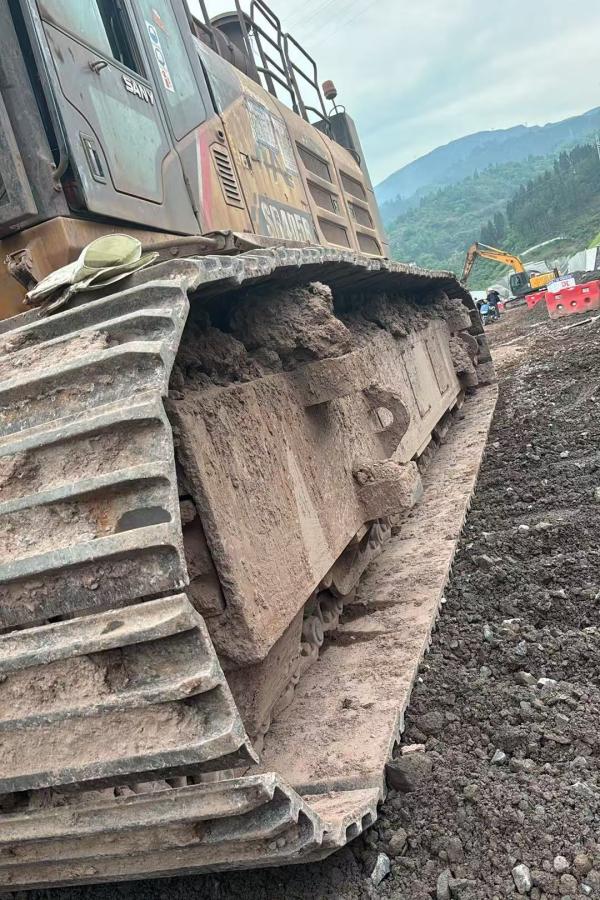
How Undercarriage Wear Affects Drilling Operations
Undercarriage condition matters beyond machine travel. A rotary drilling rig must be positioned correctly and supported by a suitable working platform before drilling begins.
Excessive wear, damaged components, or track misalignment can affect travel and positioning. A damaged undercarriage may also require repairs that delay mobilization or interrupt work.
However, track wear alone does not determine whether a drilling rig is stable during operation. Stability also depends on the machine configuration, ground-bearing conditions, platform preparation, rig positioning, and the manufacturer’s operating requirements.
How to Assess a Used Rotary Drilling Rig’s Undercarriage
A practical inspection should include the following steps:
- Review maintenance records: Check for previous track, roller, idler, sprocket, and track-chain repairs or replacements.
- Inspect both crawler assemblies: Compare wear on the left and right sides and investigate significant differences.
- Check for leakage and damage: Examine rollers, idlers, and the track tensioning system.
- Observe machine travel: If operating conditions permit, check for abnormal noise, track deviation, or uneven movement.
- Obtain measurements where necessary: Compare measured wear with the manufacturer’s service limits rather than relying only on visual estimates.
- Estimate repair requirements: Identify components that need immediate attention and those that require continued monitoring.
If wear is severe, uneven, or difficult to assess, a qualified technician should inspect the undercarriage before the purchase decision is finalized.
What Contractors Should Consider Before Buying
The cost of a used rotary drilling rig should be evaluated alongside its mechanical condition and expected maintenance requirements. Undercarriage repairs may involve individual components or several related parts, depending on the extent of wear.
Ask the seller for maintenance documentation, recent inspection findings, and details of any replaced components. Where possible, obtain a written repair estimate for defects identified during inspection.
The most suitable machine is not necessarily the one with the least visible wear. It is the one whose condition, repair requirements, configuration, and operating capability match the project’s requirements and budget.
FAQ
Inspect the track shoes, track links, connecting pins, track rollers, carrier rollers, front idlers, sprockets, and track tensioning system. Check for excessive wear, oil leakage, damage, and abnormal alignment.
Common contributing factors include abrasive ground conditions, frequent machine travel, incorrect track tension, poor maintenance, and prolonged operation on uneven or unsuitable surfaces. Actual wear depends on operating conditions and maintenance history.
Look for excessive clearance between track components, damaged links, abnormal pin and bushing wear, and irregular engagement with the sprockets. Measurements should be compared with the manufacturer’s service limits to determine whether replacement is necessary.
In some cases, individual components can be replaced separately. However, the condition of the track chain, sprockets, rollers, and idlers should be assessed together because related wear can affect component engagement and service life. Follow the manufacturer’s repair recommendations.
Not necessarily. Replacement requirements depend on the condition of each component, measured wear, machine specifications, and the intended working conditions. A qualified inspection can help determine whether individual parts need replacement or more extensive undercarriage repairs are justified.