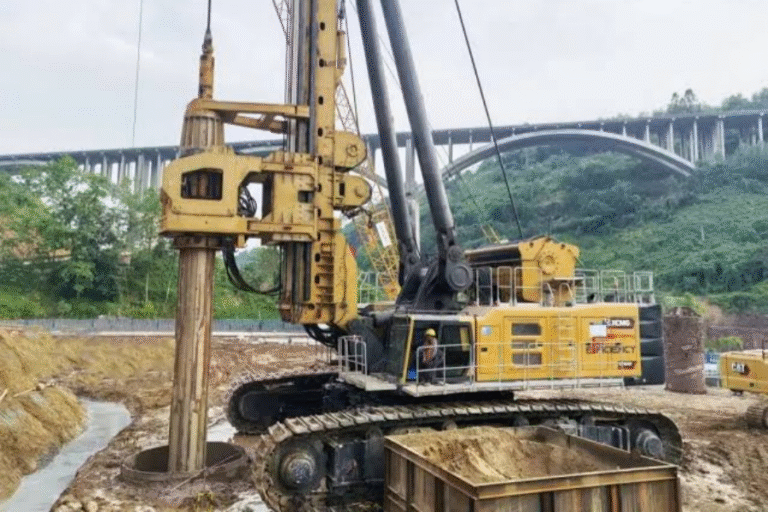

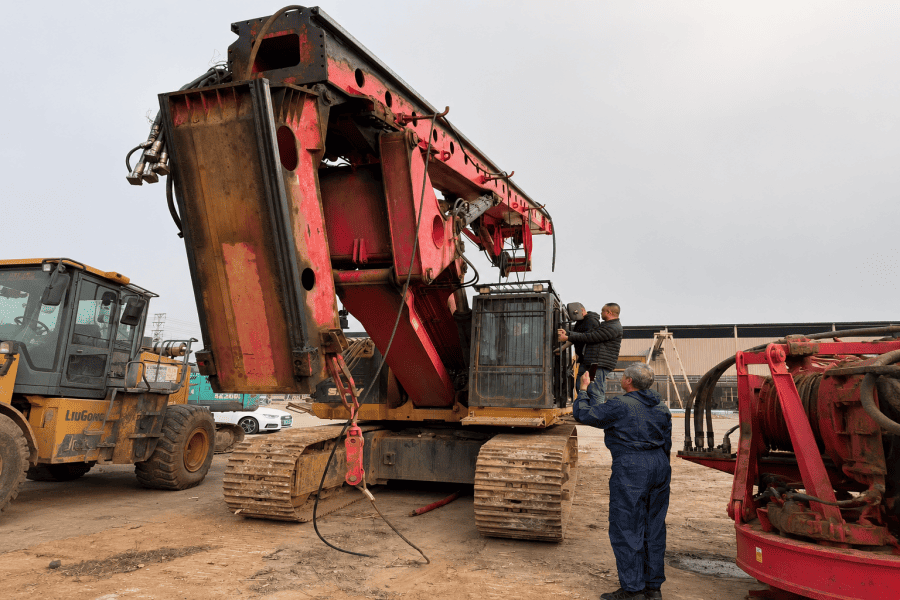
Rotary drilling rigs are widely used in foundation construction, bored piling, and infrastructure projects. Whether you operate a new machine or a used rotary drilling rig, regular maintenance and timely troubleshooting are essential for maximizing productivity and reducing downtime.
Many common failures are caused by wear, insufficient lubrication, hydraulic system issues, or improper operation. Identifying these problems early can prevent expensive repairs and extend the service life of key components.
In this guide, we’ll discuss four common rotary drilling rig problems, their possible causes, and practical troubleshooting methods that contractors and equipment managers can use on site.
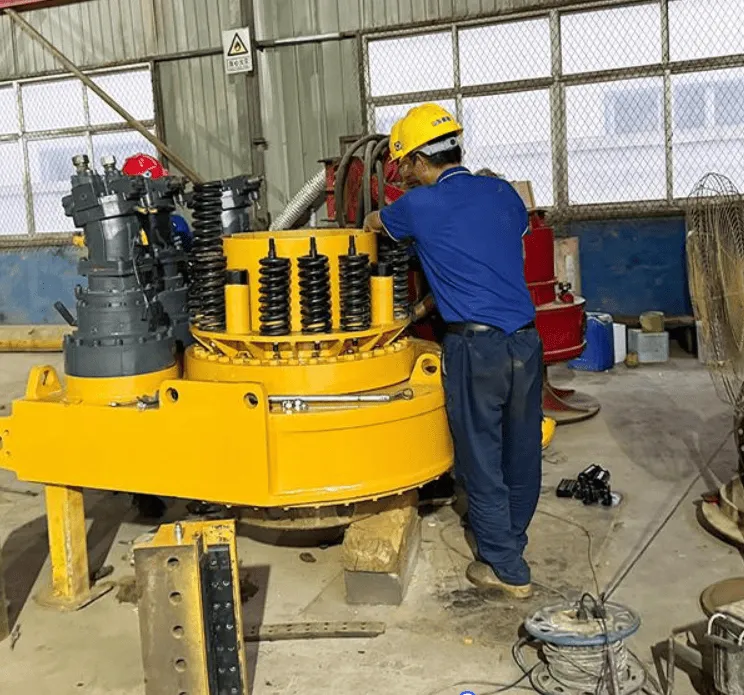
Insufficient Rotary Head Torque
The rotary head is one of the most critical components of a drilling rig. It transfers torque to the Kelly bar and drilling tools. When torque drops significantly, drilling efficiency decreases, especially in hard rock or dense soil conditions.
Common Symptoms
- Slow rotary head speed in both forward and reverse rotation
- Weak drilling performance
- Difficulty penetrating hard formations
- Abnormal noise from the hydraulic motor or gearbox
- Reduced drilling efficiency
Possible Causes
Hydraulic System Issues
- Low hydraulic pressure
- Incorrect relief valve pressure setting
- Hydraulic pump performance degradation
- Internal leakage in hydraulic circuits
Mechanical Issues
- Worn hydraulic motor
- Damaged gearbox gears
- Bearing failure
- Internal transmission component wear
Troubleshooting Steps
- Check hydraulic pressure using the machine’s diagnostic system.
- Verify relief valve settings.
- Inspect the hydraulic motor for internal leakage or abnormal operation.
- Listen for periodic noises from the gearbox.
- Disassemble and inspect the gearbox if necessary.
- Replace damaged gears, bearings, or transmission components.
Maintenance Tips
- Change hydraulic oil according to the maintenance schedule.
- Monitor gearbox oil quality.
- Avoid overload drilling.
- Inspect rotary head components regularly.

Wire Rope Press Roller Cannot Rotate
The wire rope press roller (rope guide) helps maintain proper alignment of the main winch cable. If it becomes stuck, excessive wire rope wear can occur, eventually leading to cable failure.
Common Symptoms
- Press roller cannot rotate
- Wire rope wears rapidly
- Metal grinding noise
- Rope does not feed smoothly
Possible Causes
- Lack of grease
- Bearing seizure
- Roller deformation
- Dirt or debris entering the bearing
Troubleshooting
- Inspect the roller for visible damage.
- Remove the roller assembly.
- Check grease condition.
- Inspect bearings for seizure.
- Replace damaged bearings.
- Reassemble and lubricate thoroughly.
Preventive Maintenance
- Lubricate regularly.
- Clean after dusty or muddy operations.
- Inspect wire rope condition daily.
- Replace worn bearings before failure.

Mast Cylinder Oil Leakage and Misaligned Mast
Hydraulic cylinders control mast movement and positioning. Oil leakage not only reduces hydraulic efficiency but can also affect drilling accuracy and safety.
Common Symptoms
- Oil leaking from mast cylinder
- Mast cannot remain vertical
- Uneven mast movement
- Reduced hydraulic pressure
Possible Causes
- Damaged piston rod
- Worn oil seals
- Damaged O-rings
- Scratched cylinder rod
- Internal leakage
- Faulty balance valve
Troubleshooting Procedure
- Inspect the piston rod for scratches or cracks.
- Remove the cylinder for inspection.
- Check seals, O-rings, and backup rings.
- Replace all damaged sealing components.
- Inspect cylinder bore for scoring.
- Test hydraulic pressure after reassembly.
Why It Happens
In many cases, improper operation causes the main winch wire rope to contact the cylinder rod, creating scratches that eventually damage the seals and lead to leakage.
Preventive Measures
- Avoid improper wire rope routing.
- Inspect cylinder rods frequently.
- Replace damaged seals immediately.
- Keep hydraulic oil clean.
Mast Tilts During Raising or Lowering
During mast erection or folding, both mast cylinders should move synchronously. If they do not, the mast may lean to one side, affecting operational safety.
Common Symptoms
- Mast tilts during lifting
- Uneven cylinder movement
- Slow mast response
- Poor positioning accuracy
Possible Causes
- Incorrect proportional valve settings
- Balance valve malfunction
- Internal cylinder leakage
- Damaged piston seals
Troubleshooting Process
Step 1: Check Electrical Settings
Verify proportional valve current settings according to the manufacturer’s specifications.
Step 2: Inspect Balance Valve
- Remove and clean the valve.
- Check for sticking spool movement.
- Adjust valve opening if required.
Step 3: Inspect Hydraulic Cylinder
If the problem persists:
- Remove the cylinder.
- Inspect piston seals.
- Replace damaged seals.
- Test synchronization after installation.
General Maintenance Tips to Prevent Rotary Drilling Rig Failures
Preventive maintenance is the most effective way to reduce unexpected breakdowns.
Perform Daily Inspections
Check:
- Hydraulic oil level
- Engine oil
- Coolant
- Wire ropes
- Kelly bar
- Rotary head
- Winch system
- Hydraulic hoses
Lubricate Regularly
Proper lubrication significantly extends the life of:
- Bearings
- Wire rope rollers
- Rotary head
- Mast guide rails
- Pins and bushings
Monitor Hydraulic Oil
Hydraulic contamination is responsible for many system failures.
Always:
- Replace filters on schedule
- Keep hydraulic oil clean
- Avoid water contamination
Inspect Wear Parts
Pay attention to:
- Kelly bar locking mechanisms
- Rotary head gearbox
- Drilling tools
- Hydraulic cylinders
- Seals and hoses
Why Preventive Maintenance Matters for Used Rotary Drilling Rigs
For contractors purchasing a used rotary drilling rig, preventive maintenance is even more important. Components such as hydraulic cylinders, rotary heads, wire ropes, and gearboxes may already have significant operating hours.
A comprehensive inspection before each project can reduce unexpected downtime, lower repair costs, and improve equipment reliability.
At Maxtop Machinery, every used rotary drilling rig undergoes professional inspection before delivery, helping customers obtain reliable equipment with dependable performance for foundation construction projects.
Conclusion
Most rotary drilling rig failures do not occur suddenly. They usually begin as small issues—such as insufficient lubrication, worn seals, or abnormal hydraulic pressure—that gradually develop into major mechanical problems.
By understanding these four common faults:
- Insufficient rotary head torque
- Stuck wire rope press roller
- Mast cylinder oil leakage
- Mast tilting during raising or lowering
operators can diagnose problems more quickly, perform timely maintenance, and significantly reduce project downtime.
Regular inspection, proper lubrication, and professional servicing remain the best strategies for keeping rotary drilling rigs operating safely and efficiently throughout their service life.
FAQ
Common reasons include low hydraulic pressure, worn hydraulic motors, damaged gearbox gears, or internal mechanical failures in the rotary head.
Hydraulic oil level should be checked daily, while oil cleanliness and filter condition should be inspected according to the manufacturer’s maintenance schedule or more frequently under harsh working conditions.
Lack of lubrication, seized press roller bearings, improper rope alignment, and damaged guide rollers are the most common causes.
Possible reasons include hydraulic cylinder internal leakage, balance valve malfunction, or improper proportional valve adjustment.
Yes. Routine inspections and timely replacement of wear parts are far less expensive than repairing major hydraulic or gearbox failures, while also reducing costly project downtime.