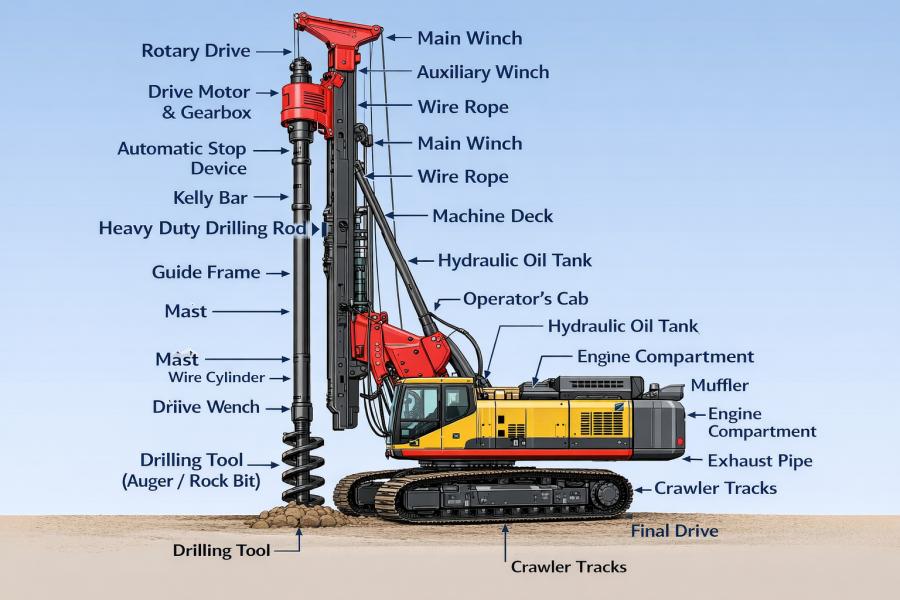
Rotary drilling rigs are comprehensive foundation construction machines widely used in bored pile projects, bridge foundations, high-rise buildings, ports, and infrastructure works. Whether you are a contractor, equipment buyer, or investor in the used machinery market, understanding the main parts of a rotary drilling rig is essential for evaluating machine performance, maintenance costs, and long-term reliability.
In this guide, we break down the key components of a rotary drilling rig and explain how each system works together to ensure efficient and safe piling operations.
Undercarriage System (Chassis System)
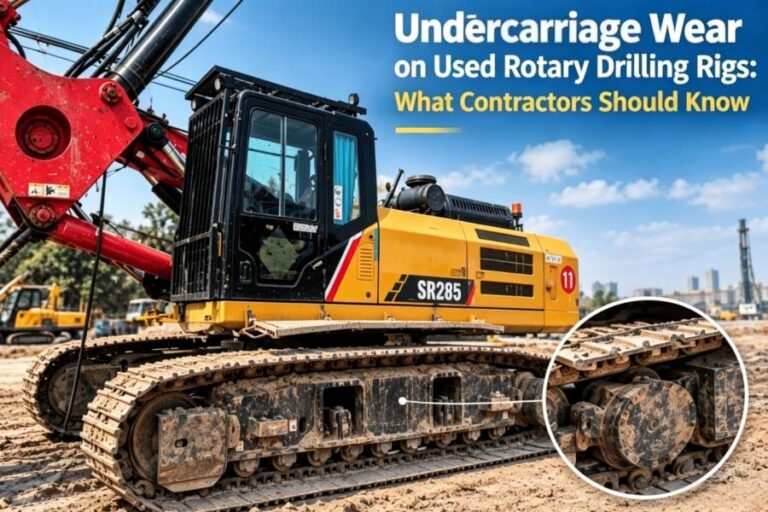
The undercarriage is the structural base of the rotary drilling rig. Most modern rigs use a crawler-type hydraulic chassis, which provides:
- High stability during drilling
- Strong load-bearing capacity
- Excellent mobility on rough terrain
- 360-degree rotation support
Types of Chassis
Rotary drilling rigs may use:
- Dedicated crawler chassis (most common)
- Modified excavator chassis
- Crawler crane chassis
- Walking-type chassis
- Truck-mounted chassis (less common for large rigs)
However, dedicated crawler chassis are widely preferred due to their compact structure, transportation convenience, and better balance.
Key Undercarriage Components (Four Wheels and One Track)
The undercarriage typically includes:
- Drive sprocket – Transfers power from the travel motor to the track
- Idler wheel – Guides and tensions the track
- Track rollers (bottom rollers) – Support machine weight
- Carrier rollers (top rollers) – Support upper track alignment
- Track assembly – Provides movement and ground contact
A well-maintained undercarriage directly affects drilling stability and safety.
Power System (Engine System)
The power system is the energy source of the entire rotary drilling rig.International brands include Caterpillar, Cummins, Isuzu, Volvo, and Liebherr, while major Chinese brands include Yuchai, Weichai, and Shanghai Diesel Engine Co., Ltd., and these engines are primarily used in drilling rigs of varying tonnages.For example, Sany SR235 and SR285 engines are mainly Isuzu engines.
Most rigs are equipped with a high-performance diesel engine, which supplies power to:
- Hydraulic pumps
- Electrical systems
- Cooling systems
- Auxiliary components
The engine must provide stable output, strong torque response, and high fuel efficiency. In the used equipment market, engine condition is one of the most critical inspection factors.
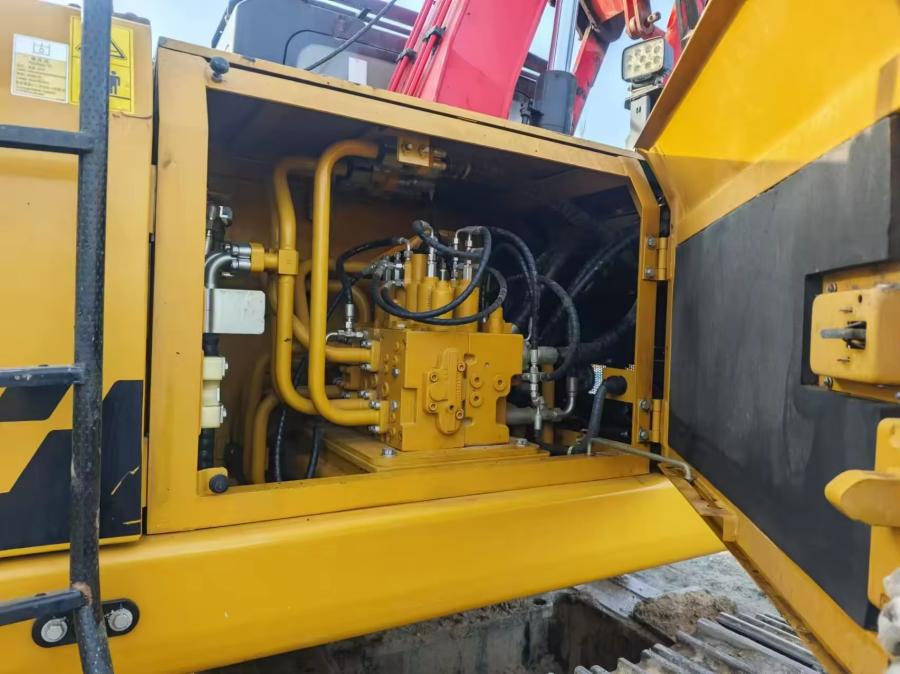
Hydraulic System – The “Blood” of the Machine
The hydraulic system controls almost every function of the rotary drilling rig. It operates through:
- Hydraulic pumps
- Hydraulic motors
- Control valves
- Oil cylinders
- Oil pipelines
Functions Controlled by the Hydraulic System
- Rotary movement of the power head
- Lifting and lowering of the drill rod
- Mast inclination adjustment
- Pressurization (crowd force)
- Winch operation
- Slewing rotation
High-pressure hydraulic oil drives the hydraulic motors, generating torque and motion. A stable hydraulic system ensures smooth operation and reduces failure rates.
Working Device System (Core Components)
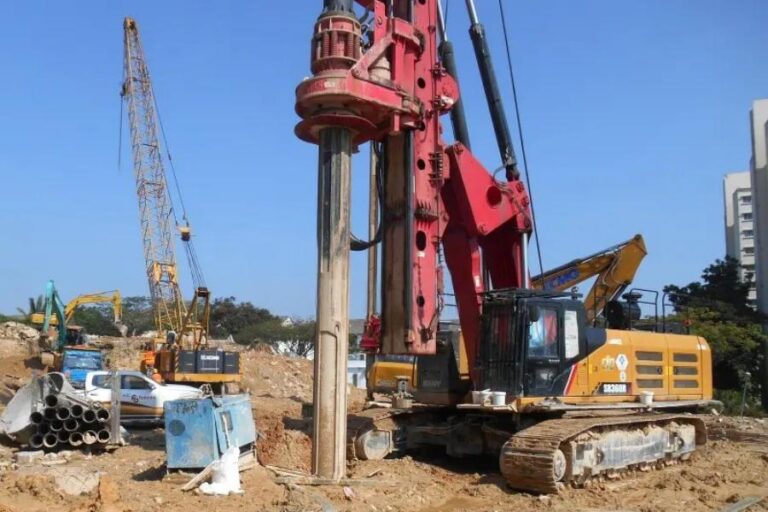
The working device is the most important part of a rotary drilling rig. It directly determines drilling depth, torque output, and operational efficiency.
4.1 Mast (Leader)
The mast is the vertical guide structure that supports and aligns the drill string.
Functions include:
- Guiding the drill rod movement
- Supporting the power head
- Adjusting drilling angle
- Folding for transport
A strong mast structure ensures drilling verticality and accuracy.
4.2 Power Head (Rotary Drive)
The power head is often called the “heart” of the rotary drilling rig.”
Its main function is to output torque and rotate the drill string.
Working Principle
- High-pressure oil from the hydraulic pump drives the hydraulic motor
- The motor transmits power to a planetary gearbox
- The gearbox reduces speed and increases torque
- Torque is transferred to the drill rod
Modern power heads usually feature:
- Variable hydraulic motors
- Multi-speed control
- Low-speed high-torque output
- High-speed reverse rotation for soil discharge
The torque capacity of the power head directly affects rock drilling capability.
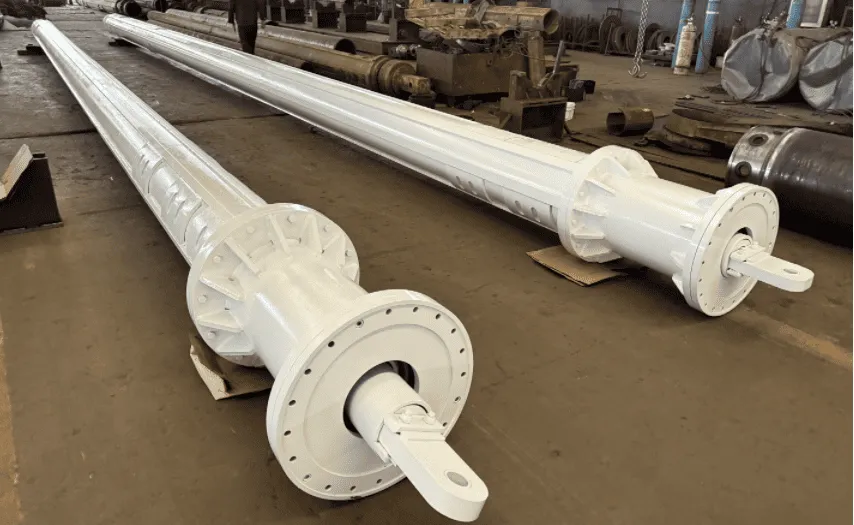
4.3 Kelly Bar
Kelly bar transmits torque and drilling pressure to the drill bit.
There are two common types:
Friction Kelly Bar
- Suitable for soft soil
- Higher drilling efficiency in loose layers
- Simpler operation
Interlocking Kelly Bar
- Better torque transmission
- Suitable for hard rock
- Higher crowd force capacity
- Requires more skilled operation
To improve efficiency, many rigs are equipped with two sets of Kelly bars for different geological conditions.
4.4 Drilling Tools (Drill Bits)
Rotary drilling rigs use various drilling tools depending on soil conditions.
Common types include:
- Auger drill (long spiral)
- Short large-diameter auger
- Rotary drilling bucket
- Sand bucket
- Core barrel
- Rock drilling bucket
- Under-reaming bucket
Choosing the correct drilling tool improves efficiency and reduces wear.
Winch System
The winch system consists of:
- Main winch
- Auxiliary winch
Main Winch
The main winch is responsible for:
- Lifting the drill rod
- Lowering the drill string
- Controlling drilling speed
It consists of:
- Hydraulic motor
- Planetary reducer
- Brake system
- Drum
- Steel wire rope
The hydraulic pump drives the winch motor, which rotates the drum to lift or lower the drill rod.
The performance of the main winch affects:
- Drilling efficiency
- Safety
- Steel rope lifespan
High-quality rigs use non-rotating steel wire ropes and single-layer winding systems to reduce wear and extend service life.
Auxiliary Winch
The auxiliary winch is used for:
- Handling drilling tools
- Supporting installation work
- Assisting lifting tasks
Although secondary, it plays a critical supporting role during construction.
Crowd System (Pressurization Device)
The crowd system applies downward pressure to the power head and drill rod.
There are two main types:
Hydraulic Cylinder Crowd
- Oil cylinder fixed on mast
- Directly pushes the power head downward
- Simple structure
- Easy maintenance
Winch Crowd System
- Uses steel wire rope and pulley system
- Provides larger crowd force
- Suitable for long auger method
- More complex structure
Both systems achieve the same purpose: applying force to break, cut, or crush soil and rock.
Electrical Control System
Modern rotary drilling rigs are equipped with intelligent electronic control systems.
Main components include:
- Control joysticks
- Display screen
- Sensors
- Verticality monitoring system
- Depth measurement system
Functions include:
- Real-time drilling depth monitoring
- Mast verticality detection
- Fault diagnosis
- Automatic operation assistance
Advanced electronic systems improve efficiency, safety, and precision.
Why Understanding Rotary Drilling Rig Parts Matters for Buyers
For contractors purchasing used rotary drilling rigs, understanding the main components helps to:
- Inspect wear conditions
- Evaluate maintenance history
- Compare torque and crowd force
- Estimate future repair costs
- Choose the right machine for soil conditions
When buying used equipment, always check:
- Hydraulic leakage
- Kelly bar wear
- Winch rope condition
- Undercarriage wear percentage
- Engine running hours
Conclusion
A rotary drilling rig is a complex integration of mechanical, hydraulic, electrical, and structural systems. The main parts include:
- Undercarriage system
- Power system
- Hydraulic system
- Mast and working device
- Power head
- Drill rod and drilling tools
- Winch system
- Crowd system
- Electrical control system
Each component plays a critical role in ensuring efficient and safe foundation construction.
For buyers in the used machinery market, a thorough understanding of these parts helps make smarter investment decisions and avoid costly downtime.
If you are looking for reliable used rotary drilling rigs, crawler cranes, or foundation equipment, feel free to explore our equipment listings and contact us for detailed specifications and inspection reports.
FAQ
A rotary drilling rig is mainly used for bored pile foundation construction in projects such as bridges, buildings, highways, and infrastructure.
The main parts include the undercarriage system, engine (power system), hydraulic system, mast, power head, Kelly bar, drilling tools, winch system, crowd system, and electrical control system.
The Kelly bar transmits torque and crowd force from the power head to the drilling tool, enabling the rig to drill into soil or rock layers.
The hydraulic system uses high-pressure oil to drive motors, cylinders, and winches, controlling rotation, lifting, mast movement, and drilling operations.
The power head generates the torque needed to rotate the drill string. Its torque capacity determines the rig’s drilling performance, especially in hard soil and rock.