
Choosing the right rotary drilling rig is not just about budget — it’s about matching technical parameters with real project requirements. In foundation engineering, improper equipment selection can result in low efficiency, excessive fuel consumption, or even structural risk.
Rotary drilling rigs are generally classified into small, medium, and large types based on five key parameters:
- Maximum torque
- Engine power
- Drilling diameter
- Drilling depth
- Operating weight
In this article, we’ll explain each category in detail and naturally introduce representative models from SANY Group to help contractors better understand real-world applications.
Key Technical Parameters That Define Rotary Drilling Rigs
Before dividing rigs into categories, let’s review the primary classification standards:
| Parameter | Definition | Project Impact |
|---|---|---|
| Maximum Torque (kN·m) | Rotational force output | Determines ability to drill rock |
| Engine Power (kW) | Power supply capacity | Affects productivity & fuel efficiency |
| Drilling Diameter (m) | Maximum pile width | Influences foundation bearing capacity |
| Drilling Depth (m) | Maximum borehole depth | Essential for deep foundations |
| Operating Weight (t) | Total machine mass | Affects stability & transportation |
Among these, maximum torque is the most critical factor, as it directly determines drilling strength and penetration efficiency.
Small Rotary Drilling Rigs
Typical Technical Specifications
- Torque: ~100 kN·m
- Engine Power: ~170 kW
- Drilling Diameter: 0.5–1.0 m
- Drilling Depth: Around 40 m
- Operating Weight: Around 40 tons
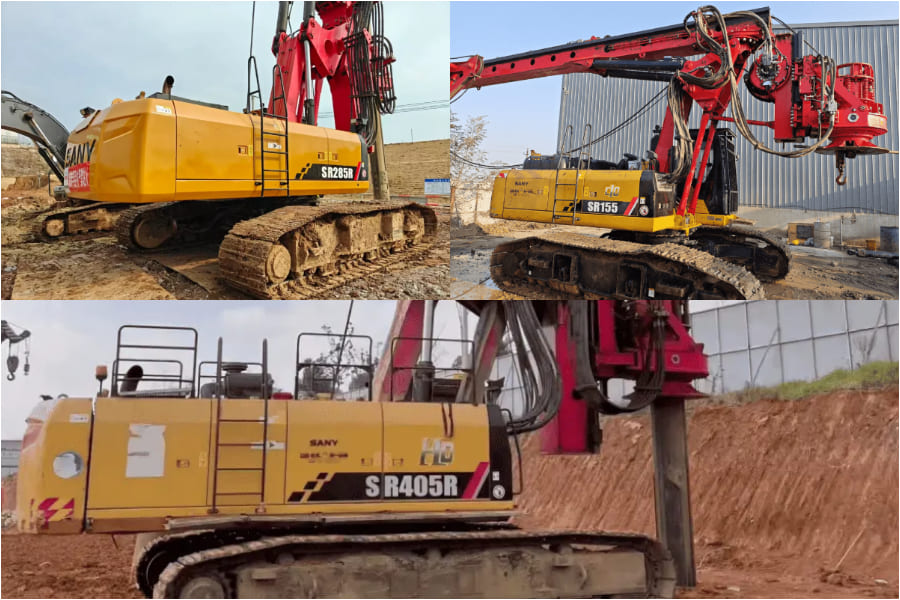
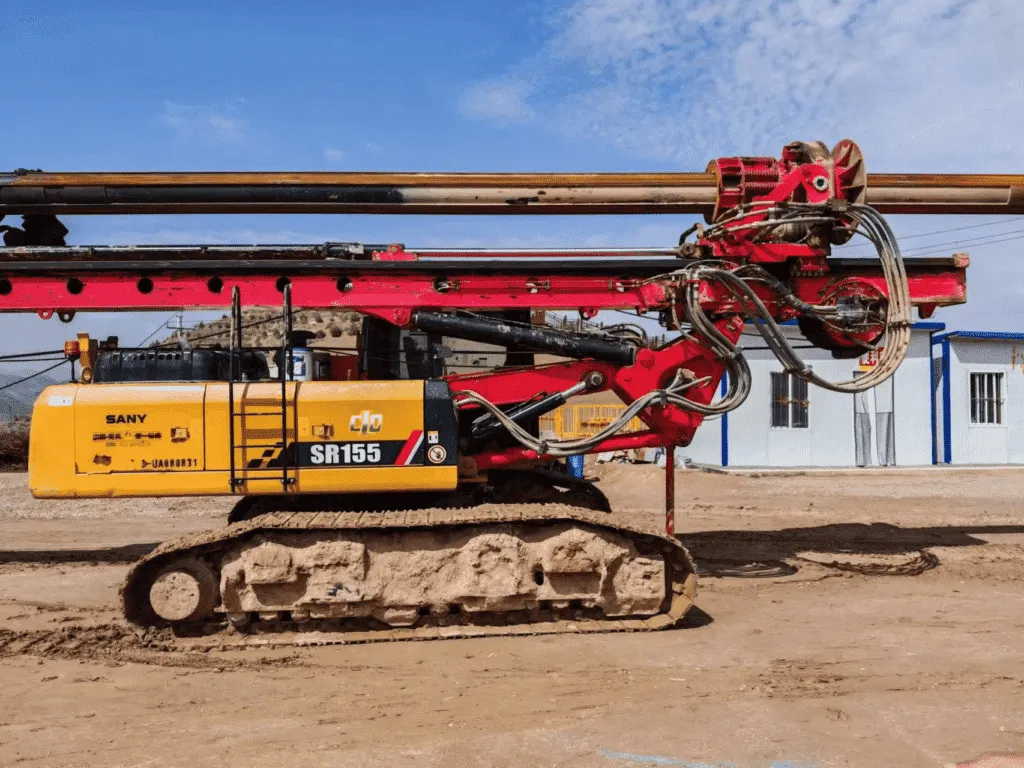
A representative example is the SANY SR155, a compact yet efficient rig designed for urban construction and small-diameter foundation work.
Applications of Small Rotary Drilling Rigs
Small rigs are commonly used for:
- Residential slope protection piles
- Partial load-bearing foundation piles
- Municipal renovation projects
- Urban projects requiring piles under 1 meter diameter
Small rigs account for approximately 30% of total market workload.
Advantages of Small Rigs
- Lower purchase cost
- Easy transportation
- Ideal for narrow job sites
- Lower fuel consumption
- High maneuverability
They are particularly suitable for contractors working in dense urban environments where space and access are limited.
Medium Rotary Drilling Rigs
Typical Technical Specifications
- Torque: ~180 kN·m
- Engine Power: ~200 kW
- Drilling Diameter: 0.8–1.8 m
- Drilling Depth: Around 60 m
- Operating Weight: Around 65 tons
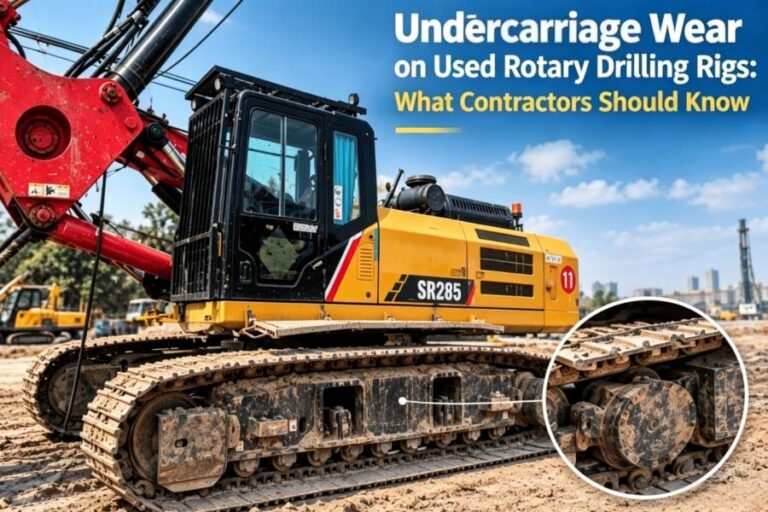
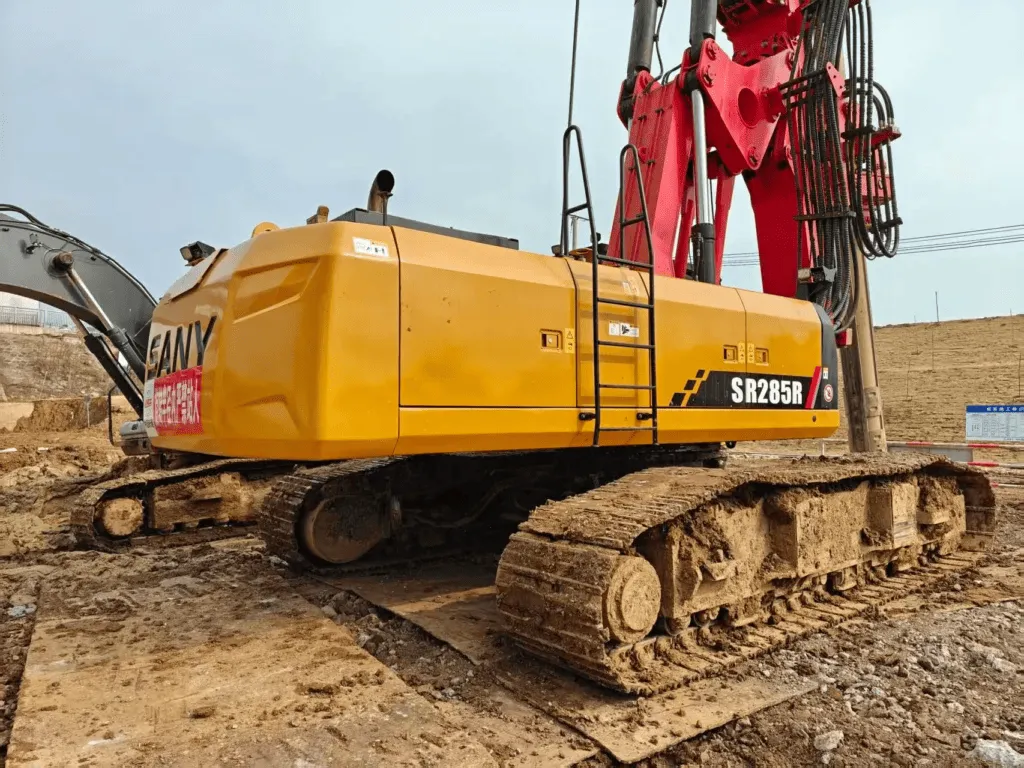
A widely recognized model in this category is the SANY SR285R, which combines strong torque output with excellent operational stability.
Applications of Medium Rotary Drilling Rigs
Medium rigs are the most versatile and dominate the global market. They are suitable for:
- Highway bridge pile foundations
- Railway infrastructure
- Large building foundations
- Port and dock construction
- Urban elevated bridges
Medium rigs cover over 90% of typical foundation engineering projects, making them the most popular choice among contractors.
Why Medium Rigs Dominate the Market
Medium rigs provide:
- Balanced torque and fuel efficiency
- Strong adaptability to various soil conditions
- Capability for medium-to-large diameter piles
- High return on investment
For most construction companies, a medium-size rig offers the best cost-performance ratio.
3.Large Rotary Drilling Rigs
Typical Technical Specifications
- Torque: 240 kN·m and above
- Engine Power: 300 kW or more
- Drilling Diameter: 1.0–2.5 m
- Drilling Depth: Up to 80 m or more
- Operating Weight: Over 100 tons
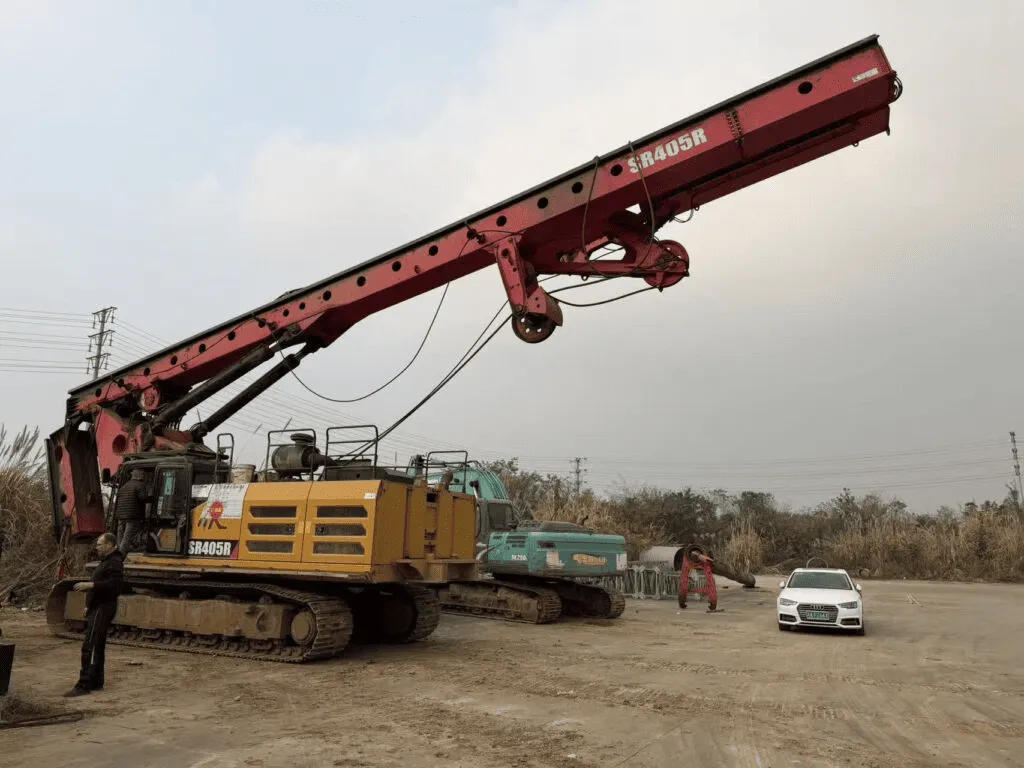
A typical heavy-duty example is the SANY SR405R, designed for deep and large-diameter pile construction in complex geological conditions.
Applications of Large Rotary Drilling Rigs
Large rigs are mainly used in:
- Super-large highway bridges
- High-speed railway major bridge foundations
- Mega infrastructure projects
- Special heavy-load structures
- Hard rock formations
Although powerful, large rigs account for only about 10% of total market demand due to their specialized use.
Advantages of Large Rigs
- Extremely high torque output
- Deep drilling capability
- Strong rock penetration performance
- Excellent stability for large-diameter piles
Limitations
- High acquisition cost
- Expensive transportation
- Larger job site requirements
- Higher operational expenses
Large rigs are best suited for companies involved in national-level infrastructure or major industrial projects.
Market Classification Overview
| Category | Torque Range | Typical Depth | Market Coverage | Example Model |
|---|---|---|---|---|
| Small | ~100 kN·m | 40 m | 30% | SR155C |
| Medium | ~180 kN·m | 60 m | 90% | SR285R |
| Large | 240+ kN·m | 80 m+ | 10% | SR405R |
Note: Market coverage overlaps because medium rigs can handle many tasks performed by small rigs.
How Contractors Should Choose the Right Rotary Drilling Rig
1. Analyze Geological Conditions
- Soft clay → Small or medium rig sufficient
- Mixed soil & gravel → Medium rig preferred
- Hard rock → Large torque machine required
2. Determine Required Pile Diameter
Projects requiring piles larger than 1.5 meters typically demand medium-to-large rigs.
3. Evaluate Required Depth
Depth beyond 50–60 meters usually requires medium or large equipment.
4. Consider Transportation and Site Access
Urban projects may limit:
- Machine weight
- Noise
- Access roads
In such cases, small rigs are more practical.
5. Assess Investment and ROI
Medium rigs often provide the highest utilization rate due to their wide application range.
Why Torque Is the Core Classification Standard
While engine power and drilling depth are important, torque is the key performance indicator because it determines:
- Drilling speed
- Rock penetration capability
- Energy efficiency
- Overall productivity
Modern drilling rigs from manufacturers like SANY are designed to optimize torque output while maintaining fuel efficiency and machine stability.
Final Thoughts
Rotary drilling rigs are classified into small, medium, and large categories based on technical parameters such as torque, engine power, drilling diameter, drilling depth, and operating weight.
- Small rigs serve urban and light foundation projects.
- Medium rigs dominate the market due to versatility.
- Large rigs handle mega infrastructure and complex geology.
By understanding these classifications — and referencing practical models such as those from SANY — contractors can make informed equipment decisions that improve efficiency, reduce operating costs, and enhance long-term profitability.
FAQ
Rotary drilling rigs are classified into small, medium, and large types based on maximum torque, engine power, drilling diameter, drilling depth, and operating weight to match different foundation project requirements.
Small rigs (~100 kN·m torque) are ideal for urban projects, municipal renovations, and foundation piles under 1 meter diameter. They offer low cost, high maneuverability, and easy transportation.
Medium rigs (~180 kN·m torque) dominate the market due to their versatility, balanced torque, fuel efficiency, and ability to handle medium-to-large diameter piles for bridges, railways, ports, and urban infrastructure.
Large rigs (240+ kN·m torque) are suitable for mega infrastructure, super-large bridges, high-speed railway foundations, and hard rock formations, offering high torque, deep drilling, and large-diameter pile capability.
Torque determines drilling strength, rock penetration, speed, and overall productivity. It is the key factor for selecting a rotary drilling rig suitable for specific soil conditions and pile diameters.