
In modern construction, infrastructure, and industrial projects, selecting the right crane is critical for safety, efficiency, and cost control. Among the most commonly used lifting equipment are crawler cranes and mobile cranes (truck-mounted cranes).
Although both are designed for lifting operations, their structure, mobility, ground adaptability, and operational logic are significantly different. Understanding these differences helps contractors and project managers choose the right equipment for specific jobsite conditions.
What Is the Difference Between a Crawler Crane and a Mobile Crane?
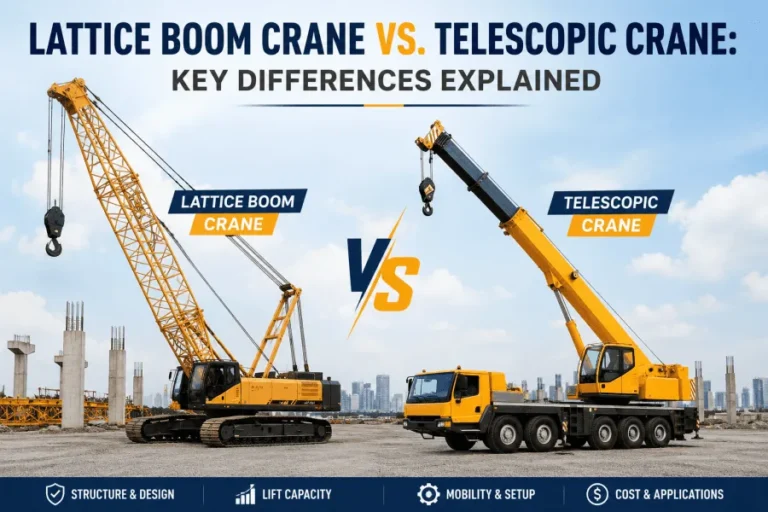
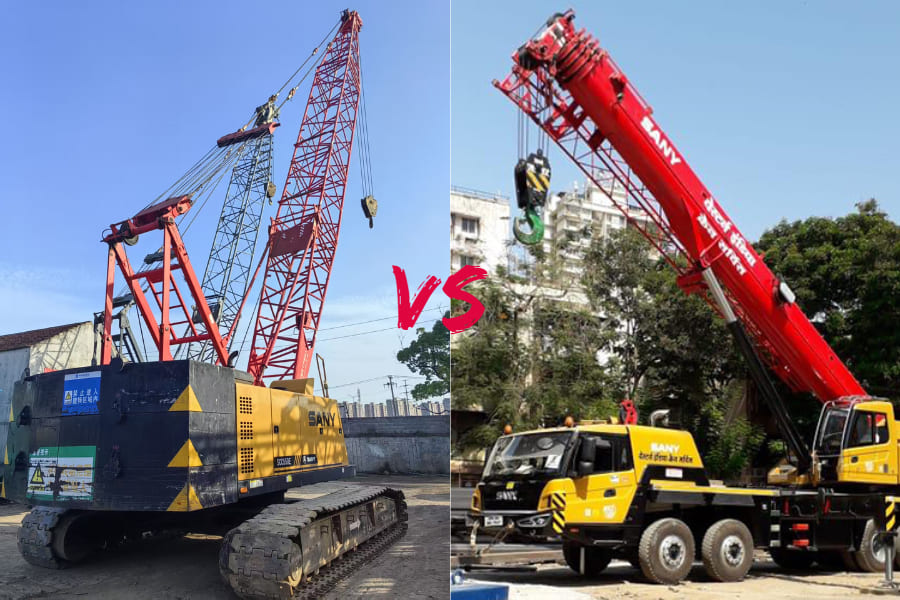
The main difference between a crawler crane and a mobile crane is mobility and lifting stability. A crawler crane uses steel tracks, allowing it to operate on soft ground and perform heavy lifting with excellent stability. A mobile crane uses rubber tires and can travel directly on public roads, making it ideal for projects that require frequent relocation.
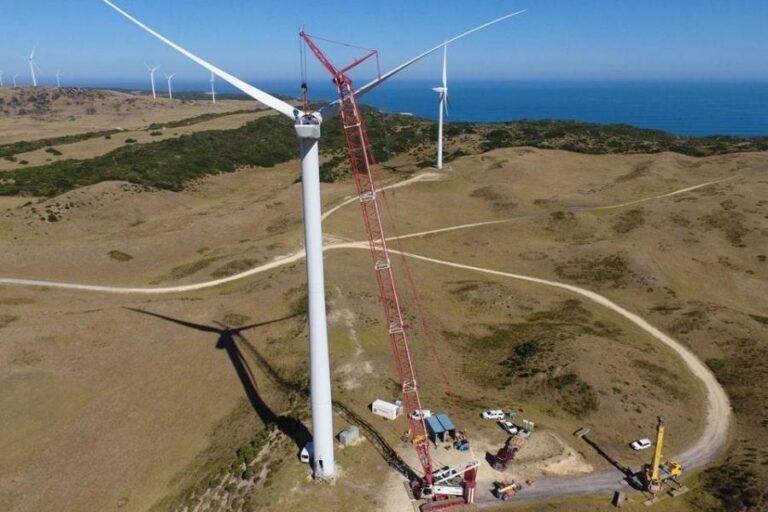
In general, crawler cranes are preferred for long-term heavy-duty projects such as bridge construction, wind farm installation, and industrial plants, while mobile cranes are commonly used for urban construction, municipal engineering, and short-term lifting operations.
Crawler Crane vs Mobile Crane at a Glance
| Feature | Crawler Crane | Mobile Crane |
|---|---|---|
| Mobility | Low | High |
| Road Travel | No | Yes |
| Stability | Excellent | Good |
| Heavy Lifting | Excellent | Moderate |
| Soft Ground Performance | Excellent | Limited |
| Outriggers Required | No | Yes |
| Relocation Speed | Slow | Fast |
| Transportation | Trailer Required | Self-driving |
| Best Application | Long-term projects | Urban projects |
| Typical Capacity Range | 50–3,000+ tons | 25–1,200+ tons |
Basic Structure Comparison
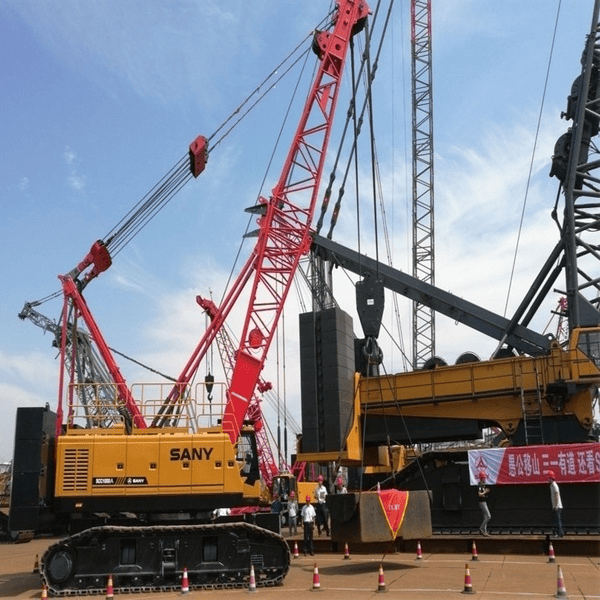
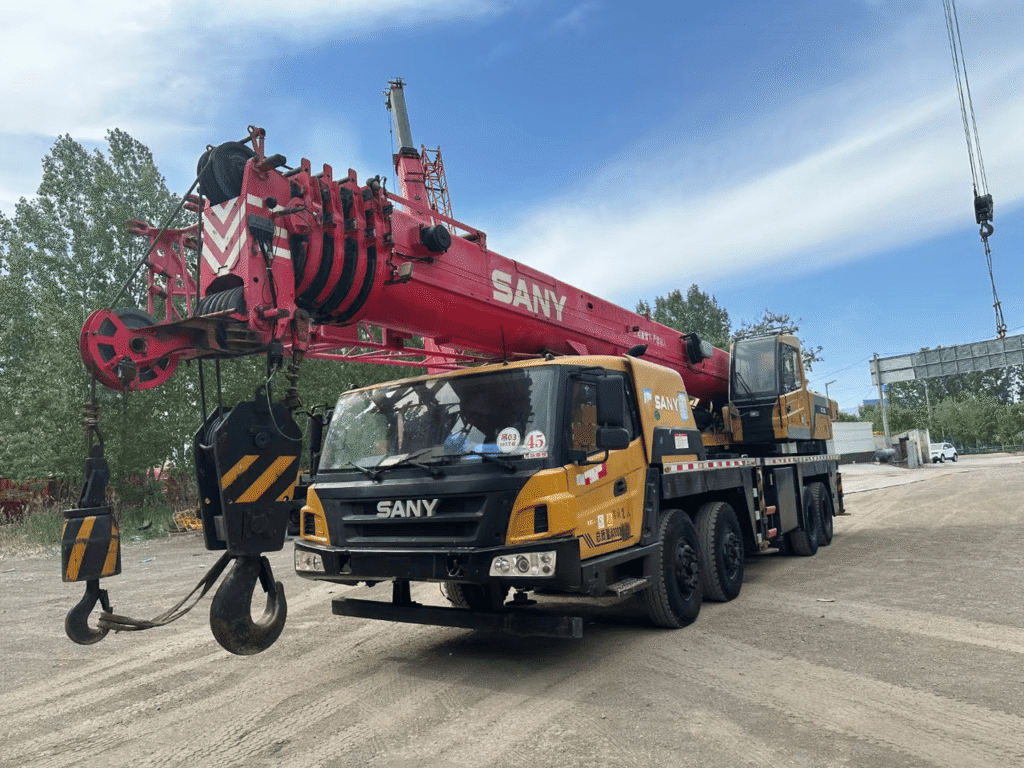
A crawler crane is mounted on a tracked undercarriage, while a mobile crane is mounted on a truck chassis with rubber tires. This structural difference directly determines their mobility and application scenarios.
Structural Overview Table
| Item | Crawler Crane | Mobile Crane |
|---|---|---|
| Undercarriage | Steel crawler tracks | Truck chassis with tires |
| Stability Method | Wide track base, no outriggers needed | Hydraulic outriggers required |
| Boom Type | Mostly lattice boom | Telescopic hydraulic boom |
| Road Travel | Cannot travel long distance on public roads | Can travel on highways and city roads |
| Transportation | Requires low-bed trailer | Self-driving to jobsite |
Crawler cranes concentrate lifting and traveling control in the upper cabin. Mobile cranes separate driving (lower cab) and lifting operations (upper cab).
Performance Comparison
2.1 Lifting Capacity and Stability
In general, crawler cranes offer stronger lifting performance under the same tonnage class due to:
- Lower ground pressure
- Wider base structure
- Better stability under heavy loads
- Ability to travel with load
Mobile cranes, although capable, must deploy outriggers and remain stationary during lifting.
2.2 Mobility and Relocation Speed
Mobility is where mobile cranes dominate.
- Mobile cranes can travel directly on public roads.
- High driving speed allows quick transfer between sites.
- Ideal for short-term, multi-location jobs.
Crawler cranes move slowly and cannot travel on highways. For relocation, they require disassembly and transportation by flatbed trailer.
Setup and Preparation Comparison
Using a 50-ton crane as an example:
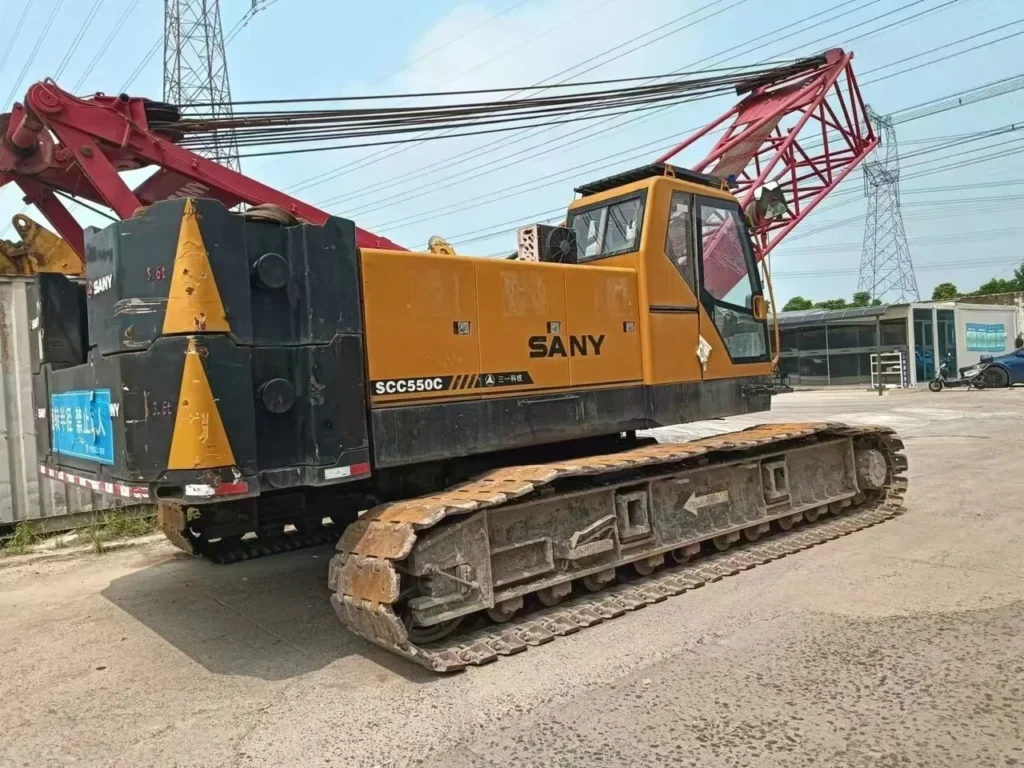
50T Crawler Crane
- Minimal lifting preparation
- No need to deploy outriggers
- Can start lifting quickly once positioned
- Requires trailer transport when relocating
50T Mobile Crane
- Must deploy hydraulic outriggers
- Must ensure full leveling before lifting
- More preparation steps
- Faster relocation after work completion
Operational Capability Differences
One major functional difference is whether the crane can move while lifting.
| Capability | Crawler Crane | Mobile Crane |
|---|---|---|
| Lift and Travel | Yes (under safe conditions) | No |
| Rough Terrain Performance | Excellent | Limited |
| Urban Road Mobility | Poor | Excellent |
| Setup Time (Same Site) | Short | Moderate |
| Relocation Speed | Slow | Fast |
The ability of crawler cranes to move with load makes them highly effective for large industrial assembly or infrastructure projects.
Ground Adaptability
Crawler cranes perform exceptionally well in challenging environments:
- Muddy construction sites
- Mining areas
- Forest operations
- Soft soil foundations
Their low ground pressure allows operation without damaging unstable ground.
Mobile cranes, however:
- Require firm and level surfaces
- Have higher ground pressure
- Perform better on paved or reinforced ground
Advantages and Disadvantages
Crawler Crane
Advantages
- Large lifting capacity
- Strong stability
- Can travel with load
- No outriggers required
- Low ground pressure
- Suitable for heavy-duty projects
Disadvantages
- Complicated assembly/disassembly
- High transportation cost
- Limited boom flexibility (non-telescopic)
- Slow relocation
Best Applications
- Large industrial plants
- Bridge construction
- Wind turbine installation
- Mining projects
- Long-term infrastructure works
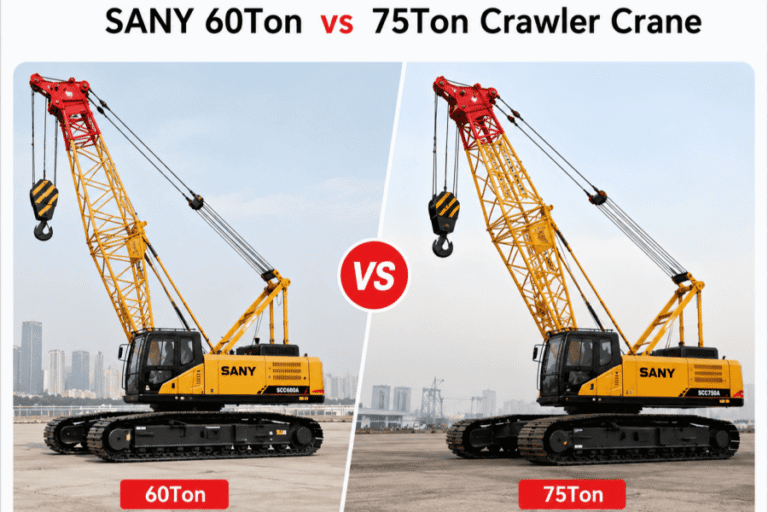
For example, mid-size crawler crane models such as the SANY SCC600A-6 are commonly used in piling support works and structural installation projects where stability is a top priority.
Mobile Crane
Advantages
- Excellent mobility
- Fast road travel
- Quick site transfer
- Flexible telescopic boom
- Ideal for rental market
Disadvantages
- Cannot lift while traveling
- Requires outriggers
- Higher ground requirement
- Limited extreme heavy lifting compared to crawler cranes
Best Applications
- Urban construction
- Municipal engineering
- Short-term lifting tasks
- Projects requiring frequent relocation
Cost and Efficiency Considerations
When evaluating total project cost, consider:
Crawler Crane Cost Factors
- Transport by trailer
- Assembly labor
- Suitable for long-term projects
- High efficiency in heavy lifting
Mobile Crane Cost Factors
- Lower relocation cost
- Faster turnover
- Ideal for short-term rental use
- Reduced downtime between sites
For long-duration heavy-duty projects, crawler cranes may offer better long-term efficiency. For fast-paced urban projects, mobile cranes usually provide better economic returns.
Crawler Crane vs Mobile Crane: Which Is Better?
There is no single crane that is best for every project. The ideal choice depends on site conditions, lifting requirements, project duration, and transportation needs.
| Project Scenario | Recommended Crane |
|---|---|
| Wind Farm Installation | Crawler Crane |
| Bridge Construction | Crawler Crane |
| Foundation Piling | Crawler Crane |
| Petrochemical Projects | Crawler Crane |
| Urban Construction | Mobile Crane |
| Road Maintenance | Mobile Crane |
| Factory Equipment Installation | Mobile Crane |
| Frequent Site Relocation | Mobile Crane |
| Soft Ground Conditions | Crawler Crane |
| Heavy Lifting Operations | Crawler Crane |
For contractors working on long-term infrastructure projects, crawler cranes often provide better lifting efficiency and stability. For short-term projects across multiple locations, mobile cranes usually deliver better overall productivity and lower transportation costs.
Which Should You Choose?
There is no universal answer. The right choice depends on:
- Project duration
- Site conditions
- Required lifting capacity
- Frequency of relocation
- Budget structure
Choose a Crawler Crane if:
- The project is large-scale and long-term
- Ground conditions are poor
- Heavy lifting performance is critical
- Relocation is minimal
Choose a Mobile Crane if:
- The project requires frequent site changes
- Work is located in urban areas
- Road travel is necessary
- Time efficiency is essential
Final Thoughts: Choosing the Right Crane for Your Project
Crawler cranes and mobile cranes are both essential in modern lifting operations.
Crawler cranes offer superior lifting performance, stability, and terrain adaptability. Mobile cranes provide unmatched mobility and flexibility in urban environments.
Understanding their structural differences, operational logic, and cost implications ensures safer operations and higher project efficiency.
Choosing the right crane is not about which one is stronger—but which one fits your jobsite conditions best.
FAQ:
A crawler crane uses tracks for better stability and heavy lifting, while a mobile crane uses rubber tires for fast road travel and flexibility.
Yes, crawler cranes can travel with load under safe operating conditions, while mobile cranes must remain stationary when lifting.
Mobile cranes are more suitable for urban construction because they can travel on public roads and quickly move between job sites.
Crawler cranes are ideal for soft or uneven ground due to their low ground pressure and strong stability.
It depends on the project. Crawler cranes are better for long-term heavy-duty projects, while mobile cranes are more cost-effective for short-term or multiple-location jobs.
In general, crawler cranes offer greater lifting capacity and stability than mobile cranes of similar size because of their wider tracked undercarriage and lower ground pressure.
Crawler cranes achieve stability through their wide track system, which distributes weight evenly across the ground and eliminates the need for hydraulic outriggers.
Crawler cranes are generally preferred for wind farm projects because they can handle heavy components at greater heights and provide better stability during lifting operations.
Mobile cranes can operate on soft ground if suitable ground preparation and outrigger support are provided. However, crawler cranes usually perform better in these conditions.
The most important factors include lifting capacity, site conditions, project duration, transportation requirements, and relocation frequency.